


 English
  русский
  عربى
عربى  Español
Supply Stop Valve: Types, Sizing, and How to Choose the Right One for Your Application
Content
- 1 What a Supply Stop Valve Does and Why It Belongs on Every Fixture Line
- 2 Straight or Angle Stop: Match the Body Pattern to the Piping Layout
- 3 Mechanism Options: Quarter-Turn vs. Multi-Turn Shutoff
- 4 Material, Connection, and Sizing Criteria
- 5 Special-Purpose Supply Stops: Locking Bodies and Excess-Flow Shutoff
- 6 Procurement Checks Before Ordering Supply Stop Valves in Volume
What a Supply Stop Valve Does and Why It Belongs on Every Fixture Line
A leaking fixture supply line can release several liters of water per minute. The component that determines whether you stop that leak in seconds or must shut down the whole building is the supply stop valve, the compact shutoff installed between the branch pipe and the fixture inlet. If you have ever closed a main valve to repair a single faucet, you already know the cost of not having one.
Put simply, a supply stop valve is a dedicated shutoff device mounted on the supply line directly upstream of a sink, toilet, washing machine, or similar fixture. Plumbers also call it a fixture shutoff or simply a stop valve. It isolates one fixture for repair, replacement, or seasonal shutdown without disturbing the rest of the system. In multi-tenant buildings, fixture-level stops limit liability: a burst hose connector can be isolated immediately instead of forcing a building-wide shutdown.
Two decisions define a supply stop valve: the body pattern, which determines how the valve fits the piping layout, and the internal mechanism, which determines how tightly it seals and how long it lasts. Both choices affect pressure drop, service life, and the speed of future maintenance.
Straight or Angle Stop: Match the Body Pattern to the Piping Layout
Select the body pattern before anything else, because it must match the physical arrangement of the supply line. The wrong pattern forces an extra elbow, longer tubing, or a clearance problem behind the fixture.
Straight Stop Valves
In a straight stop valve, the inlet and outlet are aligned on the same axis. This pattern is the default when the supply line rises from the floor, as in many pedestal sinks and washing-machine connections. The straight path creates less turbulence and a lower pressure drop than an angle body, and the handle position remains predictable.
Angle Stop Valves
In an angle stop valve, the outlet is rotated 90 degrees relative to the inlet. This is the standard choice when the supply line comes through the wall behind the fixture, the most common arrangement for under-sink installations in modern construction. The 90-degree body changes flow direction without requiring a separate elbow fitting, saving space and reducing the number of joints that can leak.
For installations that need this 90-degree flow path with a fast-acting handle, a brass right-angle ball valve is a reliable option because it combines the angle body with a quarter-turn mechanism and a compact profile designed for confined spaces.
Mechanism Options: Quarter-Turn vs. Multi-Turn Shutoff
The body pattern determines how the valve fits the installation; the internal mechanism determines how fast it operates, how tightly it seals, and how it behaves under flow. For supply stop duty, three mechanisms dominate.
Quarter-Turn Ball Valves
Ball valves close with a 90-degree rotation of the handle, making them the fastest option for fixture isolation. In the open position, a full-port ball valve leaves a bore roughly equal to the pipe diameter, which keeps friction loss minimal on long supply runs where every additional drop reduces pressure at the fixture. Ball valves are not designed for precise throttling, but they are excellent for the open-and-closed service a supply stop normally performs.
Multi-Turn Globe and Gate Valves
Globe valves, the traditional stop-valve mechanism, use a disc that moves perpendicular to the seating surface. They provide smooth throttling and very tight shutoff, which is why they remain common in commercial plumbing. Their main cost is an internal change-of-direction path that produces a higher pressure drop.
Gate valves raise a wedge or disc out of the flow path, leaving a straight bore when fully open. They suit infrequent operation where pressure loss must be minimized, but they require multiple turns and are not meant for frequent cycling.
When a multi-turn design is specified, a brass globe valve delivers the drip-tight shutoff behavior expected of a traditional stop valve plus the corrosion resistance required for potable water lines.
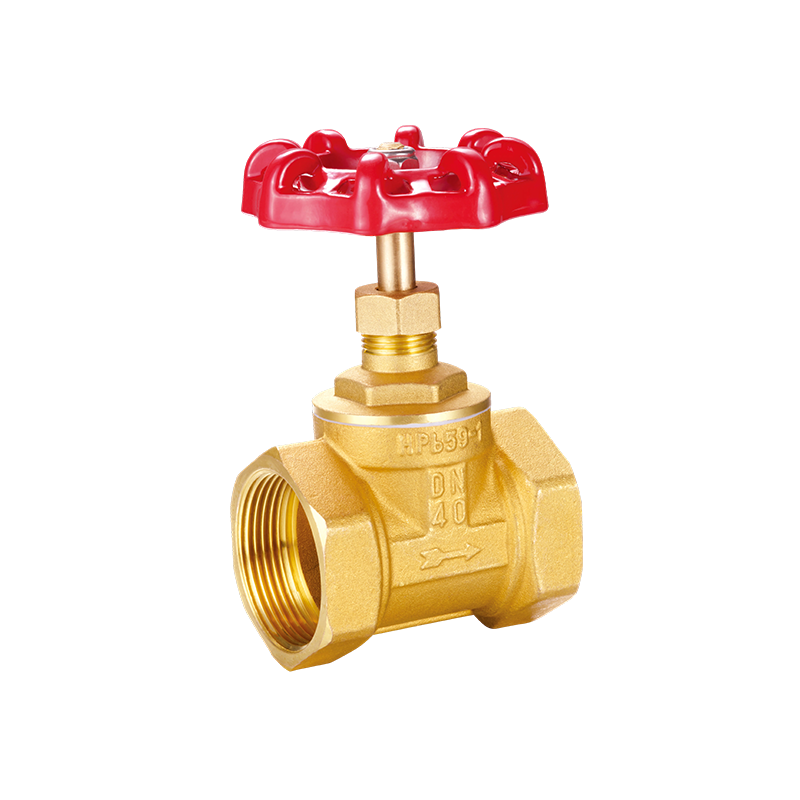 Wholesale YH-301 Brass Globe Valve Suppliers, Factory - Ningbo Yunhua Valve Co.,Ningbo Yunhua Valve Co., Ltd. is China wholesale YH-301 Brass Globe Valve suppliers and factory,Brass Globe Valve This valve is engineere...View Product →
| Mechanism | Operation | Flow Path | Best For | Main Limitation |
|---|---|---|---|---|
| Ball valve | 90-degree handle rotation | Full bore in open position; low pressure drop | Frequent on/off and fixture isolation | Limited throttling control |
| Globe valve | Multiple stem turns | Change-of-direction seat; higher pressure drop | Throttling and drip-tight shutoff | Higher flow resistance |
| Gate valve | Multiple stem turns; vertical disc travel | Unobstructed straight bore | Infrequent operation; minimal pressure loss | Slow to operate; not for cycling |
Material, Connection, and Sizing Criteria
After the pattern and mechanism come material, end connections, and port size. Errors in these details show up as leaks, thread mismatches, or insufficient flow at the fixture.
Material Selection
Brass is the dominant material for supply stop valves because it resists corrosion in potable and neutral fluids, machines cleanly, and remains stable across the temperature range of domestic water systems. Forged brass bodies provide a denser grain structure and fewer internal defects than cast bodies, which is why many specifications require forging for pressure-containing parts. Ductile iron and forged steel are reserved for larger diameters, higher pressures, or gas service, where mechanical strength outweighs cost.
Thread Standards and End Configurations
Thread compatibility is the most common field failure for supply stops. NPT and BSP threads look similar but differ in thread angle and pitch; crossing them produces a connection that seals initially and leaks under thermal cycling. Confirm the thread standard of the distribution pipe before ordering. Connection style also includes how the valve attaches to the tubing: compression fittings are common in North American under-sink work because they install without soldering, while threaded NPT or BSP connections dominate other markets. Choose the style that matches the local pipe to avoid adapter stacks.
End configuration matters just as much: female-female (F-F), female-male (F-M), and male-male (M-M) bodies change how the valve connects to the supply riser and the fixture riser. A wrong combination adds bushings and nipples, each one a potential leak point.
Hose Connector and Port Options
Washing machines, dishwashers, and gas appliances often require a supply stop with an integral hose connector instead of a plain threaded outlet. These versions reduce the number of adapters and are easier to inspect. For this type of service, brass hose ball valves are available with single or double hose connections, so the valve and fitting arrive as one assembly.
Port size controls flow capacity. Half-inch supply stops cover most residential fixtures; three-quarter-inch bodies are used for higher-flow fixtures or long branch runs. A standard-port valve has a reduced bore; a full-port valve matches the pipe bore. If the available flow is already marginal, full-port is the safer choice.
Special-Purpose Supply Stops: Locking Bodies and Excess-Flow Shutoff
Standard supply stops are not always enough. In apartment buildings, schools, laboratories, and metering rooms, unauthorized operation of a fixture stop can waste water, damage property, or create a safety hazard. In gas or high-pressure hose service, a ruptured or disconnected line can release fluid until someone arrives to close the valve.
Lockable supply stops address the first problem. Magnetic or mechanical locking mechanisms restrict operation to keyholders, allowing building managers to secure a valve in the open or closed position. This is a practical requirement in public restrooms and commercial kitchens, where the cost of a tampered valve is far higher than the valve itself.
Excess-flow shutoff valves address the second problem. These valves monitor downstream flow; when flow exceeds a preset threshold, for example because a hose cracks or a fitting blows off, the valve closes automatically without power or supervision. They are recommended for gas appliances, high-pressure wash-down lines, and any installation where personnel may not be present when a line fails. An excess-flow shutoff valve with hose connector combines this automatic protection with the connection format used on flexible supply lines, making it a direct replacement for a standard hose-end stop.
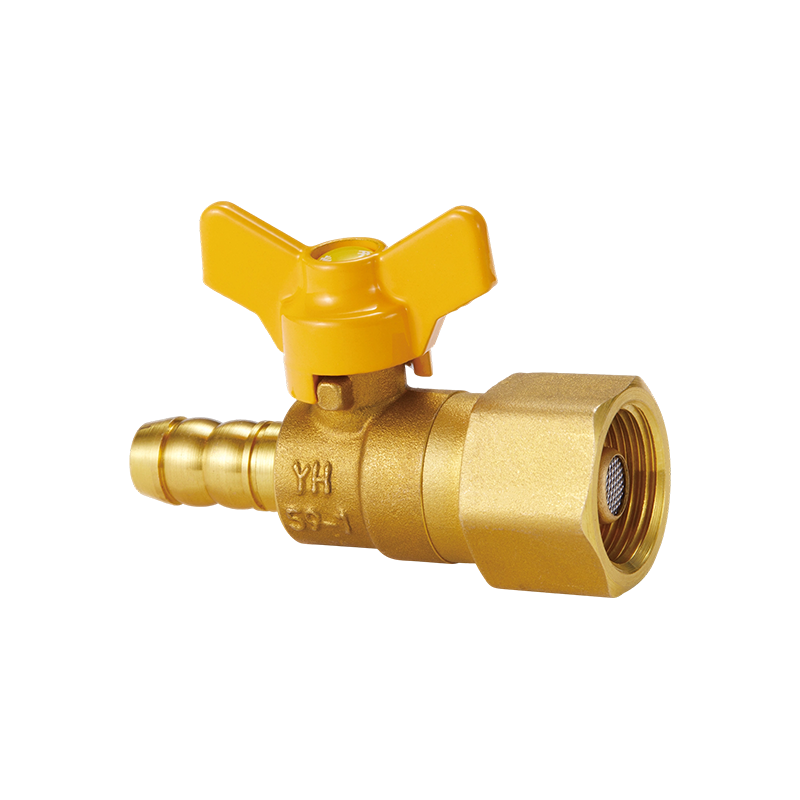 Wholesale YH-216A Brass Excess Flow Shut-Off Valve(F/Hose Connector) Suppliers,Ningbo Yunhua Valve Co., Ltd. is China wholesale YH-216A Brass Excess Flow Shut-Off Valve(F/Hose Connector) suppliers and factory,Core A...View Product →
Specification of this safety class continues to grow as gas-safety regulations and building codes tighten. Installers who plan for tamper resistance and excess-flow protection now avoid costly retrofits later; the broader market context is covered in our analysis of how gas safety policies are driving valve market demand.
Procurement Checks Before Ordering Supply Stop Valves in Volume
Buying supply stop valves by the carton or container is different from picking one at a plumbing supply counter. The three checks below prevent the most frequent batch-level failures.
- Verify end connections against local pipe standards. Request a dimensional drawing of the thread form and check it with a mating fitting during incoming inspection. A valve that passes visual inspection but fails thread gauging will leak at a rate proportional to the batch size.
- Confirm pressure and temperature ratings plus test evidence. Ask for hydrostatic and pneumatic test records, and state the acceptable seat-leakage class. For potable-water systems, confirm that wetted materials meet the water-contact compliance requirements of the destination market.
- Evaluate process control, not just samples. A manufacturer with automated CNC machining and dedicated test workshops can document dimensional tolerances and seat performance across a batch rather than relying on manual assembly and spot checks. Quality-management practices determine the consistency you receive, so review the quality management system improvements a potential supplier can demonstrate.
A practical way to shortlist a supplier is to examine its product range for the combinations you need: angle bodies, full-port bores, hose connectors, locking options, and excess-flow protection. Ningbo Yunhua Valve Co., Ltd., for example, manufactures this spread in brass, ductile iron, and forged steel, which allows a buyer to consolidate the valve and fitting portion of a bill of materials with one factory.
Related Products
-
 View More
-
 View More
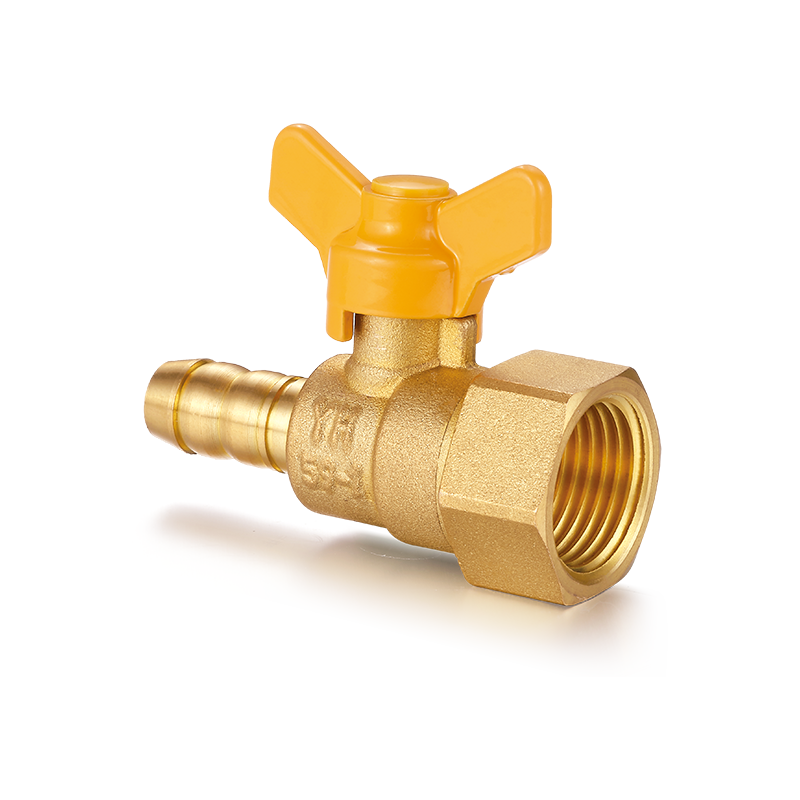
YH-216 Brass Ball Valve with Butterfly Handle(F/Hose Connector)
-
 View More
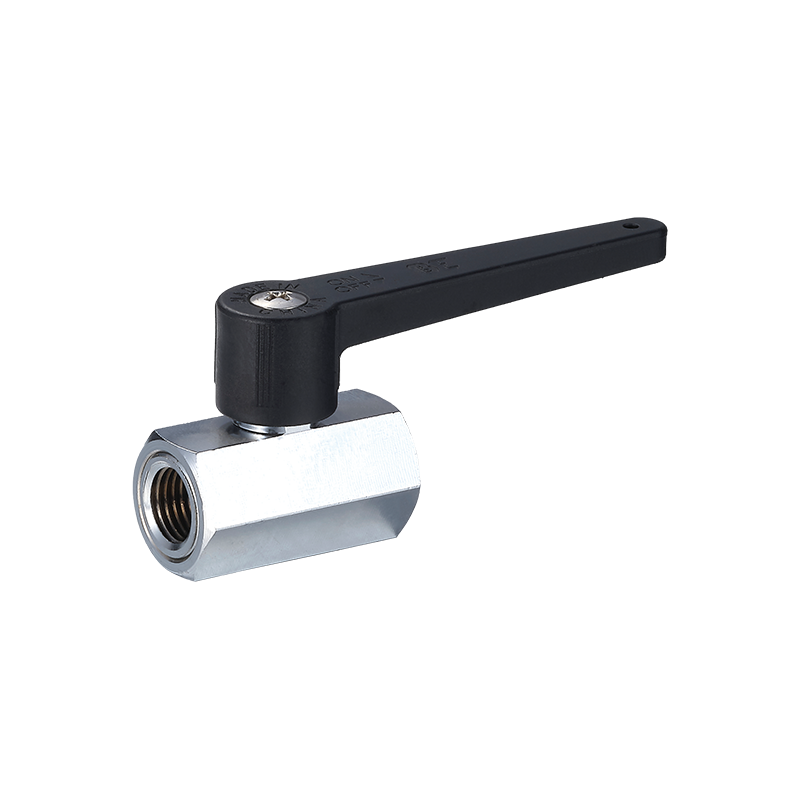
MINI-1 Mini Long Handle Ball Valve(F/F)
-
 View More
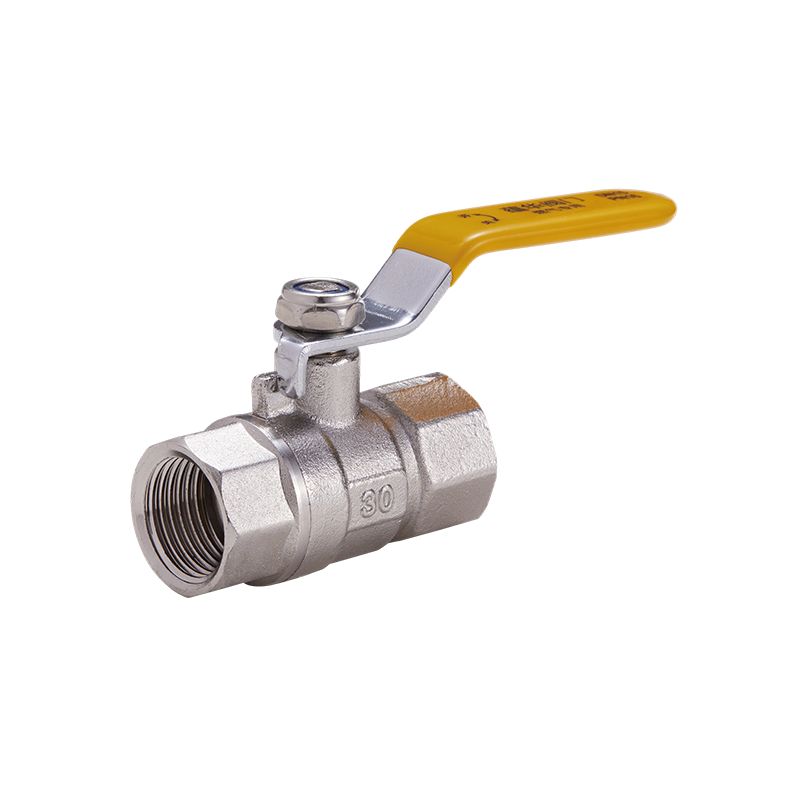
YH-2210 Forged Steel Ball Valve with Long Handle (F/F)
-
 View More
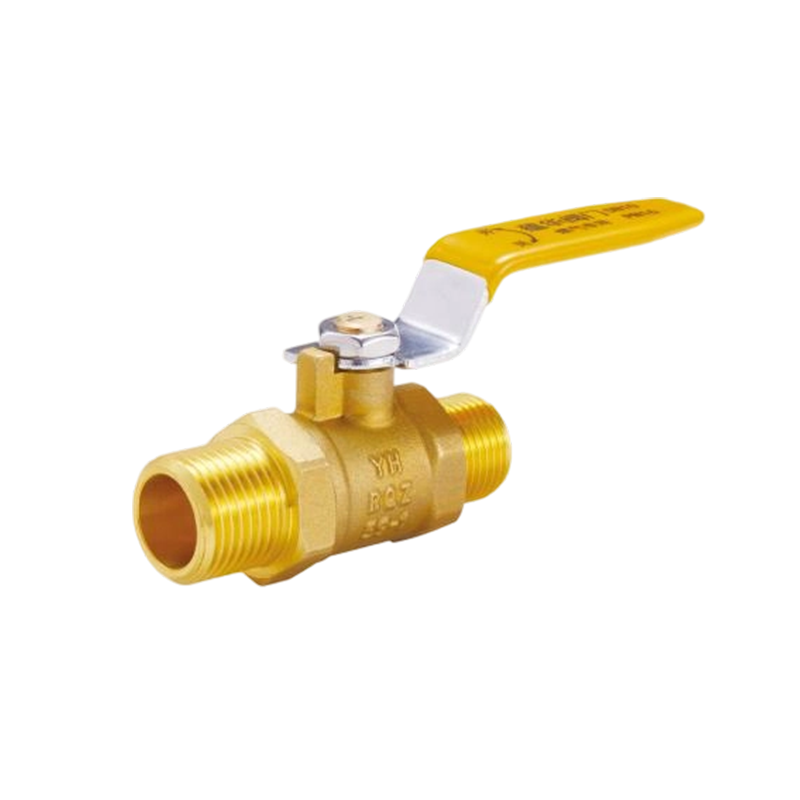
YH-221 Brass Ball Valve with Long Handle(M/M)
-
 View More
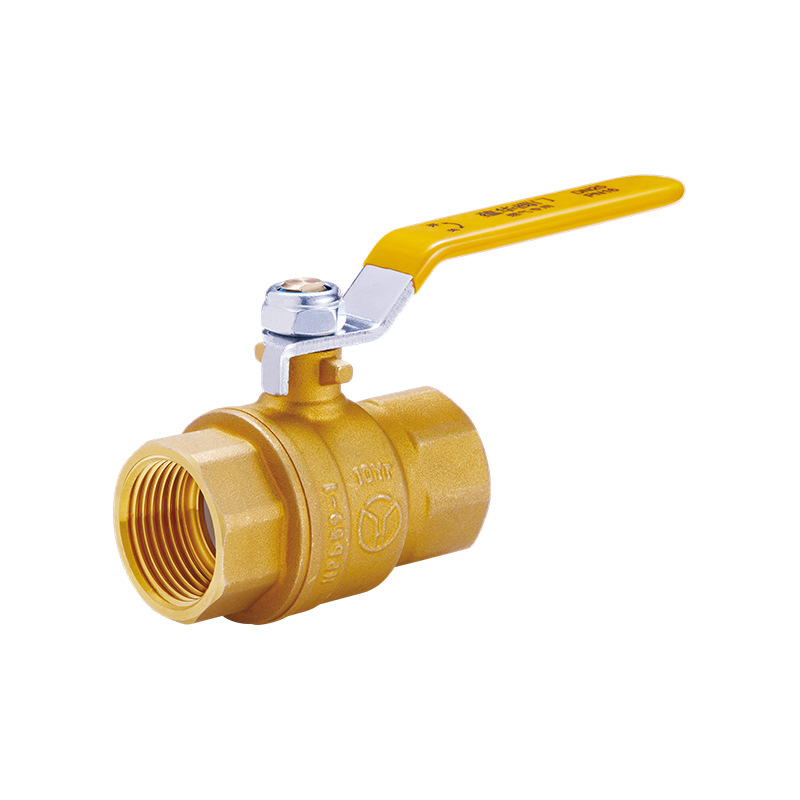
YH-220 Full Port Brass Ball Valve with Long Handle(F/F)
Related News
Contact Us
-

-
 +86-0574-63742169
 -
 No.104-128, Cizhang East Road, Zhangqi Town, Cixi City, Ningbo, Zhejiang Province, China


Message Us Now !
