


 English
  русский
  عربى
عربى  Español

YH-215 Brass Right Angle Ball Valve(F/M)
Brass Right-Angle Ball Valve



The Brass Right-Angle Ball Valve represents a critical advancement in fluid mechanics, specifically engineered to optimize space and change direction within high-performance pipeline architectures. Unlike standard inline valves that require additional piping joints and separate 90-degree elbows, the Brass Right-Angle Ball Valve integrates fluid control and directional redirection into a single, compact body. This unique design minimizes potential leak points, substantially decreases installation labor costs, and reduces the overall footprint of the machinery or plumbing assembly.
For industrial engineers and procurement specialists, fluid flow efficiency is a paramount metric. Ningbo Yunhua Valve Co., Ltd. applies rigorous hydraulic research to ensure that the internal geometry of the Brass Right-Angle Ball Valve mitigates the turbulence naturally generated when fluid changes direction at a right angle. By maintaining smooth internal core transitions, this valve design optimizes flow characteristics, reduces pressure drops, and stabilizes system performance.
The performance of a Brass Right-Angle Ball Valve in demanding industrial environments is heavily reliant on its metallurgy. Selecting premium alloy grades ensures that the valve body can withstand high mechanical stress, chemical oxidation, and dezincification. Premium formulations like HPb59-1 and CW617N are heavily utilized in professional manufacturing to provide the ideal balance between tensile strength and machineability.
Below is a detailed technical parameter comparison outlining the chemical compositions and performance behaviors of standard industrial brass alloys used in the production of the Brass Right-Angle Ball Valve:
| Parameter / Feature | HPb59-1 (Standard Industrial Brass) | CW617n (European Standard Lead-Free/Low-Lead) | DZR Brass (Dezincification Resistant Brass) |
| Copper (Cu) Content | 57.0% - 60.0% | 57.0% - 59.0% | 61.0% - 63.0% |
| Lead (Pb) Content | 0.8% - 1.9% | 1.6% - 2.5% | Less than or equal to 2.0% |
| Zinc (Zn) Content | Balance | Balance | Balance |
| Dezincification Resistance | Moderate | Standard | Highly Superior (Inhibits Zn loss in aggressive water) |
| Tensile Strength (Rm) | Greater than or equal to 400 MPa | Greater than or equal to 430 MPa | Greater than or equal to 410 MPa |
| Elongation (A%) | Greater than or equal to 15% | Greater than or equal to 12% | Greater than or equal to 15% |
| Primary Suitability | General fluid handling, hardware, and gas lines | European standard commercial plumbing | Hard water systems and corrosive chemical environments |
Ningbo Yunhua Valve Co., Ltd. implements comprehensive material verification processes across its 20,000 square meter facility, ensuring that every batch of raw brass rod conforms precisely to these alloy specifications. By using advanced testing workshops to inspect incoming raw materials, the structural integrity of every completed Brass Right-Angle Ball Valve is fully guaranteed.
The internal mechanical operation of the Brass Right-Angle Ball Valve depends on a quarter-turn, precision-machined sphere positioned within the valve body cavity. When the operator rotates the lever or actuator by 90 degrees, the internal port of the ball aligns directly with the orthogonal inlet and outlet channels.
From a fluid dynamics perspective, a right-angle path introduces centrifugal forces to the moving medium as it hits the rear chamber wall of the valve body before exiting. To combat this, the internal bore of the sphere must be polished to a mirror finish to minimize boundary layer friction. In the fully open position, a high-quality Brass Right-Angle Ball Valve creates an efficient flow path that minimizes the localized cavitation and shearing forces common in low-grade alternative designs.
To guarantee long-term operational integrity and complete bubble-tight shut-off, the sealing architecture of a Brass Right-Angle Ball Valve must be constructed from highly resilient elastomeric or fluoropolymer materials. The primary seals surrounding the internal brass or chrome-plated ball are subjected to constant friction, localized thermal expansion, and varying line pressures.
Polytetrafluoroethylene (PTFE) remains the industry benchmark due to its exceptional chemical inertness and low friction coefficient. However, specific demanding applications require modified sealing variations to prolong the service life of the valve. The table below presents a comparative analysis of the primary sealing materials integrated into industrial right-angle valve configurations:
| Technical Metric | Virgin PTFE | Carbon-Filled PTFE (PTFE + Carbon) | Viton (FKM) - Typically for O-Rings |
| Temperature Range | -20 degrees Celsius to 150 degrees Celsius | -30 degrees Celsius to 180 degrees Celsius | -20 degrees Celsius to 200 degrees Celsius |
| Maximum Pressure Limit | Up to 2.5 MPa (25 Bar) | Up to 4.0 MPa (40 Bar) | Highly dependent on structural backing |
| Friction Coefficient | Extremely Low (0.04) | Low-Medium (0.10) | High (Elastomeric behavior) |
| Wear Resistance | Standard | Extremely High (Resists abrasive particulates) | High Elasticity / Low Abrasion Resistance |
| Optimal Applications | Clean water systems, low-pressure steam, general plumbing | High-cycle industrial machinery, thermal fluid loops | Gas distribution lines, fuel systems, stem sealing |
By selecting the correct sealing pairing for the Brass Right-Angle Ball Valve, engineers can effectively eliminate inline leakage and premature seat degradation.
When integrating a Brass Right-Angle Ball Valve into a fluid loop, selecting the appropriate internal bore configuration directly impacts system efficiency and downstream pressure stability. Right-angle designs are primarily categorized into two distinct port types:
Full Port (Full Bore): In a full-port design, the internal diameter of the ball's flow path matches the nominal pipe diameter perfectly. When fluid passes through a full-port Brass Right-Angle Ball Valve, the flow restriction is kept to an absolute minimum. This is critical for viscous liquids or applications where maintaining maximum volumetric flow rates is mandatory.
Standard Port (Reduced Bore): A standard-port valve features an internal flow bore that is one size smaller than the connecting pipeline. This configuration introduces a slight restriction to the fluid stream, which can slightly elevate the flow velocity while causing a higher pressure drop across the 90-degree turn. The primary benefit of standard-port designs is their compact physical size and lower cost, making them ideal for systems where minor flow restriction does not impact operational outcomes.
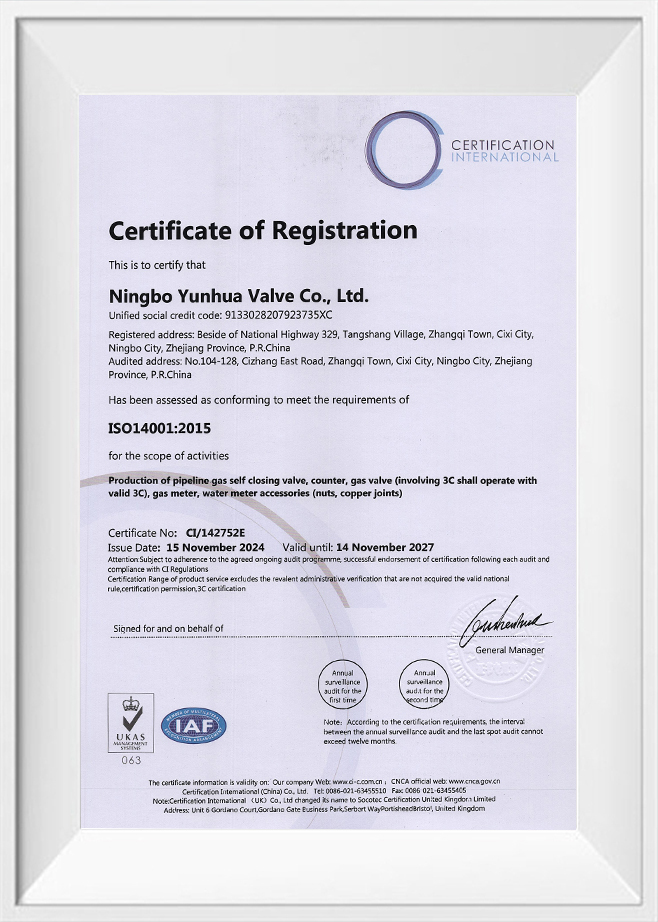
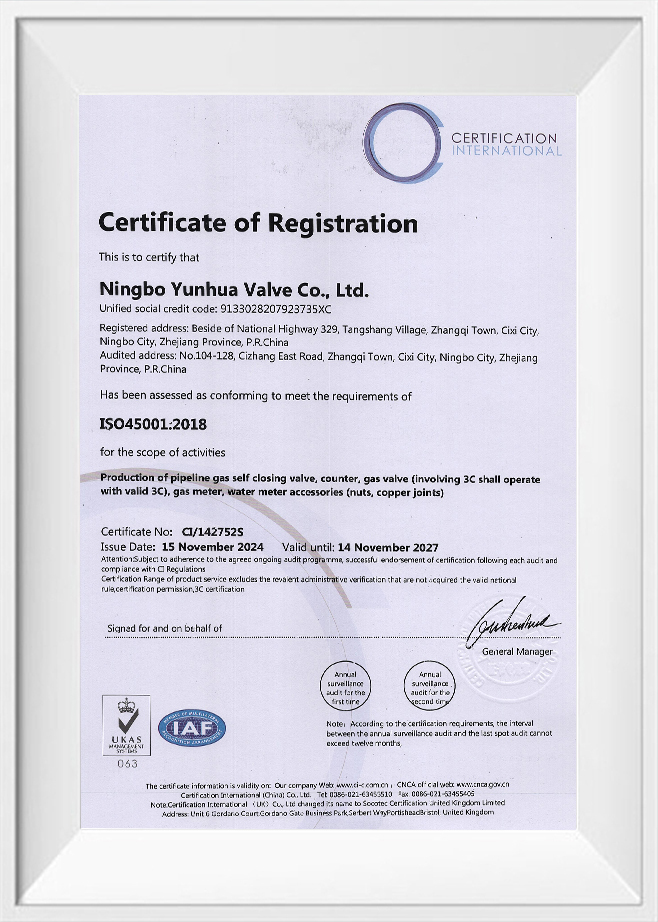
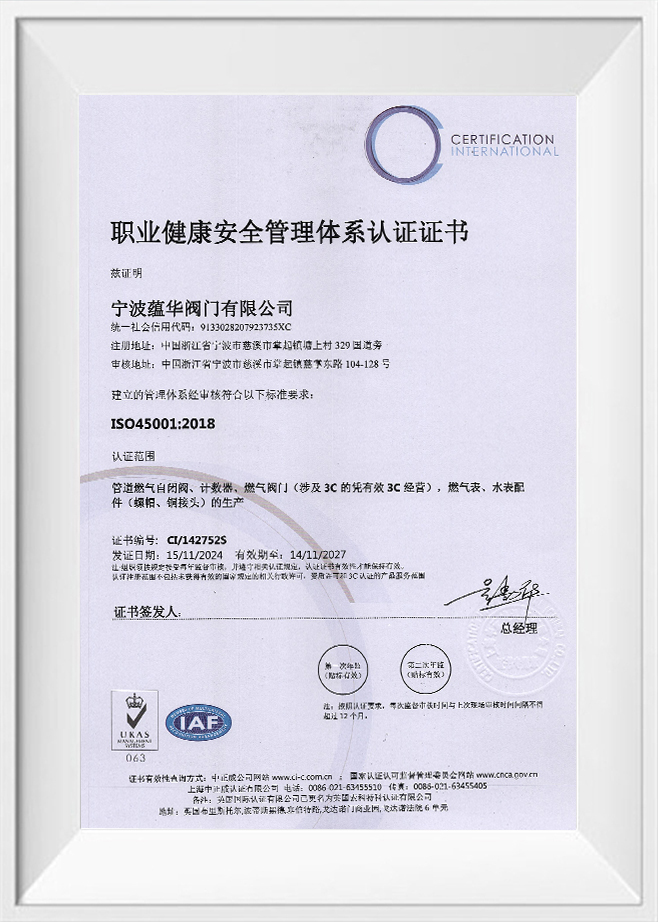
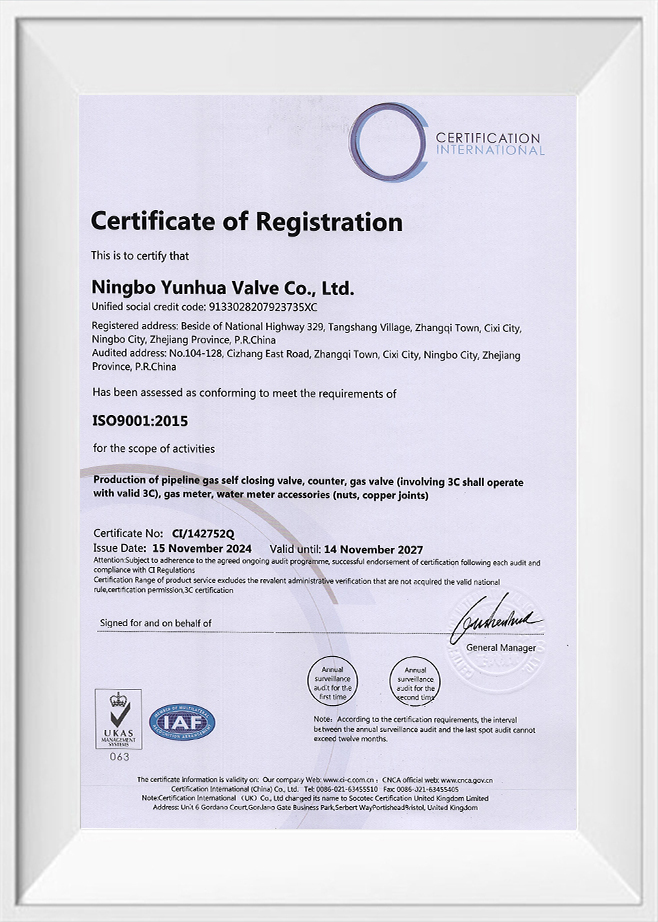
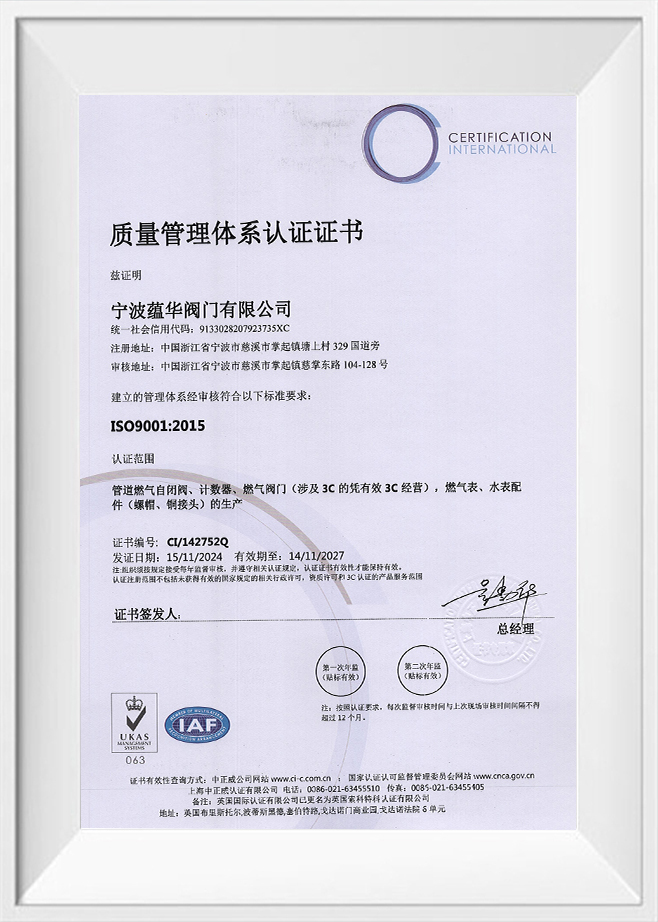
Global B2B procurement mandates strict adherence to international quality management and environmental safety protocols. For high-volume projects, manufacturing facilities must demonstrate rigorous compliance with verified quality standards. Ningbo Yunhua Valve Co., Ltd. ensures that its automated precision machining workshops and automated assembly lines operate under a stringent quality system to meet these strict expectations.
Key global benchmarks for the Brass Right-Angle Ball Valve include:
ISO 9001:2015: Validates that the factory's design, manufacturing, and testing operations maintain complete process consistency and continuous improvement frameworks.
CE Approval: Certifies that the valves conform with the strict safety and structural performance requirements stipulated by European Pressure Equipment Directives.
RoHS & NSF Compliance: Ensures that the lead content within the brass matrix is strictly limited or completely eliminated where potable water or food-contact safety regulations apply.
In modern industrial design, minimizing space requirements is a vital component of structural engineering. When routing intricate piping systems within compact industrial machinery enclosures, traditional inline valves combined with individual 90-degree pipe fittings often prove too bulky. The Brass Right-Angle Ball Valve remedies this challenge by allowing engineers to make a sharp 90-degree turn directly at the point of fluid control. This layout optimization is highly valued in oil filtration systems, industrial cleaning equipment, and commercial vehicle fluid lines, where every millimeter of spatial clearance matters.
Commercial heating, ventilation, and air conditioning (HVAC) systems subject plumbing components to relentless thermal expansion and contraction cycles. A Brass Right-Angle Ball Valve is frequently utilized as a critical isolation node within boiler bypass loops, radiant underfloor heating manifolds, and chiller system lines. The high thermal conductivity and thermal stability of industrial brass allow the valve to maintain structural form under constant temperature fluctuations, preventing the cracking or warping associated with synthetic or lower-grade metal components.
In automated factory assembly systems, medium-pressure pneumatic lines and hydraulic power distribution circuits require instant, fail-safe flow interruption. The quick quarter-turn action of the Brass Right-Angle Ball Valve delivers instantaneous shut-off capability. Ningbo Yunhua Valve Co., Ltd. utilizes an advanced domestic and international fleet of CNC machine tools to ensure the close-tolerance fits required for high-velocity compressed air systems. The tight manufacturing tolerances prevent high-pressure air molecules from escaping through the stem or thread interfaces, reducing expensive compressed air losses across large industrial facilities.
When selecting a specific model of Brass Right-Angle Ball Valve, B2B procurement managers must closely analyze the Pressure-Temperature rating curve of the component. The structural limits of the valve are defined by the nominal pressure rating (PN), which must always exceed the maximum possible surge pressure within the target system.
The standard engineering ratings for high-quality right-angle valves are broken down below:
PN16 (16 Bar / approx. 232 PSI): Suitable for light commercial installations, domestic water systems, and low-pressure utility lines.
PN25 (25 Bar / approx. 362 PSI): Designed for heavy-duty industrial applications, HVAC cooling towers, and mid-tier pneumatic lines.
Temperature Tolerance Bounds: Typical high-grade brass structures safely operate within a temperature envelope spanning from -20 degrees Celsius up to 120 degrees Celsius. Exceeding these thermal thresholds can degrade the internal PTFE sealing elements, leading to internal cross-seat weeping.
To ensure seamless integration into global mechanical infrastructure, the Brass Right-Angle Ball Valve is engineered with multiple standardized joint interfaces:
NPT (National Pipe Taper): Primarily used across North American industrial networks, utilizing a tapered thread configuration that achieves an interference seal when wrapped with PTFE tape or industrial thread sealant.
BSP / ISO 228 (British Standard Pipe): Widely adopted throughout European and Asian markets. These threads can be parallel (BSPP) or tapered (BSPT), and parallel threads rely on an elastomeric washer or face seal to contain pressurized fluid.
Compression Fittings: Ideal for applications where field welding or thread tapping is impractical. These fittings allow the valve to be clamped directly onto copper, PEX, or multi-layer composite piping with basic hand tools.
Maintaining an uninterrupted supply chain of fault-free components is critical for large-scale construction and manufacturing infrastructure. Ningbo Yunhua Valve Co., Ltd. ensures exceptional consistency by maintaining an annual production capacity of 2 million sets of valves and 100% in-house quality testing.
Before a Brass Right-Angle Ball Valve leaves the testing workshop, it undergoes a two-stage pneumatic inspection. The first stage subjects the valve shell to a high-pressure burst leak check to eliminate any casting or forging structural flaws. The second stage measures seat sealing performance, applying structural air pressure against the closed ball core to confirm that there is zero bubble leakage. This level of quality control drastically minimizes field warranty claims for global wholesale distributors.
Correct physical installation is critical to protecting the long-term functionality of a Brass Right-Angle Ball Valve. When threading pipe ends into the valve body, technicians must use precise, calibrated wrenches on the specific hexagonal flats provided near the thread entry point. Applying force to the opposite end of the valve or across the main central assembly joint can deform the valve body shell, warping the internal alignment of the PTFE seats and causing permanent stiffness during manual operation.
Furthermore, pipelines must be properly supported and structurally aligned before installation. Forcing a Brass Right-Angle Ball Valve to bridge mismatched or bent pipe segments introduces high bending moments that place excessive stress on the valve's connection ends, potentially leading to stress corrosion cracking over extended service periods.
Although the Brass Right-Angle Ball Valve is inherently a low-maintenance component, implementing a routine preventative maintenance program can double its operational lifespan, particularly in hard water systems or chemical handling loops. Over time, calcium carbonate, dissolved minerals, and particulate rust can settle within the inactive cavities surrounding the valve ball.
If the valve remains stationary in the fully open position for months at a time, these crystalline mineral deposits can crystallize on the smooth surface of the sphere. When the valve is finally operated, these hard deposits can score the soft PTFE seats, permanently compromising the valve's sealing capability. Actuating the valve through a complete open-and-close cycle at least once every quarter sweeps away these localized surface accumulations and redistributes the internal lubricant across the sealing faces.
If an operator identifies fluid weeping or moisture forming around the control handle stem, it often indicates that the internal stem packing rings have settled or experienced slight wear from high-frequency cycles. In a well-engineered Brass Right-Angle Ball Valve, this can easily be corrected without removing the entire valve from the active pipeline. Technicians simply tighten the external packing nut located beneath the handle lever by a quarter turn using standard hand tools. This minor adjustment recompresses the internal PTFE packing sleeve against the stem, restoring a complete structural seal.
Answer: The integrated design of the Brass Right-Angle Ball Valve eliminates a complete threaded or soldered joint from the fluid system. This slashes the total fluid friction coefficient compared to an independent inline valve connected to an abrupt pipe elbow. The streamlined internal path of the right-angle valve body reduces localized turbulences, lowers overall system pressure drops, and provides a much more compact physical footprint for tight installations.
Answer: Standard brass can suffer from dezincification when exposed to aggressive water containing high levels of chlorine or carbon dioxide, a process where zinc is leached out of the alloy matrix, leaving a porous, structurally weak copper frame prone to weeping. Selecting a Brass Right-Angle Ball Valve forged from Dezincification Resistant (DZR) brass or CW617N alloy ensures that specific metallurgical inhibitors are present. These element additions lock the zinc atoms securely within the metallic crystal structure, preventing chemical leaching and significantly extending operational life in harsh water networks.
Answer: Because the fluid medium must change direction by 90 degrees inside the valve core, the pressure drop across a Brass Right-Angle Ball Valve is slightly higher than that of a straight, full-port inline ball valve. However, it is significantly lower than the combined pressure drop of a standard inline valve paired with a conventional sharp-turn pipe elbow fitting. The internal flow path is optimized by manufacturers to minimize fluid resistance and maintain stable volumetric throughput.
Answer: Ball valves are fundamentally engineered for full isolation (on/off service). Using a standard Brass Right-Angle Ball Valve for continuous throttling-where the valve is left partially open-exposes the exposed edge of the internal PTFE seats to high-velocity fluid shearing and concentrated localized pressures. This can rapidly erode the sealing surfaces and cause severe cavitation, leading to downstream leakage when the valve is subsequently fully closed.
Answer: For plumbing systems delivering potable drinking water, procurement regulations typically require NSF/ANSI 61 or NSF 372 certifications, which verify that the lead content within the wetted components is below the mandated threshold of 0.25%. Facilities like Ningbo Yunhua Valve Co., Ltd. maintain advanced materials testing workflows to verify that specialized lead-free or low-lead brass runs meet these rigorous health and environmental criteria.
Answer: Virgin PTFE possesses an exceptional operational temperature range, allowing it to easily handle fluid fluctuations between -20 degrees Celsius and 120 degrees Celsius. Its natural elasticity allows it to deform slightly under thermal expansion pressures and spring back to its original profile as the system cools down. For extreme high-frequency thermal cycling loops, using reinforced or Carbon-Filled PTFE provides even greater dimensional stability and prevents material creep over long-term operations.
Answer: A blowout-proof stem is engineered with an integrated internal shoulder flange that seats from the inside of the valve body shell. In high-pressure applications, the internal fluid force pushes the stem upward against this safety shoulder, making it physically impossible for the stem to be ejected from the valve body during operation or under extreme surge spikes. Conversely, inferior external-assembly stems rely strictly on a top retaining nut, introducing a catastrophic failure risk if the retaining components fail under pressure.
Answer: To manage massive manufacturing runs while guaranteeing defect-free quality, automated facilities install specialized pneumatic testing stations right at the end of the assembly sequence. Companies like Ningbo Yunhua Valve Co., Ltd., which features an annual capacity of 2 million sets of valves, submerge the assembled valves or utilize automated differential air pressure decay systems. These computer-controlled sensors instantly flag even a fraction of a millibar pressure loss, automatically isolating any imperfect valves before boxing and shipping.
Answer: Cavitation occurs when the localized fluid pressure drops below the vapor pressure of the liquid, creating tiny vapor bubbles that violently collapse as they enter areas of higher pressure. This collapse generates tiny shockwaves that sound like gravel rushing through the pipeline. Over time, cavitation can cause severe pitting across the brass ball and internal walls. It can be prevented by avoiding excessive flow velocities, ensuring the inlet pressure remains sufficient, and selecting a full-port Brass Right-Angle Ball Valve to prevent sharp internal pressure drops.
Answer: Both thread designs offer excellent mechanical strength when machined properly. NPT threads feature a tapered profile that jams the mating threads together to form a highly rigid, structural seal along the entire length of the joint, which helps withstand the mechanical vibrations common in heavy industrial machinery. ISO 228 threads are parallel and rely on a flat sealing face or washer at the base of the thread connection, which facilitates quicker assembly and disassembly during machine maintenance while maintaining consistent joint integrity.


