The moment you attach a garden hose to a 1/2 BSP brass ball valve and feel the lever snap into place, you realise why this fitting has become the default answer for half-inch piping systems all over the world. The thread is coarse enough to grip firmly, the body is heavy enough to feel permanent, and the quarter-turn action gives you unambiguous shutoff with no guesswork. Whether you are building a home brewery, re-piping a utility room, or stocking spare valves for a maintenance contract, the 1/2 BSP brass ball valve sits at the intersection of simplicity, durability, and genuine engineering common sense.
What a 1/2 BSP Brass Ball Valve Actually Is
Start with the name, because it tells you everything. The “1/2” refers to the nominal bore size — not the exact outside diameter of the thread, but the nominal pipe size it is designed to fit, which for BSP is 1/2 inch. “BSP” stands for British Standard Pipe, a parallel thread standard widely used across Europe, Asia, Australia, and much of the water, gas, and compressed-air world. “Brass” describes the body material: a copper-zinc alloy that resists corrosion, handles moderate temperatures, and machines cleanly into reliable sealing surfaces. “Ball valve” describes the internal mechanism — a polished ball with a straight bore through the middle. A quarter turn of the lever rotates the ball 90 degrees, aligning the bore with the pipe for flow, or turning it perpendicular to stop flow completely.
There is no ambiguity about how this valve does its job. The ball is held between two sealing seats, usually made of PTFE, and the stem connects the ball to the handle. When you close the valve, the upstream line pressure pushes the ball harder into the downstream seat, improving the seal as pressure increases. That is why a brass ball valve outperforms a typical gate valve in most shutoff applications — the sealing action actually benefits from the pressure it is controlling.
Why BSP Threading Makes the Fitting Work
It is worth understanding the threading system before you hold a 1/2 BSP ball valve up against a steel pipe and reach for the thread tape. BSP comes in two broad variants: parallel and tapered. The parallel version, designated G on drawings, has across-the-flats thread corners that stay the same width along the whole thread. The tapered version, designated R, gets narrower as it approaches the end. This distinction matters in practice because a parallel BSP thread alone does not always produce a pressure-tight seal; it often relies on a washer, an O-ring, or a sealing compound. The 1/2 BSP brass ball valves you will find on shelving and in production catalogues are, almost without exception, parallel-threaded — the G 1/2 form.
For the homebrewer who pulls a 1/2 BSP brass ball valve off the shelf and screws it into a stainless steel bulkhead fitting, the result works because both components are manufactured to the same G-series tolerance. The thread pitch is 14 threads per inch — a standard that has survived decades because it is practical to machine and easy to torque without crushing thin-walled fittings. This is also why the term “garden hose thread” is misleading: classic lawnmower and garden-hose fittings use a finer 11.5 threads-per-inch pattern, which will sometimes appear to fit a BSP female port but will not hold pressure reliably.
Typical 1/2 BSP thread dimensions used in brass ball valves
| Parameter |
Value |
| Nominal size |
1/2 inch |
| Thread type |
Parallel (G) or tapered (R) |
| Threads per inch |
14 |
| Thread angle |
55 degrees |
| Outside diameter range |
20.99 – 21.98 mm |
| Typical sealing method |
PTFE tape, pipe sealant, or washer |
The practical lesson here is simple: do not rely on visual fit. A 1/2 BSP thread will look similar to a 1/2 NPT thread, but they are not interchangeable. One uses a 55-degree thread angle, the other 60 degrees, and the pitches differ. If you mix them, you risk leaks, cross-threading, or both.
Handle Styles Matter More Than They Seem
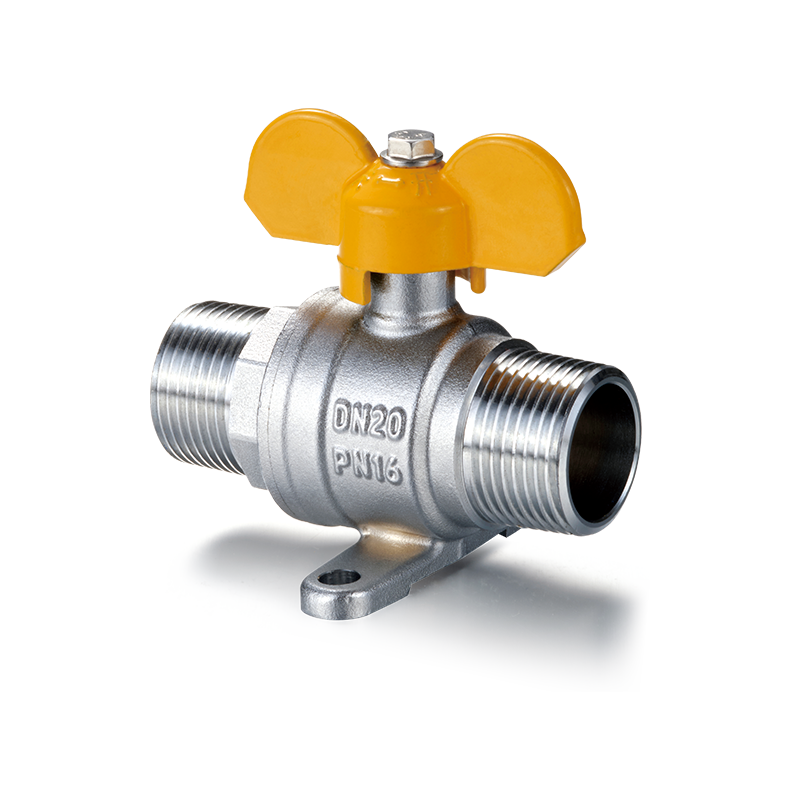
Handle configuration is not a cosmetic decision. It changes how you operate the valve, how much clearance it needs, and whether the handle can be locked or secured. Long-handle ball valves give you more leverage, which is useful when the handle has to break free from a hard water deposit or when the valve is stiff after months without movement. Short butterfly handles, by contrast, are compact, low-cost, and often the right choice when the valve sits in a tight space where a long lever would catch on surrounding pipes or insulation.
If the valve controls a water supply to an outside tap or a gas line from a meter cab, a lockable handle adds security and compliance value. Magnetic-lockable and mechanically-lockable designs stop unauthorised people from flipping the valve on or off. For industrial maintenance teams, these variants are not nice-to-have: they are part of the written isolation procedure.
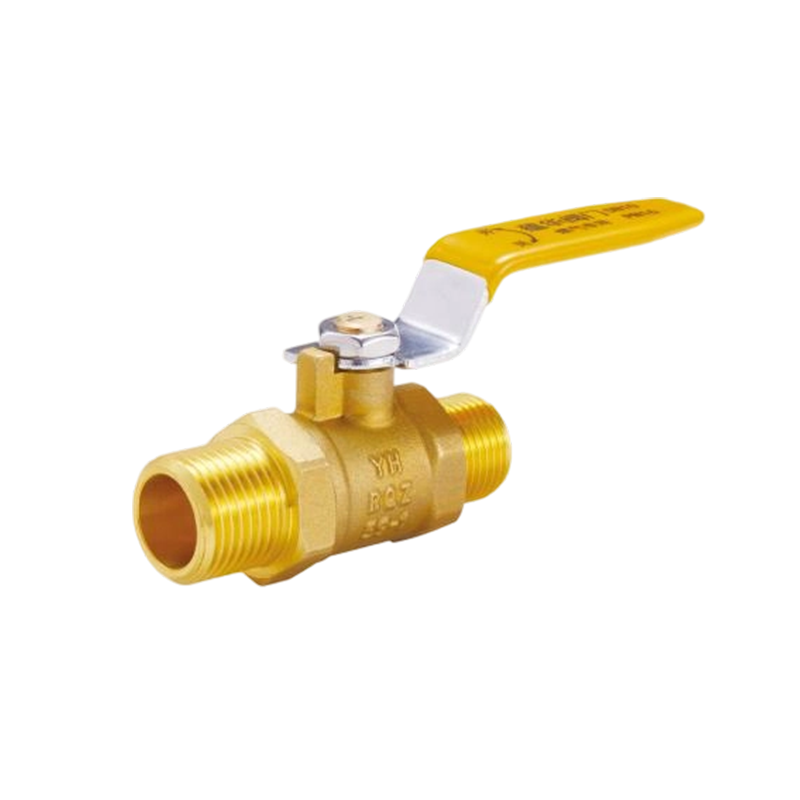
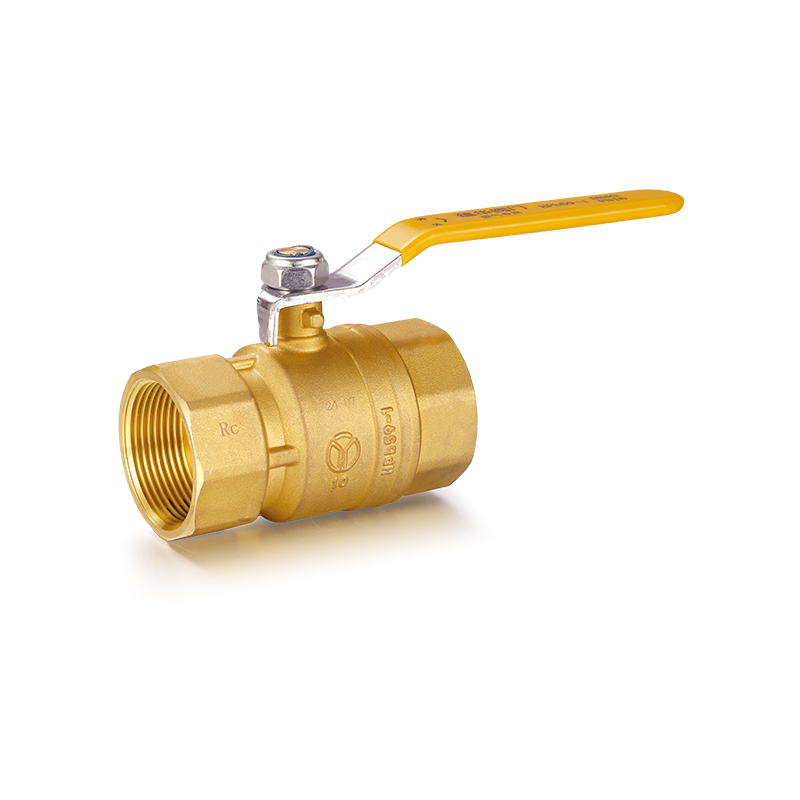
- Long handle: Better torque, easier to grip with work gloves, needs more space.
- Butterfly handle: Compact, lightweight, good for low-torque shutoff.
- Lockable handle: Allows padlock placement for lockout/tagout procedures.
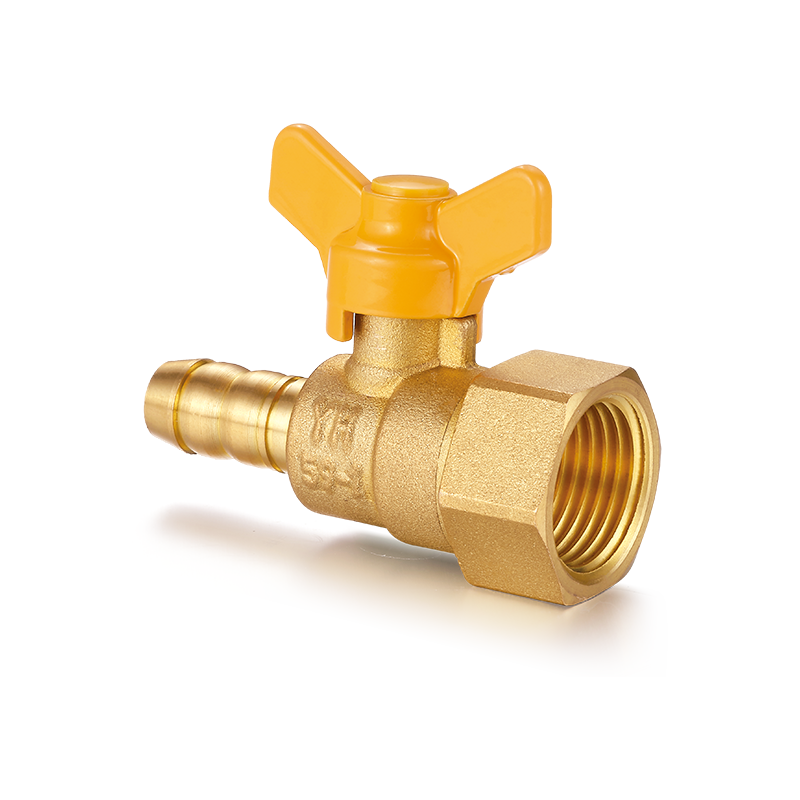
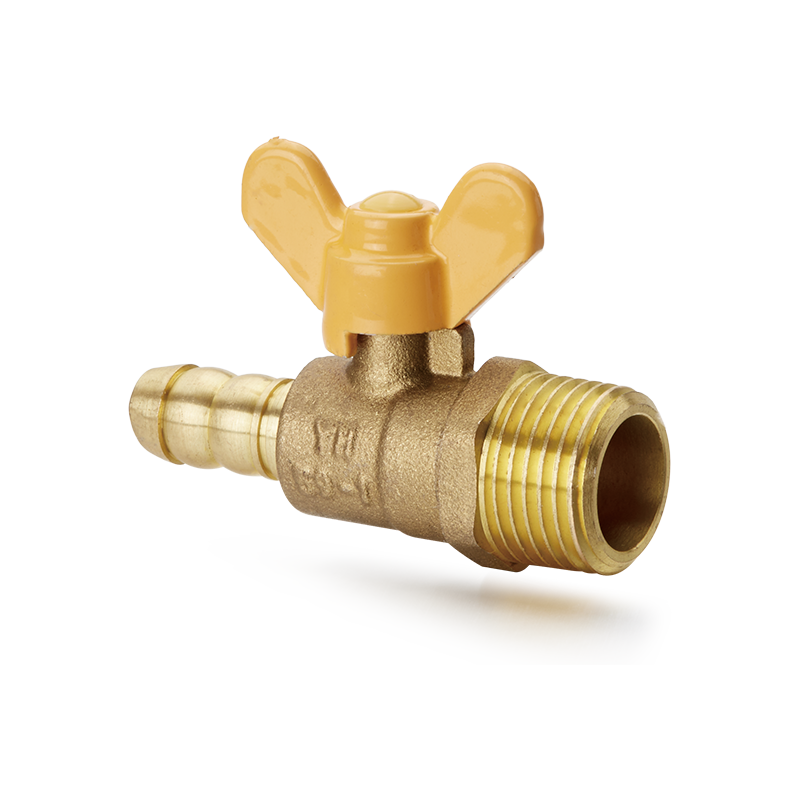
- Hose connector + butterfly: Designed for direct garden-hose attachment without additional fittings.
Full Bore vs. Standard Bore
One of the most common oversights when ordering brass ball valves is the bore difference. Standard-bore valves use a slightly reduced internal opening compared to the pipe's nominal diameter, which creates a modest pressure drop and a small restriction. Full-bore valves, by contrast, have an internal diameter that matches the pipe bore, allowing unimpeded flow. For irrigation lines and gravity-fed systems, full-bore is usually worth the extra cost: it reduces turbulence and allows small solids to pass through without clogging.
For gas lines, the distinction becomes a safety matter. A full-bore 1/2 BSP valve is often specified in gas installation guidelines because it does not add a hidden restriction to the flow path. As a rule, if the valve is installed for shutoff — not flow regulation — a full-bore design gives you the least interference and the most predictable system behaviour. To put it in the simplest terms: full bore costs more and gives you nothing but the correct hydraulic performance. That is exactly what a well-designed system needs.
When you need a 1/2 BSP full-port valve with a robust long handle, the full-port brass ball valve series offers a practical balance of pressure rating and flow capacity.
Materials and Ratings Worth Checking
The phrase “brass ball valve” can hide a surprising amount of variation. Some valves are made of dezincification-resistant brass, abbreviated DZR or referenced with the letter “R” in the material code. DZR brass is formulated to resist zinc leaching in aggressive water conditions, which extends the valve's usable life in hot-water and recirculating systems. Standard brass is fine for most cold-water and moderate-temperature applications, but if the water is soft, slightly acidic, or chlorinated, DZR is the safer choice.
Pressure and temperature ratings usually come stamped on the body or printed on the accompanying datasheet. A typical forged brass 1/2 BSP ball valve will carry a working pressure rating around 25 to 40 bar at ambient temperature. Threaded connections add a small weakness — they do not have the weld strength of a socket-weld or flanged joint. But for compressed-air lines up to 10 bar, domestic water supply at 4–6 bar, or low-pressure gas service, a properly installed BSP valve is well inside its comfort zone.
Design guidance for material selection: If you are working with drinking water, check the brass alloy meets your local potable-water standard. If the valve is exposed to freezing conditions, position it so that condensation drains away from the stem. And if the media is gas, the valve should be gas-rated rather than simply “brass” — the difference is usually visible in the test certification and the seat compound used.
Where a 1/2 BSP Brass Ball Valve Fits Naturally
Home brewing is one of the most visible uses. A 1/2 BSP ball valve screwed into a converted cooler becomes the drain tap for a mash tun, giving the brewer precise control over flow rate and the ability to shut off quickly when filling the kettle. In this scenario, the valve does not need to handle high pressure or extreme temperature — the workload is water at 65–78 °C and atmospheric pressure. What matters is food-safe construction, smooth internal surfaces, and a valve that does not seize after months of sitting between batches.
House maintenance and renovation projects are a close second. The same valve appears on hot-water tank outlets, behind washing machines, on radiator circuits, and in front of water filters. Plumbers choose it because it is compact, easy to replace, and compatible with a vast range of fittings already installed in older homes. Industrial use is equally common but usually more rigorous: pneumatic control panels, lubrication lines, wash-down stations, and atmospheric storage tanks all rely on this versatile valve.
Application tip: For installations where you need to connect a garden hose direct to the valve, look for the hose-connector variants rather than adding adapters. A valve with an integral hose connector offers one fewer thread to leak — and one fewer component to lose.
BSP Brass Ball Valve Buying Checklist
In summary, the selection of a 1/2 BSP brass ball valve comes down to a practical trade-off between the valve's internal design, its handle arrangement, and the materials used in construction. A standard-bore butterfly-handle valve will perform perfectly for appliance isolation on low-pressure water. A full-bore long-handle valve is the better choice when you have pressure-driven flow that must not be restricted. A lockable variant is the only justifiable choice where safety regulations require an obvious and secure isolation point.
- Check the actual thread standard: confirm G 1/2 parallel or R 1/2 taper if it matters for your fitting.
- Decide bore size: full bore if flow restriction is unacceptable or if you are working with gas.
- Check pressure rating: 20 bar working pressure is realistic for most brass 1/2 BSP valves; do not guess.
- Check temperature rating: PTFE seats handle typical hot-water systems, but confirm for steam or other hot media.
- Pick the handle that fits the space: long handles need clearance; butterfly handles save space.
- Specify the connection type: female thread, male thread, or hose connector — depending on what your pipework requires.
Keep in mind: The manufacturing quality of brass ball valves is not always visible in product photos. Reliable suppliers run pressure testing on every batch — or at minimum, statistically at the production line — and they maintain tolerances on the valve bore and stem sealing surfaces. When ordering in quantity, pay attention to certifications and factory quality procedures, not just the price per unit.



 English
  русский
  عربى
عربى  Español
 View More
 View More
 View More
 View More
 View More
 View More

 +86-0574-63742169
 No.104-128, Cizhang East Road, Zhangqi Town, Cixi City, Ningbo, Zhejiang Province, China

