1/2 in. ID Tubing, Barbed Brass Ball Valve: Getting the Fit Right the First Time
A practical guide to barb sizing, port bore, brass grade and clamp practice for hose-fed water, gas and fluid lines.
A 1/2 in. ID braided hose is pushed onto the barbed tail of a new brass ball valve, a stainless clamp is tightened, the handle is turned, and the joint starts weeping within a week. The clamp is rarely the culprit. In most cases the valve was ordered against the wrong half of the specification: a 1/2 in. NPT male thread instead of a 1/2 in. hose barb, a barb cut for 3/8 in. hose, or a reduced-port ball that starves the line before the hose ever sees full flow.
The short version: decide the hose ID first, then the port thread, then port bore, brass grade and clamp type. Get those five decisions in the right order and a barbed brass ball valve will outlast the hose connected to it.
What follows is how each decision plays out in real purchasing and maintenance work, including the numbers worth writing into a specification and the checks worth making before a shipment leaves the factory.
Why "1/2 Inch" Is the Most Expensive Ambiguity in Hose Fittings
In hose fittings, "1/2 in." almost always means the nominal inside diameter of the hose, about 12.7 mm. On a valve port, "1/2 in." means the pipe thread, either 1/2 NPT or 1/2 G (BSP parallel), where the outside thread diameter measures roughly 21 mm. The two numbers describe opposite ends of the same product, and catalogues rarely state which one they intend.
The result is predictable. A buyer orders a "1/2 in. brass ball valve," receives a body with 1/2 in. female ports and no barb at all, then adds a barbed adapter sized for 3/8 in. hose because that was the nearest item in stock.
Typical barb and thread combinations. Barb crest diameters vary by manufacturer and hose construction, so confirm the dimension on the supplier drawing before ordering.
| Nominal hose ID |
Metric equivalent |
Typical barb crest OD |
Common valve port thread |
| 1/4 in. |
6.4 mm |
0.27 to 0.30 in. |
1/4 NPT or G1/4 |
| 5/16 in. |
7.9 mm |
0.33 to 0.37 in. |
1/4 NPT or G1/4 |
| 3/8 in. |
9.5 mm |
0.39 to 0.43 in. |
3/8 NPT or G3/8 |
| 1/2 in. |
12.7 mm |
0.53 to 0.56 in. |
1/2 NPT or G1/2 |
| 5/8 in. |
15.9 mm |
0.65 to 0.69 in. |
1/2 or 3/4 NPT |
A caliper reading on the largest crest settles the question in seconds. If the crest measures close to the hose ID rather than slightly above it, the hose will slide on without resistance and leak under pressure, because a barbed joint seals by stretching the hose roughly 4 to 10 percent over the crest.
Info: The barb makes the seal; the clamp only stops the hose from creeping off the barb. No clamp can compensate for a crest that is too small for the hose.
Port Bore Decides Flow, Not the Barb
Two 1/2 in. brass ball valves can look identical from the outside and behave completely differently. A full-port valve has a ball bore close to the nominal pipe size. A standard or reduced-port valve typically opens to about 60 to 70 percent of nominal, which cuts flow capacity roughly in half at the same differential pressure.
The valve is only one restriction in the line. Count the barb tail, the adapter and the hose itself before blaming the ball.
Full port is worth the extra cost on gravity-fed tanks, low-head circulation pumps, long hose runs and any branch feeding an appliance that is sensitive to flow. Standard port is fine on short on/off branches where pump head is generous and pressure drop is irrelevant.
The barb tail adds a restriction of its own. Even on a 1/2 in. hose connector, the bore through the tail is often 8 to 10 mm, so a full-port ball upstream of a narrow tail is partly wasted. Ask for the tail bore dimension alongside the ball bore, and write both onto the order.
Thread, Barb and the End Combinations That Matter
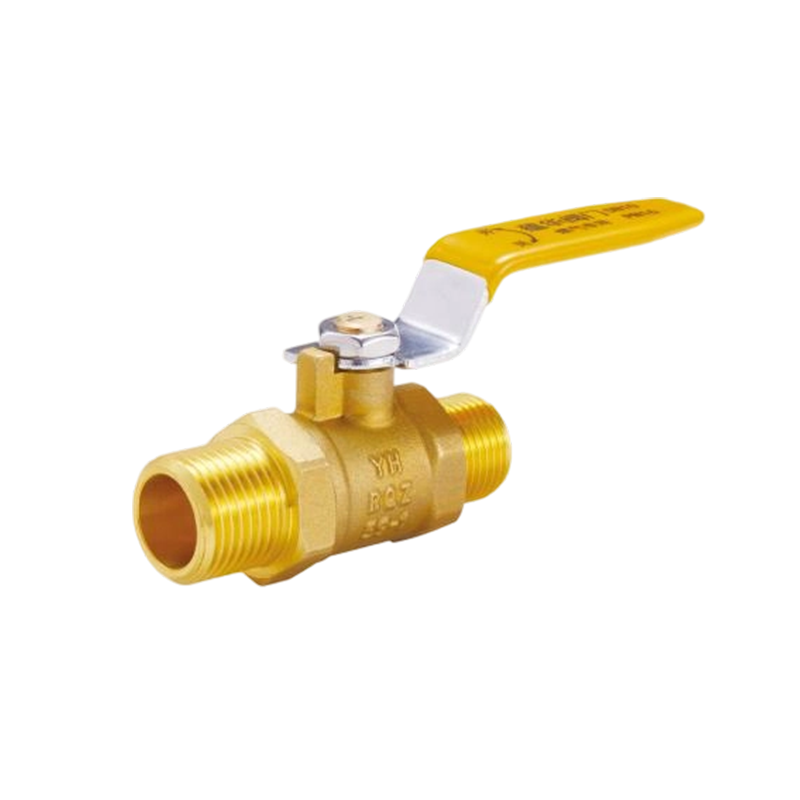
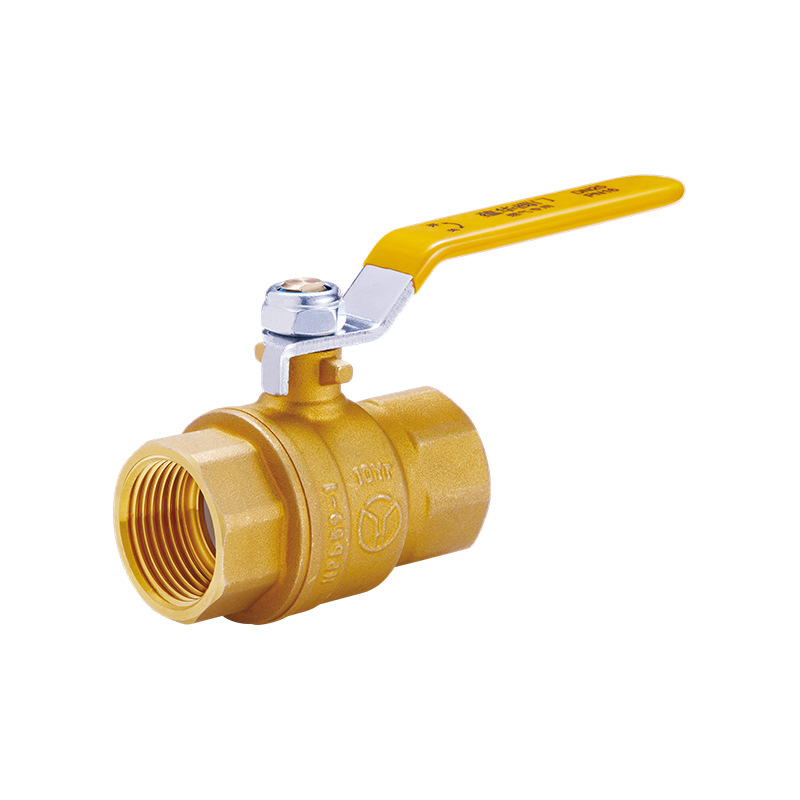
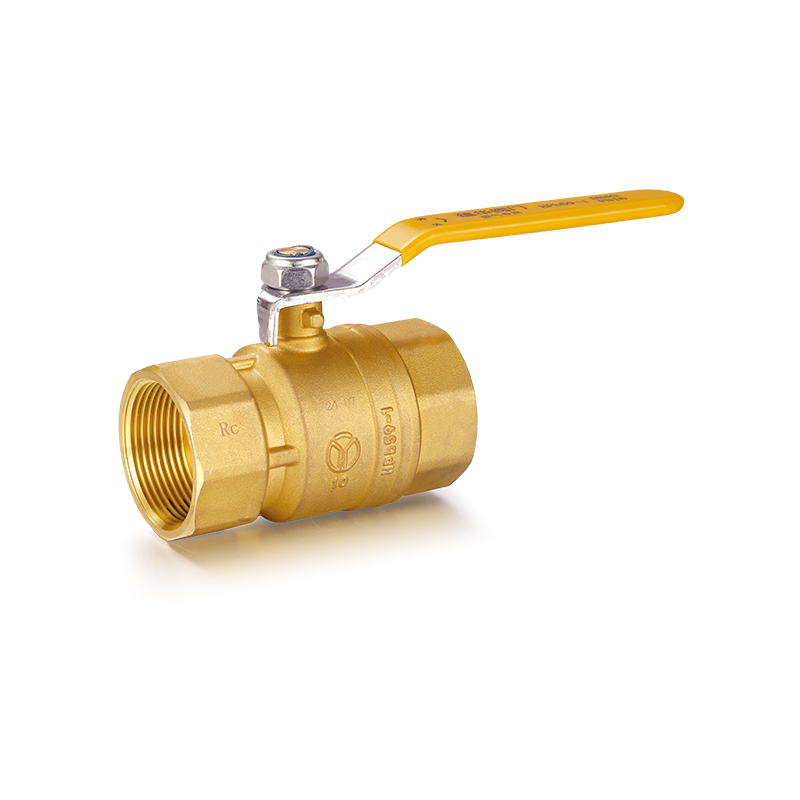
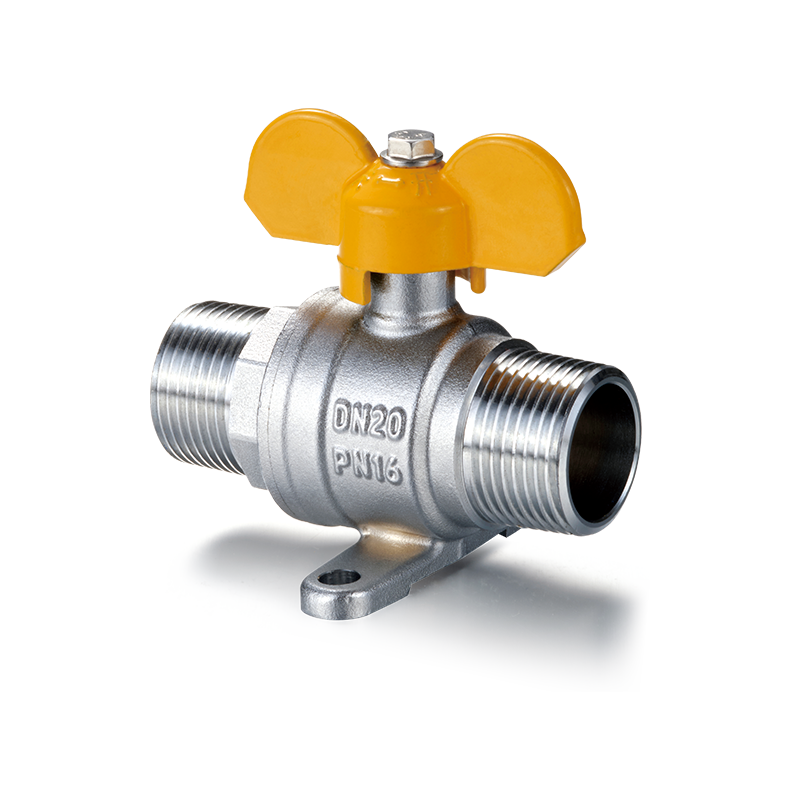
Brass ball valves are normally catalogued by the combination of their two ends: F-F, F-M or M-M, where F is a female threaded port and M a male threaded port. Hose versions are described separately as single or double hose connector bodies, and that distinction is usually what decides whether you need one adapter or none.
The thread standard deserves as much attention as the size. NPT is tapered and seals along the threads, which is why PTFE tape or paste works there. G (BSP parallel) seals on a flat face or washer at the shoulder, and wrapping the threads will not stop a leaking parallel joint. A G male threaded into an NPT female will engage a turn or two and then cross-thread; on imported valves this is one of the most common field failures.
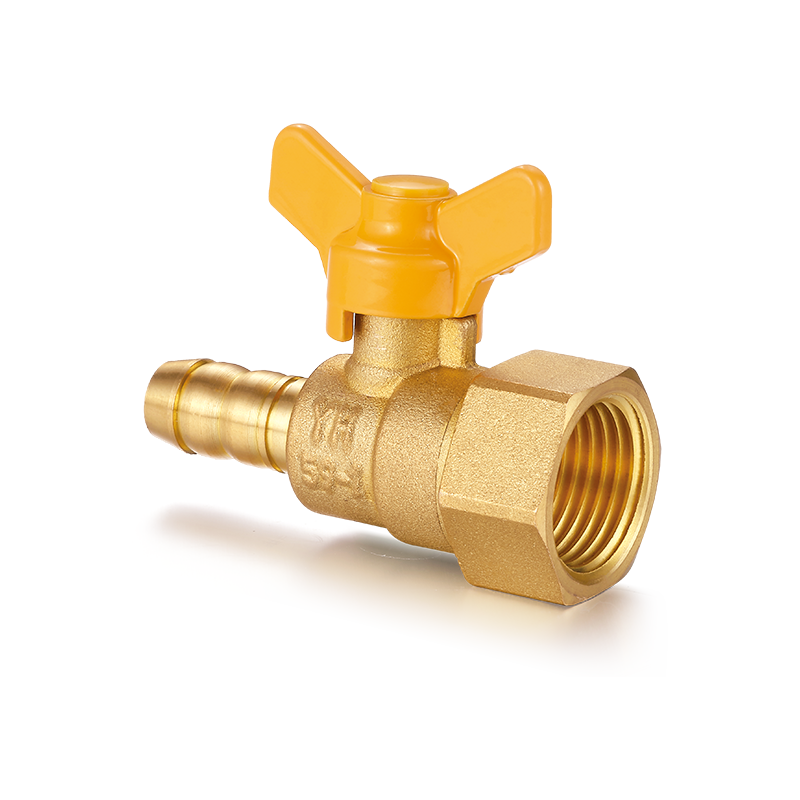
For a hose-fed line, the practical configuration is one threaded port into a filter, manifold or tank outlet, and one barbed end for the hose. Where both sides run to hose, a double hose connector body removes two adapters and two potential leak paths.
If the requirement is only the tail rather than a complete valve, the same [hose connector range](/product/hardware-accessories/hose-connector/) follows the same port and thread conventions, so a replacement tail can be matched to an existing body without re-threading.
Brass Grades and Lead Limits: The Part Most Buyers Skip
"Brass" is not a specification. The alloys most often used for valve bodies are C37700 forging brass and C36000 free-machining brass, and their zinc content of roughly 35 to 40 percent is exactly what makes them vulnerable to dezincification in soft, low-pH or high-chloride water. Dezincified brass turns porous and pink, loses strength, and eventually weeps through the wall rather than at the joint.
Where water chemistry is aggressive, or where a valve will sit in the line for decades, specify a dezincification-resistant grade such as CW602N, C46500 or an equivalent DZR brass. On a 1/2 in. body the price difference is small against the cost of replacing a joint behind a finished wall.
Lead is the second question. Potable water applications in the United States fall under NSF/ANSI 372, which caps the weighted average lead content of wetted surfaces at 0.25 percent, with NSF/ANSI 61 covering the material itself. Europe adds the Drinking Water Directive and 4MS listings, with tighter lead limits phasing in. For gas service, the separate question is whether the body is rated for gas at all: a valve approved for water is not automatically approved for fuel gas.
Warning: If a supplier can only describe the body as "brass" without an alloy designation or a material certificate, treat that as an open question rather than an answer.
Pressure, Temperature and the Weakest Link
A 1/2 in. brass ball valve is commonly rated around 600 psi WOG, meaning non-shock water, oil and gas, with a lower steam rating. That figure describes the valve with threaded ends. It says nothing about the hose pushed onto a barb.
Seat material sets the temperature window. PTFE seats in a standard brass ball valve are typically suitable from about -20 °F to 250 °F, or -29 °C to 121 °C. Above that range the seat softens and extrudes into the flow path. Thermal cycling is the slower killer: warm hose relaxes, the clamp loses tension, and a joint that passed a cold pressure test weeps after a month of hot water service.
In practice the clamp assembly limits the joint long before the valve body does. A single worm-drive clamp on warm 1/2 in. vinyl hose is not a 600 psi connection, whatever the nameplate says. For higher confidence, use two clamps set back to back, constant-tension or double-ear clamps, and a hose whose rated burst pressure sits comfortably above the system relief setting.
Danger: Never pressure-test a barbed joint beyond the hose manufacturer's rating. The valve may hold; the hose will not, and a burst hose at close range is a serious injury risk.
Installation Steps That Keep the Joint Dry
- Cut the hose square. An angled cut leaves a gap along one side of the barb.
- Check the hose ID against the barb crest with the hose at room temperature; warm vinyl stretches and hides a mismatch.
- Lubricate with water or silicone, never petroleum grease, which swells EPDM hose.
- Push the hose past the last crest, not just onto the first one.
- Seat the clamp behind the crest, on the hose, never on top of the barb.
- Support the valve body so hose weight and vibration do not hang on the barb.
- Test with the ball open, then closed, to separate a joint leak from a seat leak.
- Re-check clamp tension after the first thermal cycle.
Where both ends of the valve terminate in hose, a double hose connector body such as the YH208 removes two adapters and two places where a joint can fail.
Where Excess-Flow Protection Belongs
An excess-flow shutoff valve closes automatically when flow through the body rises above a set trip point, such as a burst hose, a broken fitting or a disconnected appliance. It is a mechanical device with no sensor and no power supply, which is why it appears on LPG and natural gas lines and, increasingly, on water lines feeding appliances in unoccupied buildings.
Two selection points matter. The trip point must sit above the system's normal peak flow, or the valve will nuisance-trip during filling. It must also sit below the flow a full-bore break would produce, or it will not trip when it should. Sizing the trip point against a measured normal flow beats sizing it against nominal pipe size every time.
What to Verify With a Supplier Before the Container Ships
- The alloy designation and a material certificate for the brass.
- A dimensional drawing stating barb crest diameter, tail bore and thread standard explicitly.
- The test regime: pressure and leakage testing, and whether it applies to every unit or by batch.
- Gas or potable water approvals, if the application requires them.
- Wall thickness and handle material, the two most common places where cost is quietly removed.
These checks are easier when the supplier manufactures rather than trades. A maker with in-house CNC machining, automated assembly and a dedicated test workshop can hold barb dimensions to a drawing batch after batch, which a trader cannot. Yunhua Valve, for example, reports a 20,000 square meter plant with automated machining and assembly lines and a separate test workshop, alongside annual capacity of roughly two million valve sets and ten million hardware fittings.
It also helps to see how a factory manages quality over time rather than on the day of an audit. A published account of [strengthening the quality management system](/news/company-news/strengthen-the-construction-of-the-quality-management-system-and-enhance.html) is a reasonable proxy for whether inspection records exist at all when a claim comes back two years after delivery.
The Short Version: Four Lines on the Drawing
- Hose ID first: a 1/2 in. ID hose needs a barb whose largest crest measures roughly 0.53 to 0.56 in.
- Port thread second: state NPT or G, and the size, in writing.
- Port bore third: full port for flow-sensitive lines, standard port where pressure drop is irrelevant.
- Brass grade fourth: DZR for aggressive water, lead-free for potable, gas-rated bodies for fuel gas.
Put those four lines on the drawing, add the clamp type and the test requirement, and a barbed brass ball valve stops being a gamble. The joint that weeps after a week is nearly always a specification that was never written down, not a part that failed. Buyers who specify all four dimensions up front spend their time installing valves instead of chasing leaks.
Success: Confirm four numbers in writing before ordering: barb crest diameter, port thread standard, ball bore and brass alloy. Everything else about the valve is secondary.



 English
  русский
  عربى
عربى  Español
 View More
 View More
 View More
 View More
 View More
 View More

 +86-0574-63742169
 No.104-128, Cizhang East Road, Zhangqi Town, Cixi City, Ningbo, Zhejiang Province, China

