


 English
  русский
  عربى
عربى  Español
Brass Ball Valve Applications and Their Importance for Industrial Uses
Content
The plant maintenance engineer once summarized every ball valve purchase decision in one sentence: "The valve that closes fast and stays closed is the valve that prevents the flood." When a line carrying water, gas, or process fluid has to be isolated, a quarter-turn of a brass ball valve often is the difference between a quick repair and a full facility shutdown. Brass ball valves earn their place in industrial plants because they combine fast, repeatable shutoff, low flow resistance, and corrosion resistance in a package that costs less than stainless alternatives.
This guide explains why brass ball valves are considered essential in industrial fluid systems, where they are used across industries, which types fit which installations, and what you should verify before purchasing them for a plant or project.
Why Brass Ball Valves Matter in Industrial Fluid Systems
The most important reason brass ball valves are specified in industrial piping is the quarter-turn operating principle. Inside the valve, a ball with a round bore rotates 90 degrees. When the bore aligns with the pipe, the flow path is unobstructed; when the ball turns perpendicular, the seats press against it and the line is sealed. The handle position tells the operator at a glance whether the valve is open or closed.
Brass is a practical body material because it machines cleanly, resists corrosion in water and many non-aggressive fluids, and holds stable pressure ratings at moderate cost. Most brass ball valves used in industrial service carry working pressure ratings in the PN16 to PN25 range and operate from about -20 degrees C to 150 degrees C, depending on the seat and seal material. With NBR or PTFE seats, they maintain tight shutoff across hundreds of cycles without the frequent attention that metal-seated gate or globe valves often demand.
| Characteristic | Brass ball valve | Gate valve | Globe valve |
|---|---|---|---|
| Turns to operate | One quarter turn | Many turns | Many turns |
| Flow resistance when open | Low with full port | Low | High |
| Shutoff reliability | Strong in clean media | Moderate after wear | Good with effort |
| Maintenance demand | Minimal | Packing and seat wear | Seat and disk wear |
| Best role | Fast isolation | Open and closed service | Throttling |
The comparison above explains why ball valves dominate isolation duty: they do not trade sealing quality for operating speed, and they require almost no day-to-day maintenance.
Main Industrial Applications of Brass Ball Valves
The practical value of a brass ball valve shows up across a broad set of industries, and nearly all of them share the same needs: fast shutdown, dependable sealing, and a valve that will not become the weak link in the pipe.
- Water supply and distribution: isolation at pump manifolds, branch lines, and meter bypasses. Full-port versions keep pressure loss low while the line is open.
- HVAC and hydronic heating: boiler isolation, radiator circuits, and chiller loops. Brass handles repeated thermal cycling and stays easy to turn.
- Compressed air and pneumatic systems: quarter-turn operation suits frequent maintenance isolation, and brass resists the moisture that condenses inside air lines.
- Low-pressure gas distribution: natural gas and LPG lines commonly use brass ball valves with gas-rated seals, and lockable handles help prevent unauthorized operation.
- Irrigation and washdown systems: hose-connector versions attach directly to flexible lines, so the valve sits exactly where the operator needs it.
- Light process and chemical lines: for non-aggressive media such as water, glycol, and many oils, brass delivers reliable sealing at a lower cost than stainless steel.
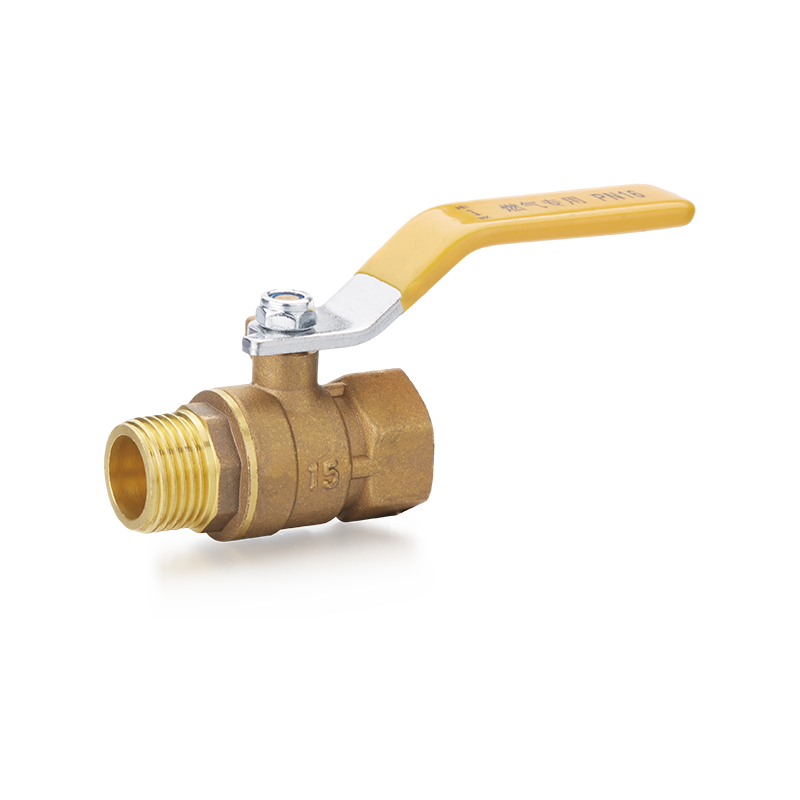
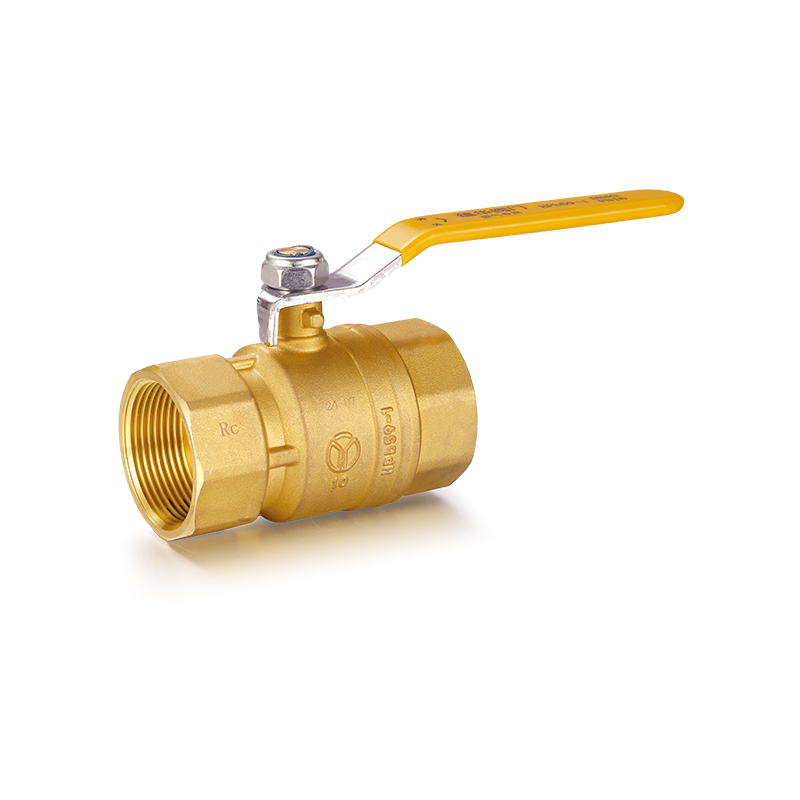
For water or HVAC mains, flow capacity is usually the first priority. A full-port brass ball valve keeps the internal bore equal to the pipe diameter, which avoids unnecessary pressure loss in the open position. The YH220 full-port brass ball valve with long handle is an example of this design, combining a full bore with the extra leverage required on higher-pressure lines.
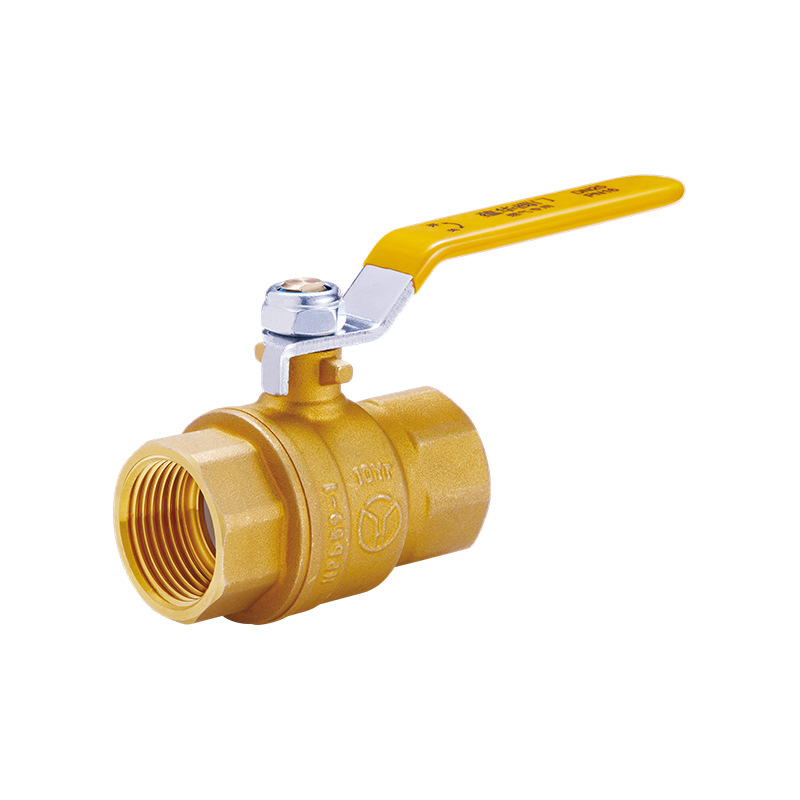 Wholesale YH-220 Full Port Brass Ball Valve with Long Handle(F/F) Suppliers, FacNingbo Yunhua Valve Co., Ltd. is China wholesale YH-220 Full Port Brass Ball Valve with Long Handle(F/F) suppliers and factory,Core Advan...View Product →
Common Brass Ball Valve Types and Where Each One Fits
Full port versus reduced port
Full-port brass ball valves have a bore that matches the pipe size, so the open valve creates almost no flow restriction. They suit main lines, pump suction piping, and any service where flow capacity is critical. Reduced-port valves use a smaller bore. They are more compact and cost less, so they fit branch lines and secondary duties where a small pressure loss is acceptable.
Body construction and connection styles
Two-piece brass ball valves are the workhorse of industrial isolation because they balance cost, strength, and ease of installation. Three-piece designs allow the valve center to be removed while the body stays in the pipe, which appeals to plants that schedule regular valve service. Connection details widen the application range further: female-female, female-male, and male-male threads cover standard pipe layouts, while base-mounted and right-angle ball valves solve tight installation angles.
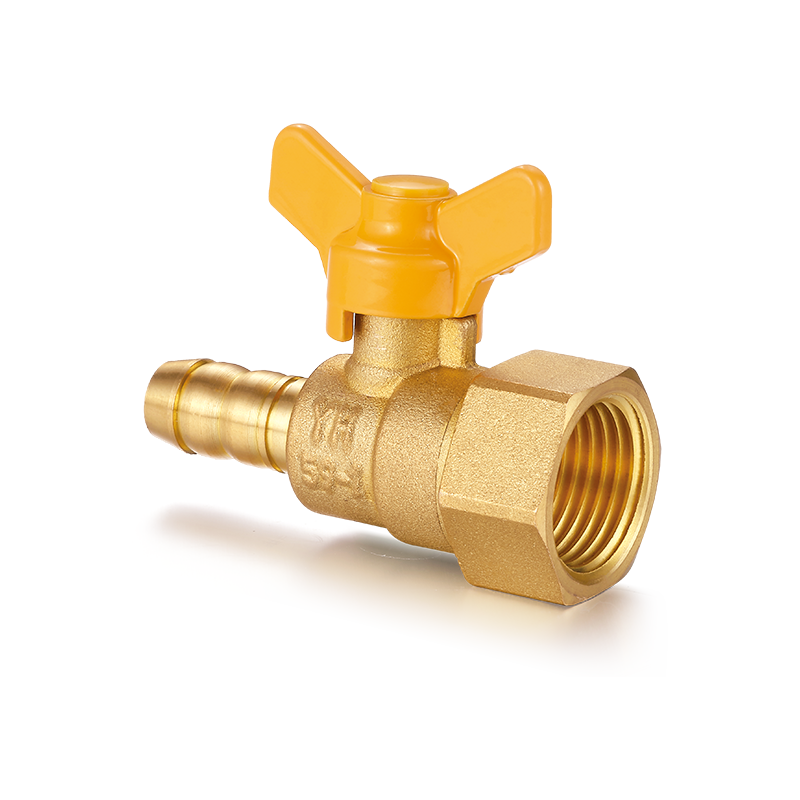
Flexible hoses create their own requirements. For a branch line that terminates in a hose, a brass ball valve with hose connector eliminates an extra fitting and makes replacement simple; miniature ball valves handle instrument panels and small-bore tubing where compact size and low torque matter more than full flow.
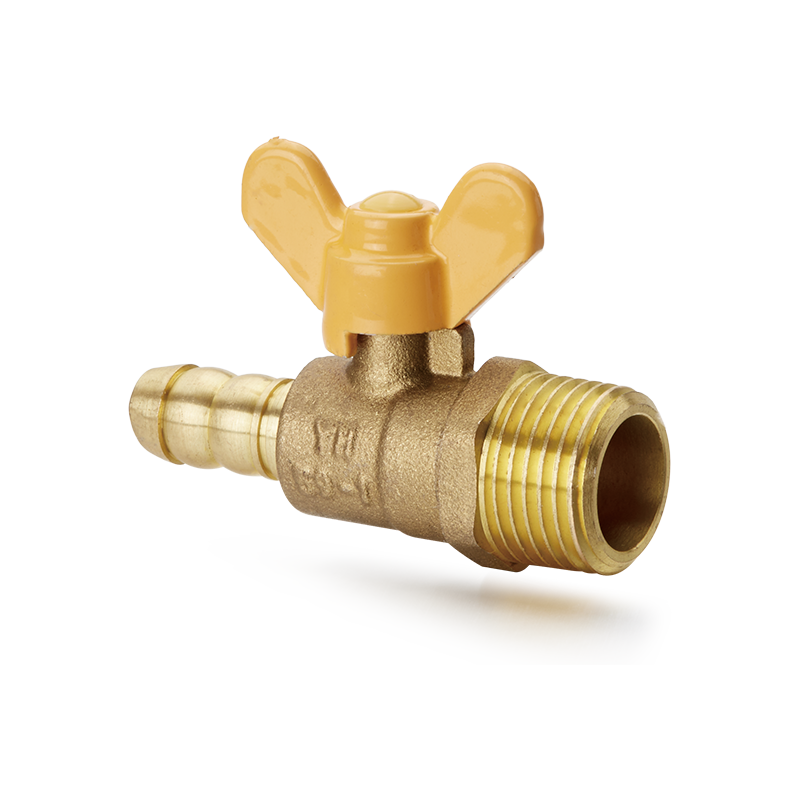 Wholesale YH-207 Brass Ball Valve with Butterfly Handle(M/hose connector) SuppliNingbo Yunhua Valve Co., Ltd. is China wholesale YH-207 Brass Ball Valve with Butterfly Handle(M/hose connector) suppliers and factory,Co...View Product →
Handle styles and tamper resistance
Handle choice is a practical detail that gets too little attention. Long handles provide more leverage and show the valve position clearly; butterfly handles fit enclosures with limited clearance; lockable handles keep the valve in a safe position during maintenance or stop unauthorized operation entirely. In plants with lockout procedures, a lockable brass ball valve works like a padlocked disconnect switch for a process line.
What to Check Before Buying a Brass Ball Valve
A brass ball valve is only as reliable as the sum of its material, thread quality, and testing. Most field failures do not start with the ball itself. They start with a valve selected without checking the media, the connection standard, or the manufacturer's quality evidence.
- Media compatibility: confirm that the body, seats, and seals can handle the fluid. Brass is a poor choice for acidic media or ammonia, aggressive water may require a dezincification-resistant alloy, and potable-water service usually demands a low-lead or lead-free alloy to meet drinking-water regulations.
- Pressure and temperature rating: match the valve class to the maximum system pressure and the full temperature range, not just to the numbers printed on the data sheet.
- End connections and thread standard: verify thread types and sizes such as BSP or NPT so the valve mates correctly with existing pipes, fittings, or hoses.
- Port type: choose full port when pressure drop matters, and reduced port when compactness or budget is the deciding factor.
- Handle and locking: use lockable versions when the line must stay closed during maintenance, or when equipment needs protection from tampering.
- Quality evidence: ask for pressure test records, leak test results, and material traceability, and inspect machining and plating consistency before committing to a large order.
In services where a burst hose or an uncontrolled flow is the main risk, an excess-flow shutoff valve closes the line automatically when flow rises above a set level. The brass excess-flow shutoff valve with hose connector is one example built for that safety duty.
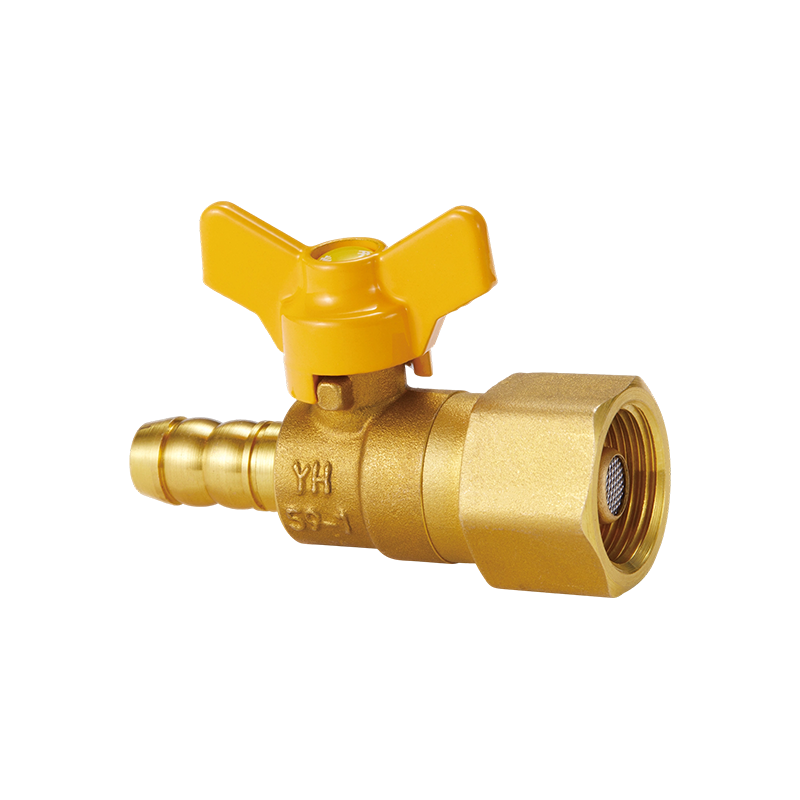 Wholesale YH-216A Brass Excess Flow Shut-Off Valve(F/Hose Connector) Suppliers,Ningbo Yunhua Valve Co., Ltd. is China wholesale YH-216A Brass Excess Flow Shut-Off Valve(F/Hose Connector) suppliers and factory,Core A...View Product →
Because brass ball valves are sold at very different quality levels, buying directly from an industrial valve manufacturer shortens the distance between design, production, and testing. That is also why plants increasingly evaluate manufacturers with mature quality management systems instead of choosing a vendor on price alone.
Brass ball valves have earned a default position in industrial piping for solid reasons: they close in a quarter turn, they hold pressure reliably, they cost less than stainless alternatives, and they keep working for years in water, gas, HVAC, and compressed-air service when the specification matches the actual condition.
Before you specify or replace one, take the extra minutes to check the port, the seal material, the thread standard, and the manufacturer's test record. That small effort separates a valve that is merely installed from one that earns its place in the line.
Related Products
-
 View More
-
 View More
YH-220 Full Port Brass Ball Valve with Long Handle(F/F)
-
 View More
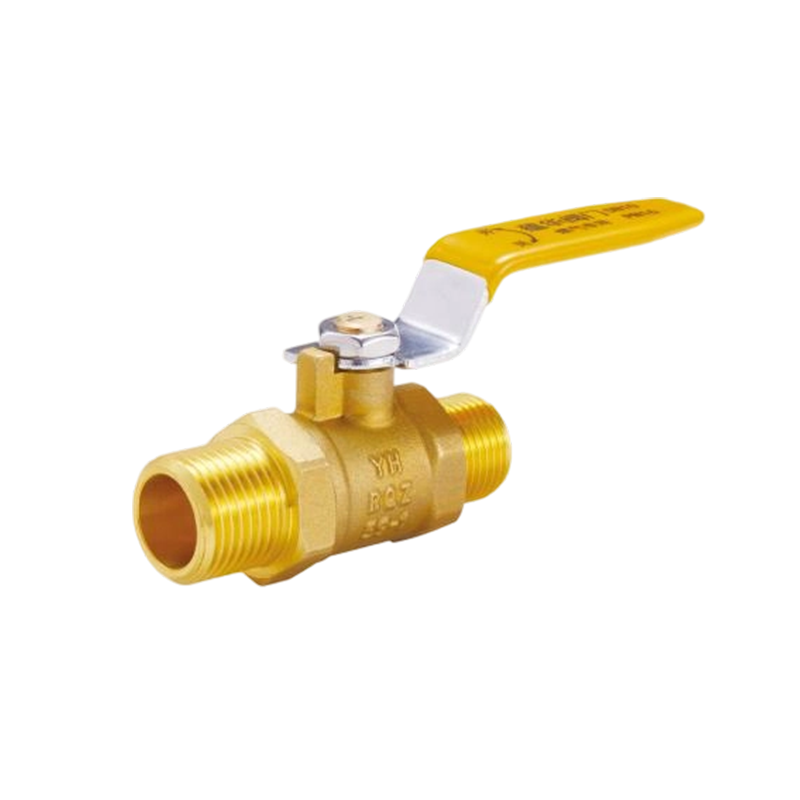
YH-202 Brass Ball Valve with Long Handle(F/M)
-
 View More
YH-201 Brass Ball Valve with Long Handle(F/F)
-
 View More
YH-216 Brass Ball Valve with Butterfly Handle(F/Hose Connector)
-
 View More
YH-207 Brass Ball Valve with Butterfly Handle(M/hose connector)
Related News
Contact Us
-

-
 +86-0574-63742169
 -
 No.104-128, Cizhang East Road, Zhangqi Town, Cixi City, Ningbo, Zhejiang Province, China


Message Us Now !
