Component Selection · Fluid Control
Small Valve. Serious Selection.
A brass mini ball valve often sits in the tightest corner of a system, yet it carries the same responsibility as valves many times its size. Getting the end connections, bore, and material right matters more than the small footprint suggests.
In a pneumatic control cabinet, a dozen miniature shutoffs may be squeezed between fittings. On a gas sampling train, the same compact valve must seal reliably for years without maintenance access. The brass mini ball valve is a workhorse component whose performance depends on how carefully its specification matches the working conditions.
What a brass mini ball valve is and when you need one
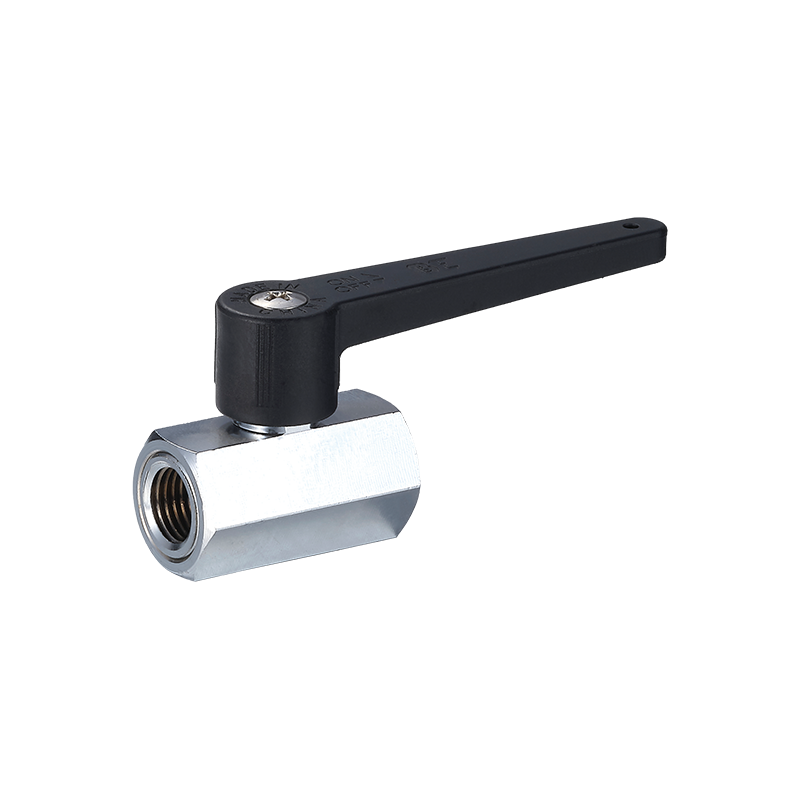
A brass mini ball valve is a compact quarter-turn shutoff device machined from brass, with a spherical ball that rotates 90 degrees to open or close the flow path. The mini label refers to the body size and handle reach, not the thread size. Miniature versions are built for small-bore lines, usually 1/8 in., 1/4 in., and 3/8 in. connections, where a standard valve body will not fit inside an instrument panel or machine skid.
You need one whenever the line is small and the space is smaller: pneumatic control panels, gas sampling trains, analyzer cabinets, cooling loops on compact equipment, and shutoffs under sinks. In those positions, a standard brass ball valve with a long handle would interfere with other components, while a mini version fits the clearance without sacrificing positive shutoff.
How it differs from a standard brass ball valve
Standard brass ball valves use larger bodies and longer handles for higher flow and easier operation. Mini versions trade some flow capacity for compactness, a fair trade in branch and instrument lines where the main job is reliable isolation for maintenance and safety.
Read the end-connection code before anything else
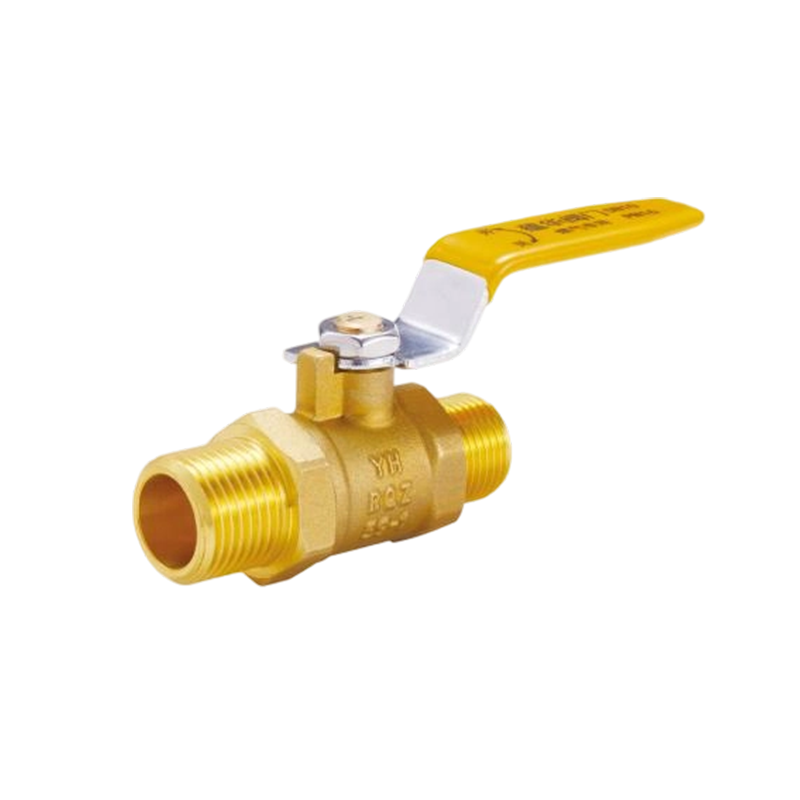
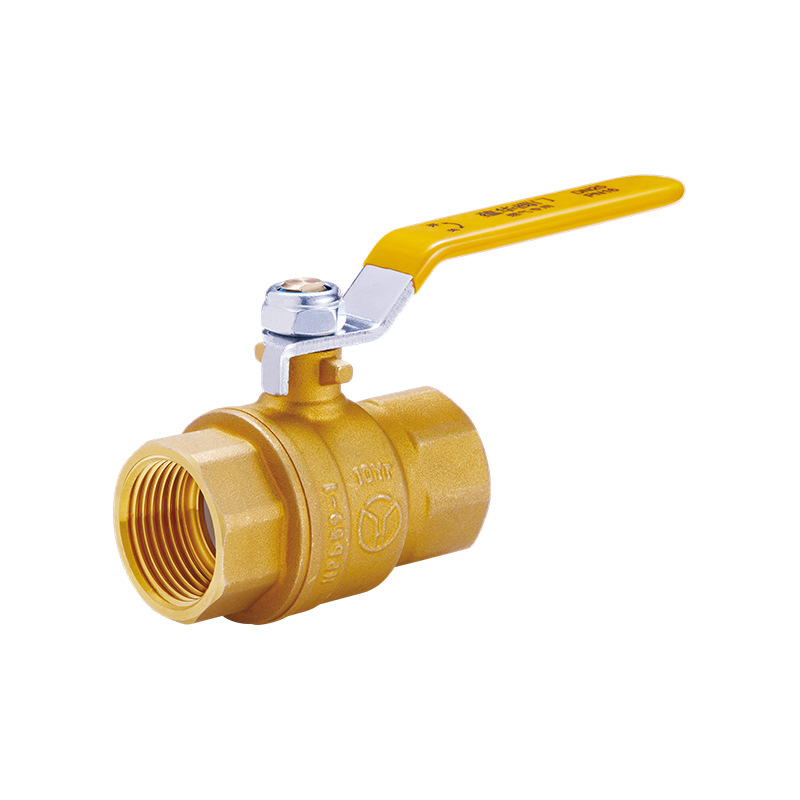
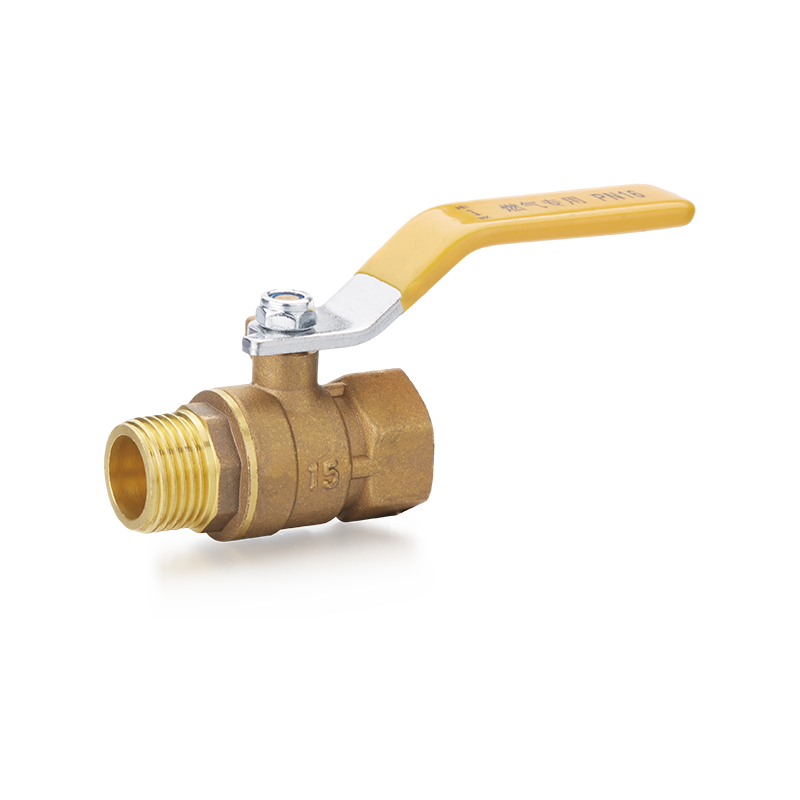
Brass mini ball valves are specified by the thread type on each side of the body. Two letters describe the valve: F for female threads, M for male threads. A valve marked F-M has a female inlet and a male outlet. This code is the most common source of ordering errors, because the same valve family is produced in several combinations and the wrong one only becomes obvious at installation.
End-connection codes describe the thread type on each side of the valve; reading them from the inlet side avoids most ordering mistakes.
| Code |
Inlet |
Outlet |
Typical installation |
| F-F |
Female |
Female |
Fits between two male-threaded pipe ends or nipples |
| F-M |
Female |
Male |
Connects a male-threaded supply to a female-threaded equipment port |
| M-M |
Male |
Male |
Slots directly into two female sockets, saving adapters |
| M-F |
Male |
Female |
Mounts on a male-threaded manifold outlet and provides a female socket downstream |
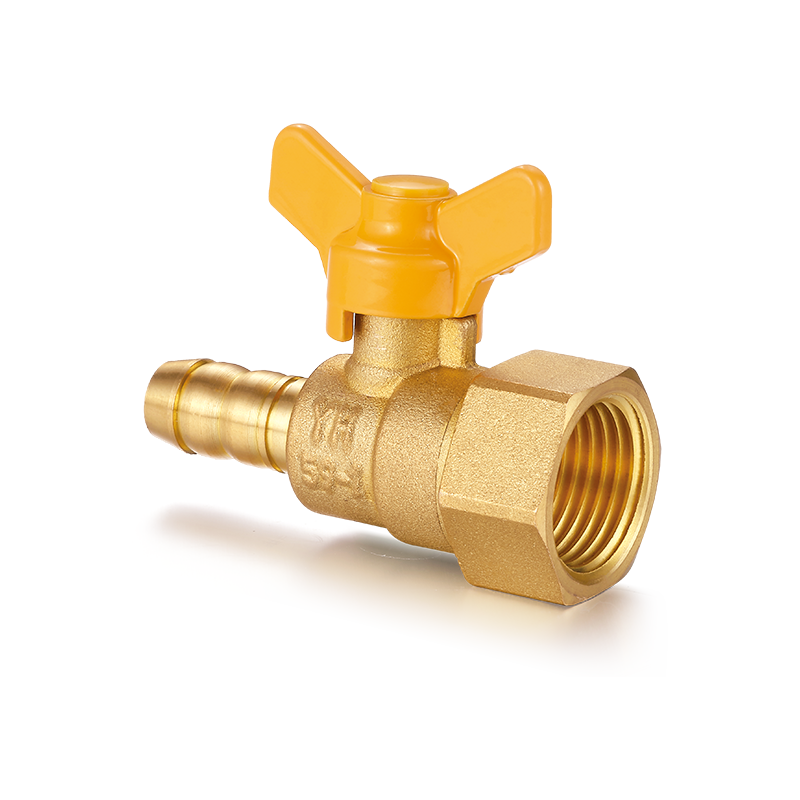
The M-F configuration deserves special attention in manifold design. A manifold block usually has male ports; an M-F mini valve screws directly onto that port and gives the downstream tubing a female connection, eliminating one adapter. Every saved fitting shortens the assembly and removes potential leak paths.
State the code explicitly when ordering, rather than describing the valve by handle type. A long-handle F-F valve and a short-handle M-M valve may look similar in a photo, but they fit completely different piping arrangements.
BSP and NPT threads are not interchangeable. Tightening a brass mini ball valve into a port with the wrong thread standard can strip the thread or crack the body; confirm the standard before installation.
Pressure, temperature, and flow: what the small size actually means
Many buyers assume a smaller valve has a lower pressure rating. In practice, a brass mini ball valve can be specified for the same nominal working pressure class as a larger brass valve, because the body is machined from solid bar rather than cast with a thin wall. The practical limitation is flow: a mini bore creates a higher pressure drop at the same volumetric flow.
In a mini ball valve, the bore is the real performance limit, not the body. If the line needs high flow, no amount of handle leverage will compensate.
For gas and fluid service, check the working pressure, the media temperature window, and the flow coefficient of the bore. If the circuit is flow-sensitive, choose the largest bore that still fits the envelope and compare it against the line size.
Five service factors that determine whether a compact brass ball valve stays reliable in a small-bore line.
| Service factor |
Why it matters |
What to verify |
| Working pressure |
The body and stem seal must tolerate system pressure peaks |
Rated pressure on the data sheet |
| Media temperature |
PTFE seats and seal compounds limit the thermal window |
Rated temperature range |
| Flow rate |
A reduced bore raises pressure drop |
Flow coefficient or bore diameter |
| Handle torque |
A short handle offers less leverage over a stuck ball |
Ball action and stem seal design |
| Thread standard |
BSP and NPT threads are not interchangeable |
Exact thread standard and gauge class |
Never extend a mini valve handle with pliers or a wrench to force it closed. The extra leverage can distort the brass body, damage the ball seat, or tear the stem seal, and these failures only appear after the valve is installed and pressurized.
Material and machining quality decide the service life
The brass alloy, the surface finish of the ball, and the precision of the machined threads decide whether a mini valve seals cleanly over thousands of cycles. A low-price valve can pass a visual check and still leak from a poorly cut thread or a ball that does not seat evenly. That is why the manufacturing process matters more than the product photograph: CNC consistency, automated assembly, and batch pressure testing make a compact valve repeatable across a full order.
For drinking-water systems, confirm the brass specification and lead-free compliance instead of assuming a copper-alloy body is suitable. For gas service, verify that the stem seal and seat are compatible with the media and that the valve carries the required test documentation.
Our production line pairs every machining stage with automated assembly and testing, so a finished mini valve reaches packaging only after the ball, thread, and seal have been checked. You can read more about that process in our report on continuous improvement in manufacturing capabilities and product quality.
A supplier that performs pressure testing and thread gauging on every batch removes many field failures before they start. Ask how testing is documented, not just whether it is performed.
Where a brass mini ball valve earns its place
Compact brass mini ball valves appear wherever a shutoff must be close to the point of use but the space around it is already occupied:
- Instrument air panels and pneumatic control cabinets
- Gas sampling lines and analyzer cabinets
- Cooling circuits on compressors and packaging machines
- Under-sink shutoffs in residential plumbing
In all of these positions, the valve is mounted once and expected to operate for years without maintenance access.
The same qualities make mini valves useful in building-scale systems, where utility networks are under pressure to fit more functions into less space. The ongoing upgrading of urban water supply and gas infrastructure is creating compact metering and branch-controller designs that need small, trustworthy shutoffs. For manifold and panel mounting in an extremely tight envelope, a short-handle M-M mini valve keeps the whole assembly inside the footprint of the connection itself.
A practical selection checklist for design and procurement
When specifying brass mini ball valves, work through the list below in order. It takes less time than a single field rework.
- Confirm the thread standard first: BSP, NPT, or a company-specific gauge. A perfect valve with the wrong thread is scrap at the job site.
- Match the end-connection code, F-F, F-M, M-M, or M-F, to the actual ports on the equipment.
- Check the rated pressure and temperature against worst-case service conditions, including pressure peaks.
- Evaluate the bore size against the required flow rate; choose a full-bore version if pressure drop matters.
- Look at handle orientation and clearance. A long handle suits recessed valves; a short handle suits exposed panels.
- Ask about material certificates, testing records, and marking so the valve can be traced back to its batch.
If the valve will handle potable water, request lead-free material documentation instead of assuming a copper-alloy body is automatically compliant.
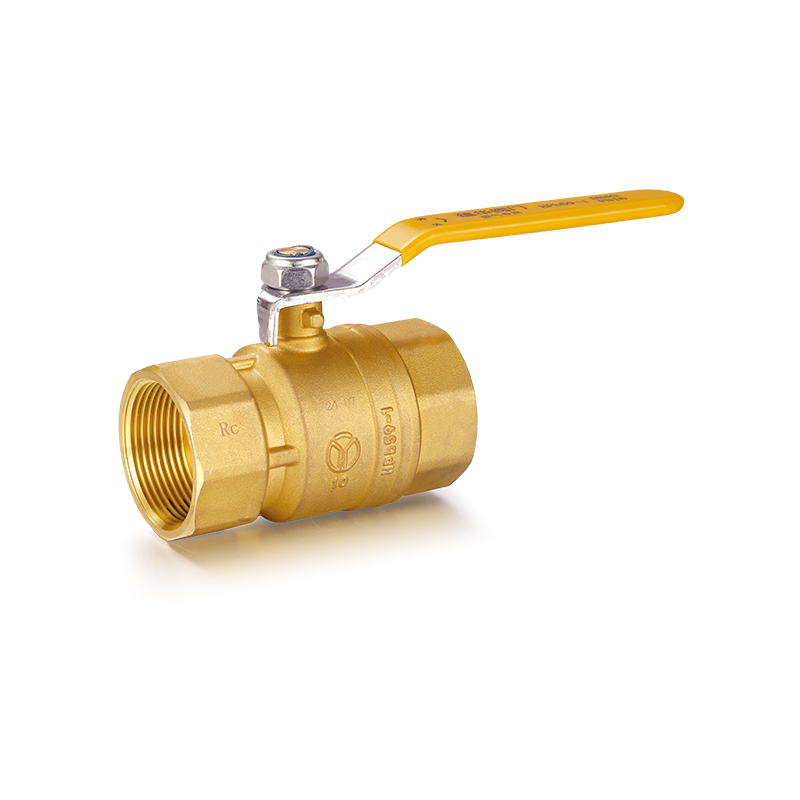
Handle style is not only a comfort issue. Long handles give more leverage and are preferred in recessed installations; short handles reduce the risk of accidental operation on exposed panels. A long-handle F-F version is the conventional choice for panel-installed shutoffs because the same body can serve both the inlet and outlet connections.
Why buying from the manufacturer changes the outcome
A distributor can supply a mini ball valve; a manufacturer supplies the specification behind it. Sourcing directly lets you align thread options, handle style, material grade, packaging, and test documentation with your bill of materials, and receive the same product every time the factory runs your order. That consistency matters most in OEM production, where a valve that drifts between batches creates rework far downstream.
A factory with CNC machining, automated assembly lines, and in-house testing can respond to specification changes faster than a trading company. It can also combine your mini valve order with matching brass ball valves, check valves, filters, and fittings in one shipment, which simplifies supplier management and freight. The right conversation is not about the lowest unit price; it is about the total cost of a valve that never leaks, never gets mis-threaded, and never arrives late.
Brass mini ball valves are small components with a disproportionate influence on uptime and safety. Start with the end-connection code, confirm the pressure and flow envelope, and choose a maker whose machining and testing can be verified. Get those three decisions right, and the smallest valve in your system will never be the one that fails.



 English
  русский
  عربى
عربى  Español
 View More
 View More
 View More
 View More
 View More
 View More

 +86-0574-63742169
 No.104-128, Cizhang East Road, Zhangqi Town, Cixi City, Ningbo, Zhejiang Province, China

