1/2 Inch 12VDC Brass Ball Valve: Getting the Body and the Actuator to Agree
Size, voltage and material look like a complete specification. They are not. Here are the decisions still open on the purchase order, and what each one costs at commissioning.
A skid builder orders five hundred 1/2 inch brass ball valves with 12V DC actuators for a solar-powered fertigation panel. The bodies arrive with ISO 228 (BSPP) threads; the manifolds on the panel are NPT. Nothing leaks at the valve. Everything leaks at the joint. Adapters, sealant, rework and a pushed-back commissioning date cost more than the valves did.
That is a specification gap, not a manufacturing defect, and it repeats itself in other forms: the actuator that stalls a few degrees short of the seat, the bore that turns out to be 8 mm when the drawing assumed 13 mm, the seal that hardens in the second summer of service.
Conclusion first: a 1/2 inch 12V DC brass ball valve is two purchased items, not one. The wetted valve and the actuator carry separate data sheets, tolerances and failure modes. Fix bore and Cv, thread standard, seal material, actuator torque with margin, voltage range, fail position and IP rating on paper before the order goes out. Where any one of those stays an assumption, the buyer carries the risk.
What "1/2 Inch 12VDC Brass" Really Describes
Three words carry four different meanings, and most order errors start there.
- 1/2 inch is the nominal connection size, DN15. It says nothing about the bore through the ball, which can range from roughly 5 mm to 13 mm at the same connection size.
- 12V DC is the control voltage. It is not a torque, duty or current rating, and those three numbers decide whether the valve actually closes against line pressure.
- Brass is a material family, not a grade. Alloy, dezincification resistance and lead content vary, and they matter most in drinking water and hot-water service.
Physically the product splits into two assemblies from two supply chains. The wetted valve is a brass body with a chrome-plated ball, two PTFE seats, a stem with double O-rings and two threaded end caps. The actuator is a motor, gear train, mounting plate or ISO 5211 flange, limit switches and wiring, usually with a manual override. The valve is normally selected by a piping engineer and the actuator by a controls engineer, and the combination is tested for the first time on site.
Port Size and Cv: The Number That Decides Your Pump Curve
For a 1/2 inch valve, the bore through the ball is the first thing to freeze, because it sets the flow coefficient and therefore the pressure drop your pump or head tank has to overcome.
Indicative ranges for 1/2 inch (DN15) brass ball valves at PN16. Confirm bore and Cv on the manufacturer data sheet before sizing.
| Configuration |
Ball bore (approx.) |
Typical Cv |
Pressure drop |
Where it fits |
| Full port |
12 to 13 mm |
5.5 to 8 |
Lowest |
Gravity and solar-fed lines, low-head pumps, dosing manifolds |
| Standard (reduced) port |
8 to 10 mm |
3.5 to 5 |
Noticeable above 10 L/min |
General isolation duty, short runs, compact manifolds |
| Mini ball valve |
5 to 7 mm |
1.5 to 3 |
Highest |
Instrument lines, sampling points, tight enclosures |
A reduced-port body is not defective. It is a different hydraulic device. On a 1/2 inch line carrying 12 L/min, the gap between full port and reduced port is a pressure drop you can read on a gauge, and on a solar-fed header it may decide whether the last emitter works at all.
Cv figures here are indicative ranges, not catalogue values. Brass ball valves of the same nominal size differ by manufacturer, by seat material and by the finish of the ball. Ask for a tested Cv at 100 percent open, or at minimum a bore dimension that can be measured on arrival.
Full-port long-handle bodies such as the YH220 pattern are the usual starting point when a 1/2 inch line has to stay close to the flow capacity of the pipe itself.
Thread Standards and End Configurations
Three thread systems appear on 1/2 inch brass valves, and they are not interchangeable.
- ISO 228-1 (G, BSPP): parallel, 55 degree form. It seals on a flat face washer or an O-ring, not on the thread itself.
- ISO 7-1 (R / Rp, BSPT): tapered, 55 degree form, sealing in the thread with sealant.
- ASME B1.20.1 (NPT): tapered, 60 degree form, also sealing in the thread, and it will not marry a BSPT thread reliably.
A G1/2 male thread will start into a 1/2 inch NPT female port by hand. It will also leak. On a manifold with twenty valves, that mistake is not a maintenance issue but a project milestone.
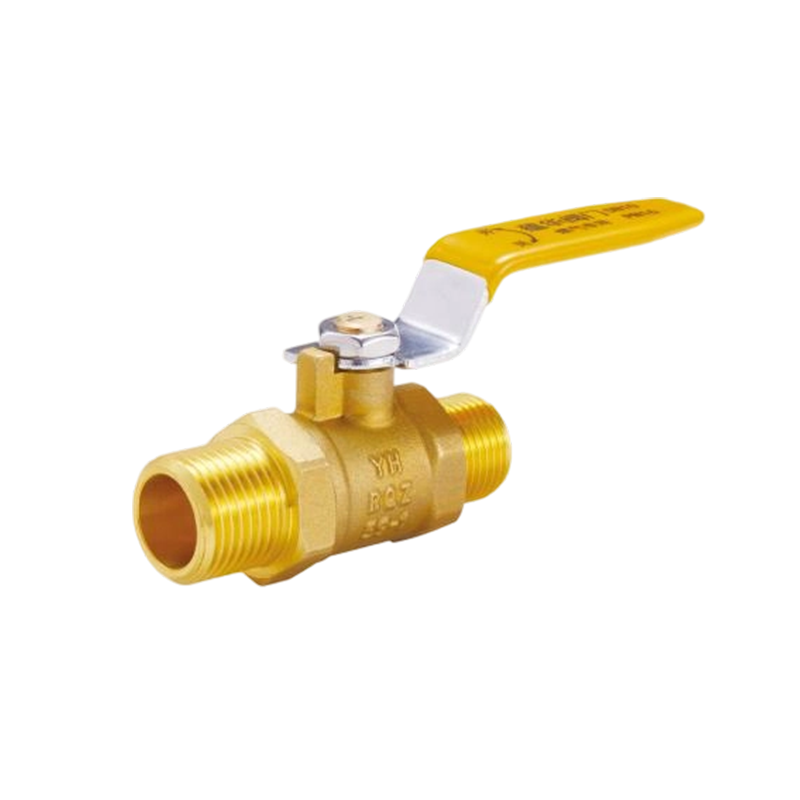
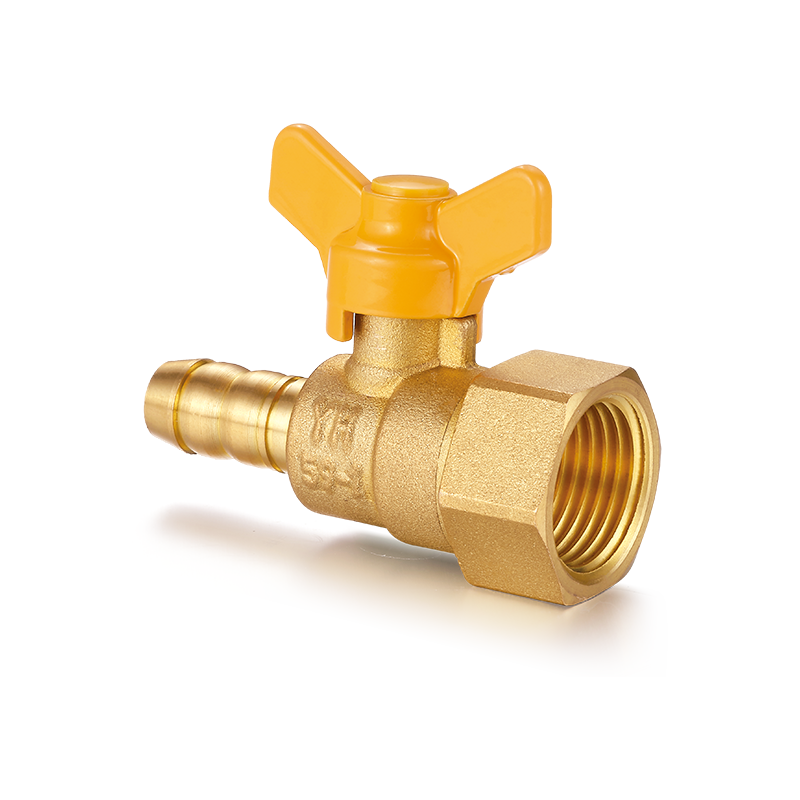
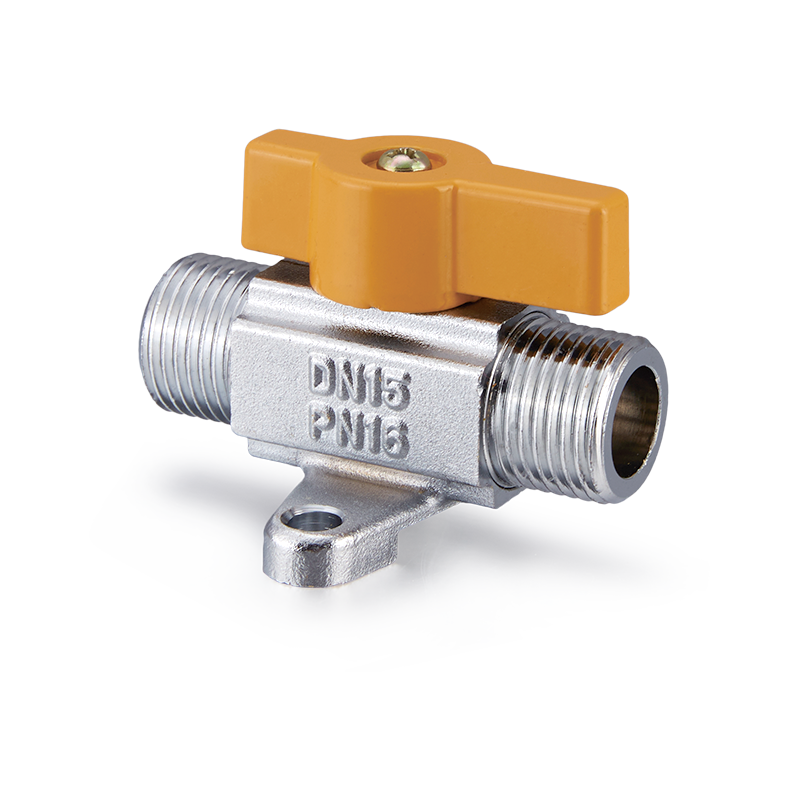
The second decision is the end combination. A female-female body drops into a line between two male nipples; a female-male body replaces a nipple or elbow in a tight assembly; a male-male body threads into two female fittings. Suppliers who publish those combinations per model, as Yunhua Valve does across its brass range, make the bill of materials easier to freeze before production starts.
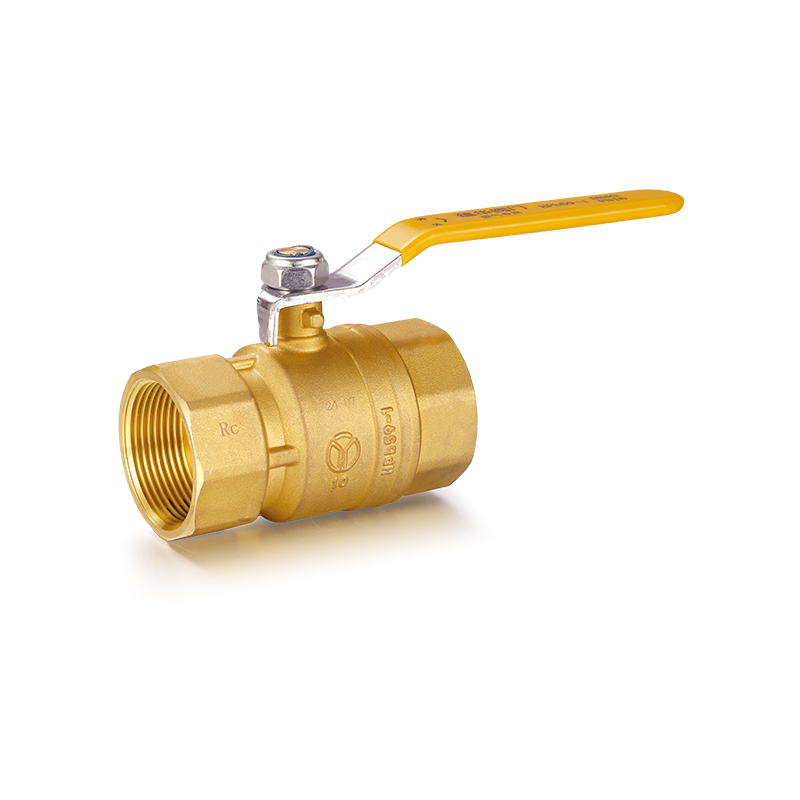
Standard F-F long-handle bodies such as the YH201 are the common reference point for 1/2 inch isolation duty on water and gas lines.
Matching the 12V DC Actuator to the Valve
Actuators are sold by torque, and the number that matters is not the catalogue torque of a new valve but its breakaway torque after months in service. A clean 1/2 inch brass ball valve with PTFE seats may break away at 2 to 4 Nm; the same valve after a season of hard water can need half as much again.
The field rule is to select an actuator rated at 1.5 to 2 times the valve's breakaway torque at line pressure. The margin is not conservatism for its own sake. An under-torqued actuator rarely fails wide open or fully shut: it stalls a few degrees short of the seat, and the valve weeps in a way that looks like a seat defect.
- Duty cycle: an on/off actuator cycling a few times a day is a different device from one holding position against a control loop.
- Cycle time: 5 to 15 seconds is typical at this size. If the control sequence assumes 3 seconds, the valve will always be late.
- Voltage window and current: a nominal 12 V battery system can sit at 10.5 V on a cold morning. Check the stated voltage range plus running and stall current against the fuse and supply.
- Enclosure and mounting: IP65 for sheltered outdoor use, IP67 for washdown, and a stem square plus bolt circle that matches the bracket. A 9 mm square stem with an F03 or F05 flange is common at 1/2 inch, but adapters are frequently required.
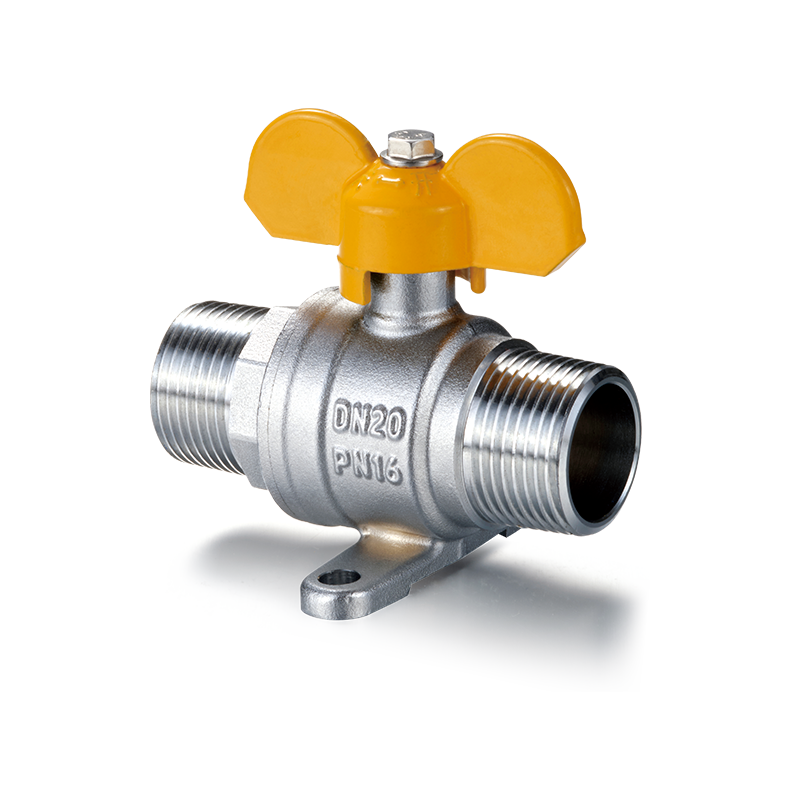
Many teams run the manual version of the same body in the real line first, then automate it. Compact butterfly-handle patterns such as the YH203 are handy during that trial because they fit inside a cabinet without changing the mounting.
Fail position is a process decision, not a catalogue option. A fail-closed valve on a line that must keep moving, such as freeze protection, cooling or continuous dosing, creates a hazard the moment power drops. Define what the valve must do with no power, then buy the spring-return or capacitor-return actuator that matches.
Seals, Media and Temperature
The brass body usually outlives the seals by a wide margin, so the seal set defines the real service envelope of the valve.
- PTFE seats: standard for water, air and most light fluids, roughly minus 20 to 120 degrees C depending on the stem O-ring.
- NBR O-rings: good with oils, fuels and water up to about 80 degrees C.
- EPDM: preferred for hot water and outdoor UV exposure, less suitable for mineral oil.
- FKM (Viton): chemical and high-temperature service, but a poor choice for hot water and steam.
A valve is only as dry as its weakest element. Bore, thread, torque margin and seal material are the four places where a saved dollar returns as a service call.
Two material points deserve a place in the specification when the line carries drinking water: dezincification-resistant brass, commonly designated CW602N or DZR, and a lead-content declaration against the applicable standard. Brass valves and brass fittings are regulated differently in several markets, so the declaration should name the valve.
Procurement Risks and an Ordering Checklist
Most of the cost of a wrong specification appears months later as returns, adapters, warranty claims and lost commissioning days. The following items cover the failures that repeat most often.
Never mix BSPP and NPT in one manifold without an adapter, and never verify a thread by hand-tightening. A mismatched pair threads two or three turns and stops, which feels like a tight fit and behaves like a leak.
- Bore and Cv confirmed for the required flow, with the source of the figure noted.
- Thread standard, end combination (F-F, F-M, M-M) and sealing method per port.
- Pressure rating and test standard, typically PN16 or 600 WOG at this size.
- Seal material matched to media, temperature and cycling frequency.
- Body alloy, dezincification resistance and lead declaration where required.
- Actuator torque at 1.5 to 2 times breakaway, duty cycle, cycle time, manual override.
- Voltage range, running and stall current, wiring type and fail position.
- IP rating, ambient range and mounting interface dimensions.
- Documentation: material certificate, pressure test record, RoHS or REACH statement.
A supplier with a managed quality system answers these questions from records rather than memory. That is what continuous manufacturing improvement looks like from the buyer's side: the same answer, twice, six months apart.
Ask for the data sheet and the test record with the quotation, not after the order. Two documents, submitted before production, remove most of the risk described here at no cost.
The Short Version
Treat the 1/2 inch 12V DC brass ball valve as two purchased items. Fix bore and Cv against the flow the line really needs, lock the thread standard and end combination before the bill of materials is frozen, choose an actuator with genuine torque margin and a defined fail position, and match the seals to the media and temperature. Every other comparison, price included, becomes easier once those five decisions are on paper.



 English
  русский
  عربى
عربى  Español
 View More
 View More
 View More
 View More
 View More
 View More

 +86-0574-63742169
 No.104-128, Cizhang East Road, Zhangqi Town, Cixi City, Ningbo, Zhejiang Province, China

