


 English
  русский
  عربى
عربى  Español
The 1/2 NPT Brass Ball Valve Inline: Sizing, Threads, and Buying Guide
Content
- 1 1/2 NPT Brass Ball Valve Inline: Sizing, Threads, and Buying Guide
- 2 What 1/2 NPT Means on a Brass Ball Valve
- 3 Port Geometry: Standard vs Full-Port Inline Valves
- 4 Handle Styles: Leverage, Visibility, and Safety
- 5 End Connections: F-F, F-M, and M-M Configurations
- 6 Brass Quality and Manufacturing Consistency
- 7 Pressure, Temperature, and Media Compatibility
- 8 Sourcing Checklist for Your Next Order
Brass Valve Selection Guide
1/2 NPT Brass Ball Valve Inline: Sizing, Threads, and Buying Guide
A practical reference for engineers and buyers specifying one of the most common brass valves in water and gas service.
A replacement order for a 1/2 NPT brass ball valve inline takes less than a minute when the part number is known. When it is not, or when a new supplier is being evaluated, the shorthand specification matters: 1/2 NPT defines the thread, brass defines the body material, and inline defines the flow path. What those terms do not define is the port diameter, the handle style, the end connection, or the quality of the machining. All of these choices affect how the valve performs and how long it stays reliable. This guide explains each specification element, highlights the practical differences, and gives you a checklist to use when comparing quotes.
The 1/2 NPT designation locks down the thread and the pipe size. Everything else about the valve is still your decision.
What 1/2 NPT Means on a Brass Ball Valve
1/2 NPT stands for 1/2-inch National Pipe Thread, a tapered thread standard used across North American plumbing and gas systems. The 1/2-inch size refers to the nominal pipe size, not the actual thread diameter. A 1/2 NPT male thread measures about 0.84 inches at the major diameter and uses 14 threads per inch. The taper, roughly 1.75 degrees from the thread axis, creates an interference fit that seals when the threads are tightened with a suitable sealant.
NPT threads rely on controlled deformation of the thread crests. That is why a 1/2 NPT ball valve must not be treated like a straight-thread fitting: the more it is tightened, the higher the radial force on the valve body. The rule of thumb — hand-tight plus one to two turns — is the design intent, not a casual suggestion.
| NPT Size | Nominal Pipe Size | Threads per Inch | Male Thread OD |
|---|---|---|---|
| 1/4 NPT | 1/4 in | 18 | 0.54 in |
| 1/2 NPT | 1/2 in | 14 | 0.84 in |
| 3/4 NPT | 3/4 in | 14 | 1.05 in |
| 1 NPT | 1 in | 11.5 | 1.32 in |
Sealing practice. Apply PTFE tape or a thread sealant approved for your media. Two or three wraps of tape, wound in the direction of the thread, are sufficient; over-wrapping can prevent the taper from engaging fully.
Port Geometry: Standard vs Full-Port Inline Valves
An inline brass ball valve can have a bore equal to the pipe's internal diameter, called full port, or a smaller bore, called standard port. The difference matters. A standard-port 1/2 NPT ball valve typically has a bore around 0.38 to 0.41 inches, while a full-port version matches the pipe's internal diameter at roughly 0.50 inches. That difference in area directly affects pressure drop and maximum flow.
For shut-off duty, where the valve stays fully open and some restriction is acceptable, a standard-port valve is often the economical choice. For supply lines where fixture performance depends on maintaining flow, full port is the safer option. Full-port bores also reduce turbulence and are easier to flush when the line carries debris or scale.
One example of a full-port configuration is the YH220, a long-handle brass ball valve with a full bore and a female end, intended for direct inline installation on 1/2-inch supply lines.
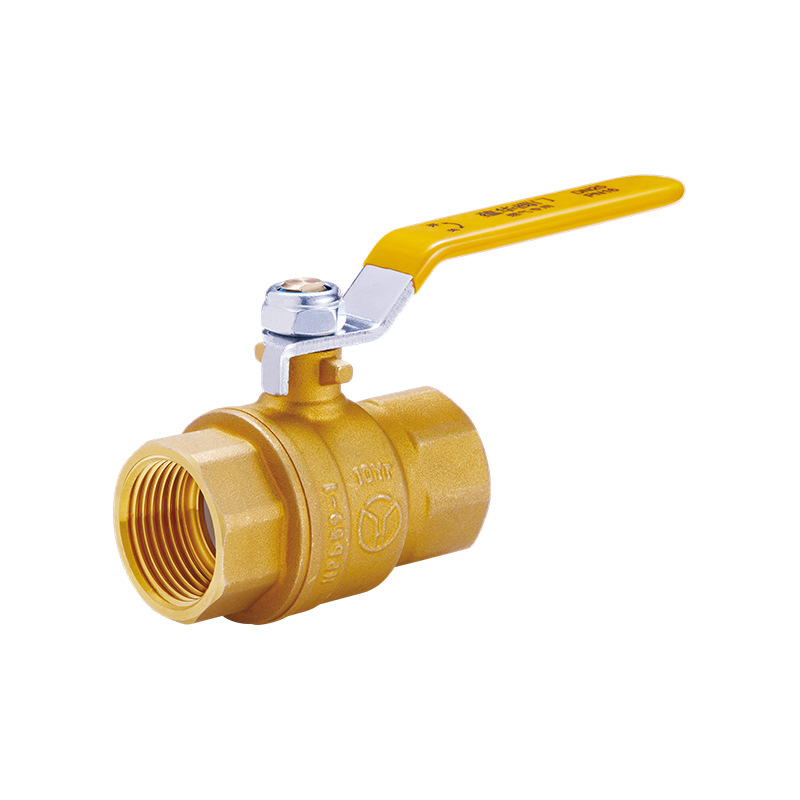 YH-220 Full Port Brass Ball Valve with Long Handle, F/FThis full-bore brass valve with female threads is built for 1/2-inch inline supply lines, offering reduced flow resistance and easier operation through its extended handle in medium-pressure systems.View Product →
Check the flow before substituting ports. Replacing a full-port valve with a standard-port model can create a measurable pressure drop at peak demand, which may affect pump performance and fixture output in longer supply runs.
Handle Styles: Leverage, Visibility, and Safety
The handle of an inline ball valve is the operator's interface with the valve, and its design affects more than appearance. Long handles provide better mechanical leverage, which helps when deposits increase turning resistance after years of service. Butterfly handles are compact, cost less, and show valve position clearly, but they produce less torque and can be awkward to grip in tight spaces.
Some installations benefit from a handle that can be locked, either to prevent tampering in public areas or to comply with lockout/tagout procedures. If a valve will be exposed to unauthorized operation, a lockable variant is worth specifying from the start.
For compact equipment enclosures, a butterfly-handle valve saves space. The YH203, with a female inlet and a male outlet, is a typical example of a 1/2 NPT inline valve designed for such conditions.
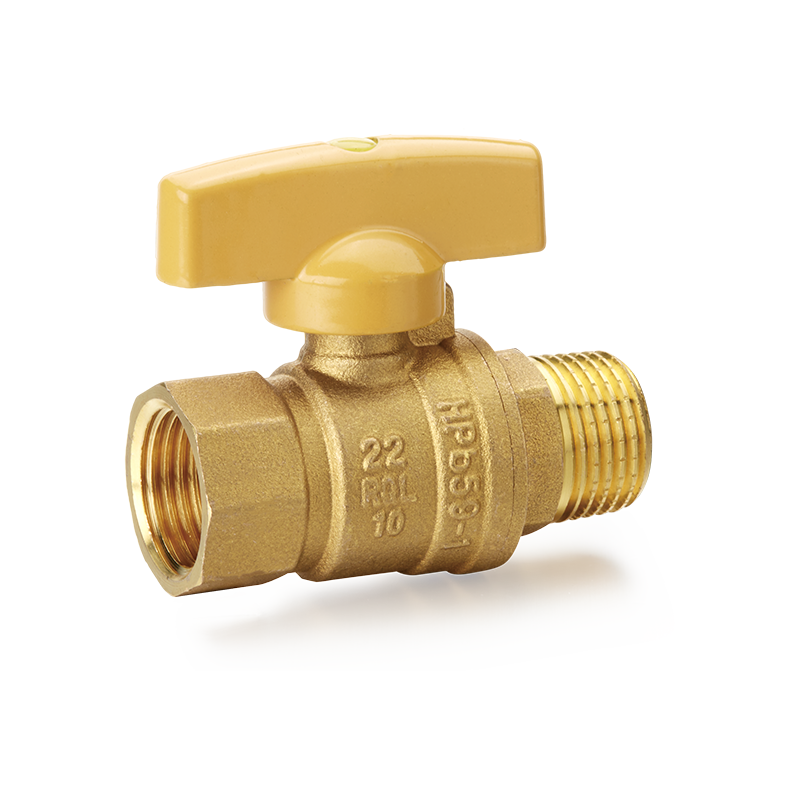 YH-203 Brass Ball Valve with Butterfly Handle, F/MDesigned for compact spaces, this female-male valve pairs a base-free butterfly handle with an anti-ejection stem, fitting tight areas while providing reliable shutoff for gas, water, or oil.View Product →
End Connections: F-F, F-M, and M-M Configurations
The end connections determine how the valve integrates with the surrounding piping. Female-female (F-F) valves are the standard choice for replacing components in a threaded line, because both sides accept standard nipples. Female-male (F-M) versions eliminate one coupling, reduce the number of potential leak paths, and shorten the installed length. Male-male (M-M) valves appear less often, usually in compact or panel-mounted installations.
The trade-off is installation convenience versus joint count. An F-M valve saves a fitting, but it must be oriented correctly during installation: once the tapered male thread is engaged and sealed, the body orientation is fixed. F-F valves can be adjusted slightly before the second nipple is secured.
A typical female-to-female inline valve, the YH201 long-handle brass ball valve, is well suited for replacing an existing component in a threaded 1/2-inch line.
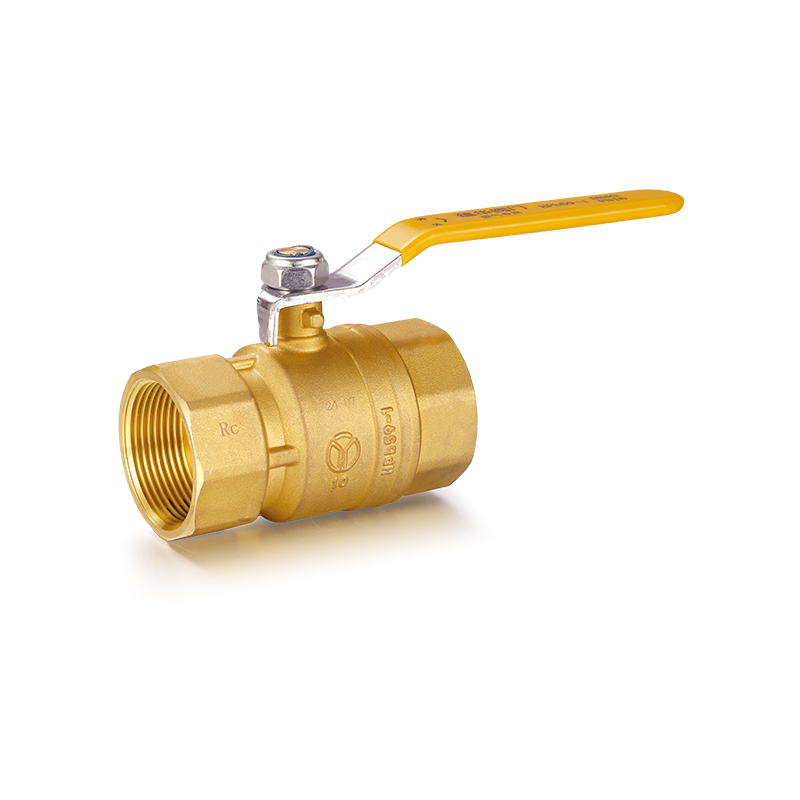 YH-201 Brass Ball Valve with Long Handle, F/FA standard female-to-female inline valve for threaded 1/2-inch lines, its long lever reduces operating torque and suits frequent use in gas, water, and non-corrosive fluid applications.View Product →
Brass Quality and Manufacturing Consistency
The label "brass ball valve" covers a wide quality range. Three checks separate dependable valves from valves that cause problems later.
- Body surface. A smooth, even surface without porosity or flash indicates a clean forging or casting. Porous castings can leak slowly through micro-channels under pressure.
- Weight. A valve that feels light for its size usually has thinner walls and less material around the stem and seat area.
- Material certification. For drinking water lines, the valve should comply with lead-free requirements — typically lead content below 0.25 percent — and carry the relevant certification.
Internal finish matters just as much. A ball that is rough or out of round will wear PTFE seats faster, and the handle will feel stiff as the seat deforms. Manufacturers that control ball surface finish during production, rather than relying on final inspection alone, deliver more consistent valves.
A well-made valve, long service. A properly installed 1/2 NPT brass ball valve should give years of reliable shut-off with no maintenance beyond an occasional full 90-degree exercise to keep the seats clean.
Pressure, Temperature, and Media Compatibility
Brass inline ball valves are rated for water, oil, or gas service at a maximum working pressure, commonly stated as WOG. A valve rated 600 WOG, for instance, is suitable for service up to 600 psi with water, oil, or gas at ambient temperature. At elevated temperatures, the allowable pressure drops because the PTFE seats soften and the brass body loses mechanical margin.
For most residential and light commercial water systems, a standard brass ball valve has more pressure capacity than the system will ask for. Gas installations are different: local codes may require specific approvals, and the valve must be listed for gas service. Always confirm the manufacturer's documentation before using a ball valve in a gas line.
Media compatibility is straightforward. Brass suits water, oil, and dry or natural gas, but not acidic fluids or saltwater. In corrosive environments, select a different body material.
Long-term demand for brass supply valves is also structural. Urban water and gas infrastructure upgrades continue to drive steady demand for reliable supply valves as aging distribution networks are replaced.
Respect the rating. Never exceed the valve's WOG rating, and derate for high-temperature service. Overpressure can deform the seats, crack the body, or force the stem to leak — failures that always cost more than the valve itself.
Sourcing Checklist for Your Next Order
Whether you are buying a handful of spares or planning a container shipment, this checklist keeps the purchase aligned with the application:
- Confirm the thread: 1/2 NPT, 14 threads per inch, tapered.
- Decide full port or standard port based on the acceptable pressure drop in the line.
- Specify F-F, F-M, or M-M to match the surrounding piping.
- Choose a handle style that fits the space and the required operating torque.
- Verify brass material and any drinking-water certification required.
- Request test documentation when the valve will be used in critical service.
Buying from a manufacturer that controls machining, assembly, and testing in-house simplifies several of these steps. Ningbo Yunhua Valve produces brass ball valves and related fittings in a dedicated facility with automated production and test equipment, keeping quality consistent across batches. To start, review the complete brass valve product range and shortlist the models that match your specification.
Once the thread, port, end connection, and material are confirmed, ordering a 1/2 NPT brass ball valve inline becomes a straightforward purchasing decision with clear acceptance criteria.
Related Products
-
 View More
-
 View More
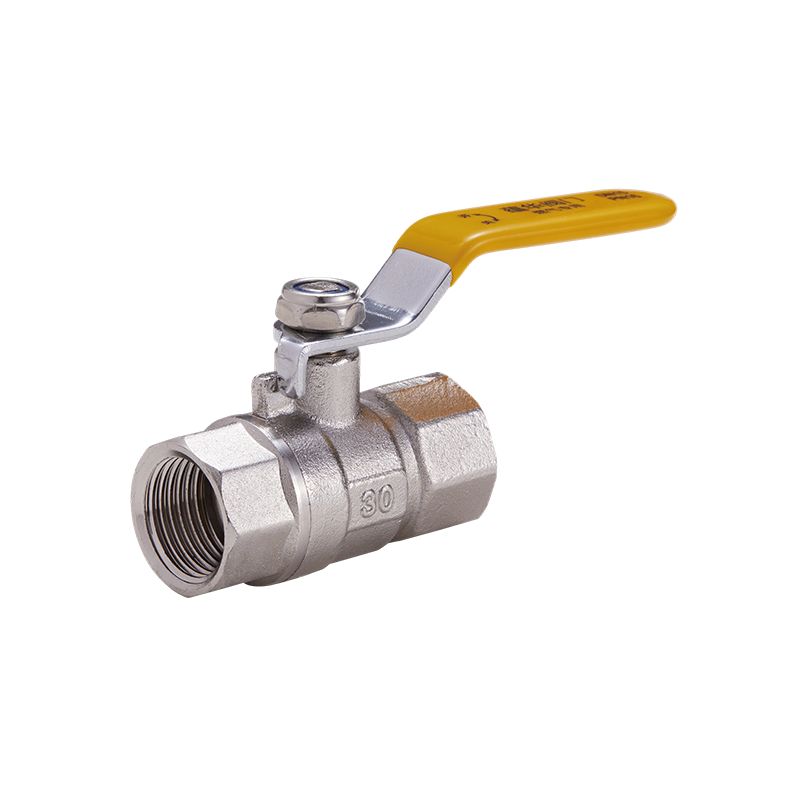
YH-201 Brass Ball Valve with Long Handle(F/F)
-
 View More
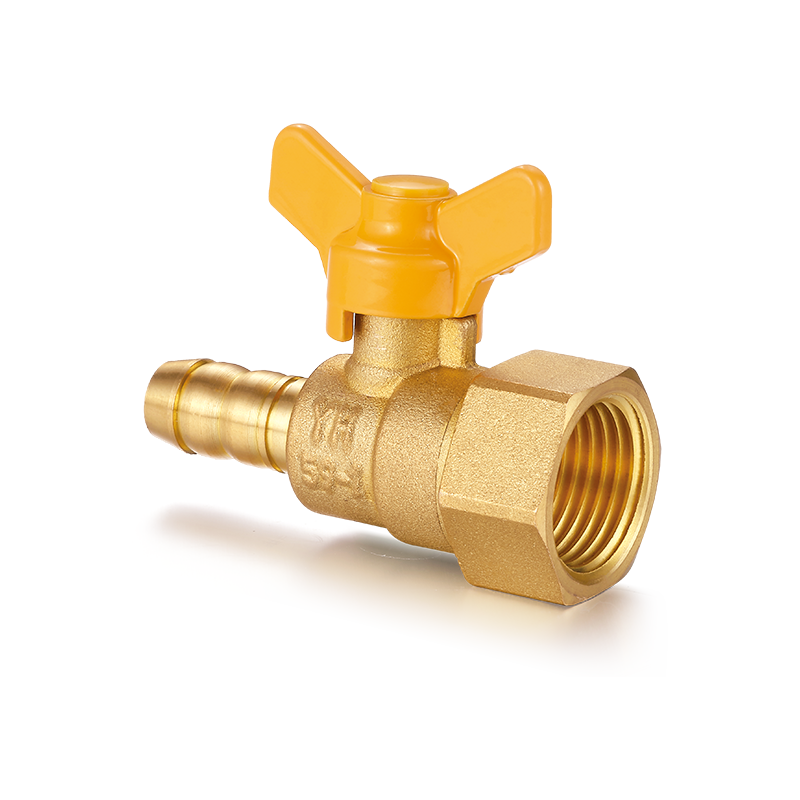
YH-216 Brass Ball Valve with Butterfly Handle(F/Hose Connector)
-
 View More
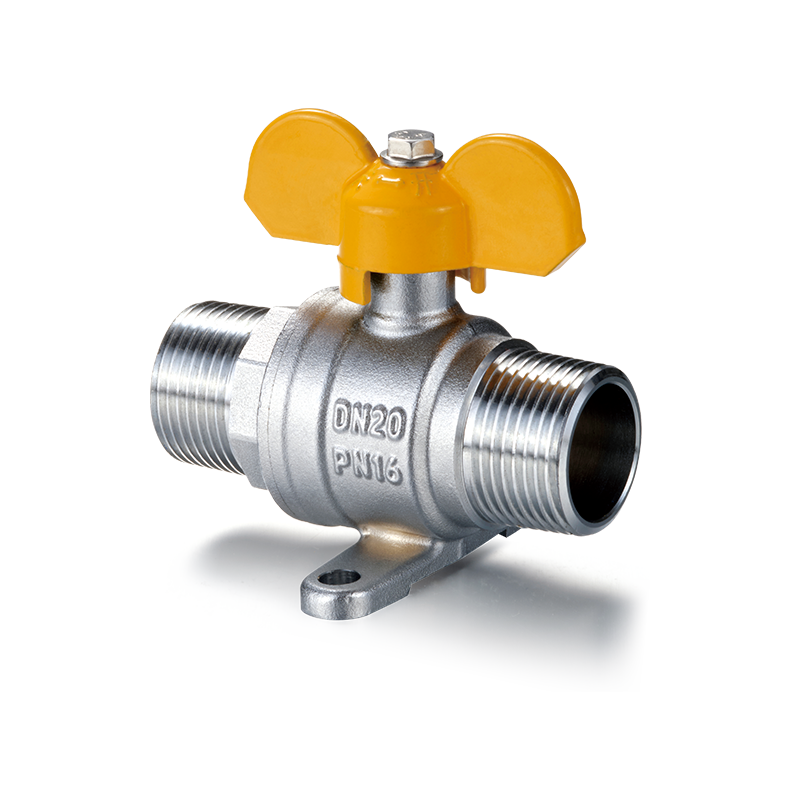
YH-214 Brass Ball Valve with Base& Butterfly Handle(M/M)
-
 View More
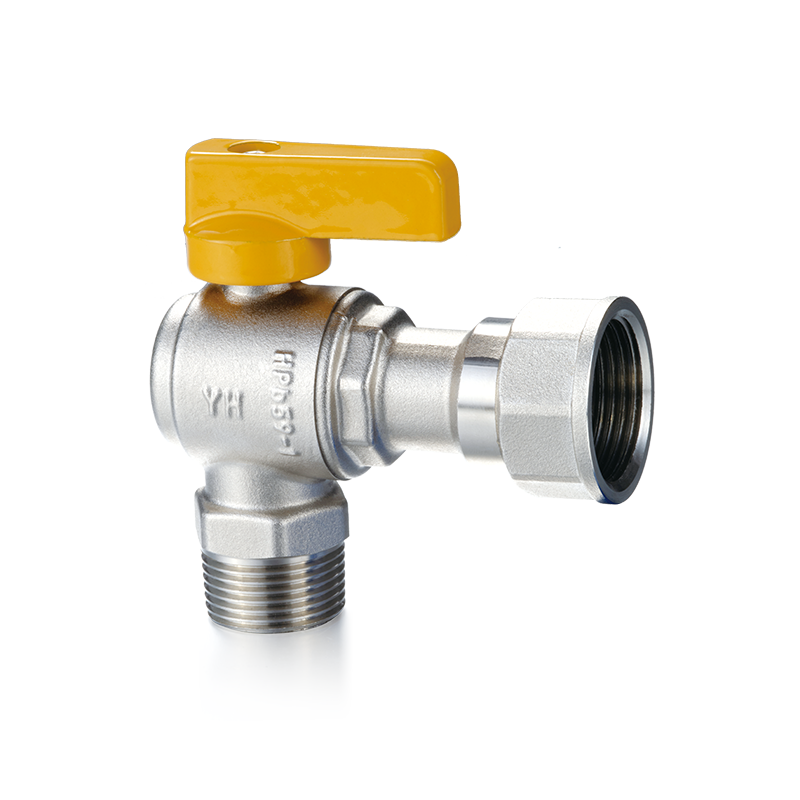
YH-215 Brass Right Angle Ball Valve(F/M)
-
 View More
YH-2210 Forged Steel Ball Valve with Long Handle (F/F)
Related News
Contact Us
-

-
 +86-0574-63742169
 -
 No.104-128, Cizhang East Road, Zhangqi Town, Cixi City, Ningbo, Zhejiang Province, China


Message Us Now !
