


 English
 русский
 عربى
 Español

1 2 in compression out brass ball valve: Practical Applications, Selection, Performance
Content
Field Notes / Valve Engineering
1/2 in Compression Brass Ball Valve: A Practical Look
A compact shutoff valve for branch lines, mounted without solder or pipe threads. Here is what to check before you choose one, and how to install it so it stays dry for years.
If your plumbing project involves a 1/2-inch copper or PEX line and you want a shutoff that does not require a torch, a 1/2 in compression brass ball valve is usually the right tool. The conclusion is simple: compression connections work well when the tube is round, clean, and fully seated. The brass body gives the valve a stable platform for quarter-turn operation, and the compression nut holds the ferrule against the tube without flame or thread tape.
The phrase “compression out” often means the valve outlet uses a compression fitting, while the inlet may be another style. In practice, you will also see compression-on-both-ends versions. For 1/2-inch nominal sizing, the valve is designed for standard 1/2-inch copper or PEX tubing, whose actual outside diameter is 5/8 inch. This nominal sizing convention is common in the North American market, so confirm the valve’s port designation before ordering.
How the Compression Connection Works
A compression ball valve has three parts that define its seal: the valve body with a machined shoulder, a brass or polymer ferrule, and a compression nut. When the nut is tightened, it presses the ferrule into the shoulder and around the tube. The result is a mechanical seal that depends on even radial pressure. This is different from a threaded joint, where the seal relies on the thread form and sealant.
“The most common compression leak is not a bad valve. It is a scratched tube or an over-tightened nut that distorts the ferrule.”
Because the seal is made on the outside diameter of the tube, the tube’s condition directly affects reliability. A clean, square-cut tube with no deep scratches will seal with a moderate amount of torque. An oval or scratched tube may leak even with a new valve. In that sense, the valve is only as good as the preparation of the pipe end.
Compression vs. Threaded vs. Push-Fit
For a 1/2-in brass ball valve, the connection choice changes the installation workflow, the tools you need, and the long-term serviceability. Here is a concise comparison:
| Connection | What it needs | Best for |
|---|---|---|
| Compression | Copper or PEX tube, clean square cut, wrench | No-heat installations, valve replacement in tight spaces |
| Threaded (NPT) | Thread sealant or tape, matching female/male thread | Metal pipe systems and manifolds with threaded ports |
| Push-fit | Deburred pipe, no scratches, release collar for removal | Fast assembly and temporary testing, at a higher fitting cost |
Compression sits between threaded and push-fit in both speed and dismantleability. It is slower than push-fit but more tolerant of slight pipe movement. It is more labor than threaded when you already have a threaded port, but it removes the need to seal threads. For many water line repairs, the compression outlet also makes it easier to adapt to copper stub-outs without adding transition fittings.
What to Check Before Buying
Before choosing a specific 1/2 in compression brass ball valve, review these points:
- Lead-free brass: For potable water, choose a valve manufactured from lead-free brass alloy and confirm it is marked accordingly.
- Full port vs. standard port: Full-port ball valves let the full pipe diameter pass through; standard-port valves add flow restriction. For shutoff on a branch line, full port is generally worth the slight size increase.
- Compression outlet and inlet orientation: Confirm whether the valve is compression-by-compression, or compression by male/female thread. The product code often uses F and M to mark port ends.
- Handle style: A long lever handle is easier to grip; a butterfly handle is more compact. Lockable handles help prevent unauthorized operation in commercial settings.
- Pressure rating: Check the maximum water working pressure and the intended temperature range. A typical brass ball valve might be rated at 600 WOG, but the compression connections lower that rating unless the manufacturer states otherwise.
If you are replacing an existing valve in a tight cabinet, also measure the center distance from the pipe to the wall. A valve with an integrated base can be bolted down to keep the compression joint from flexing during handle operation.
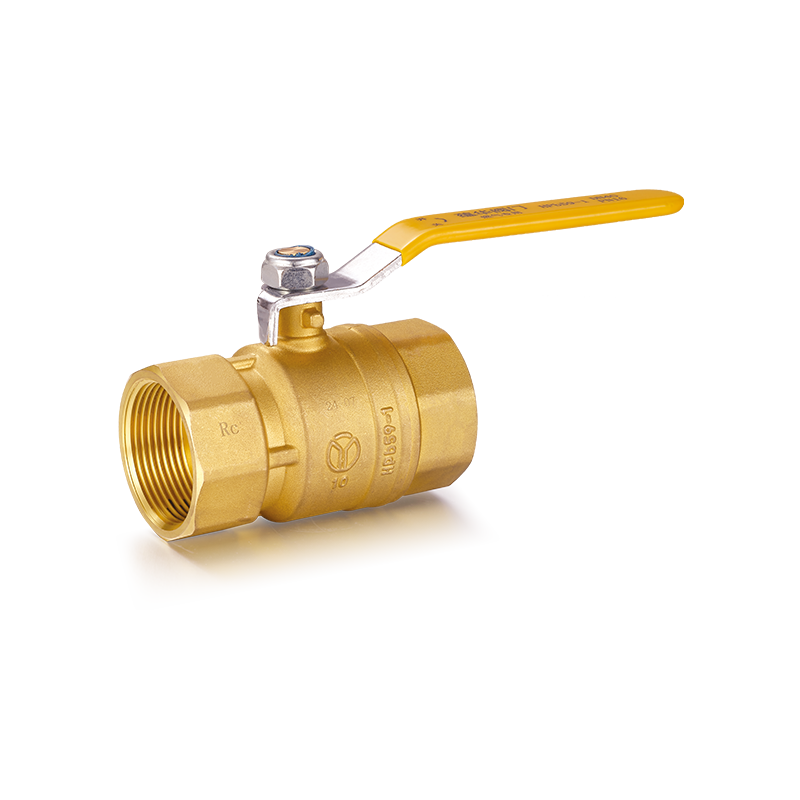
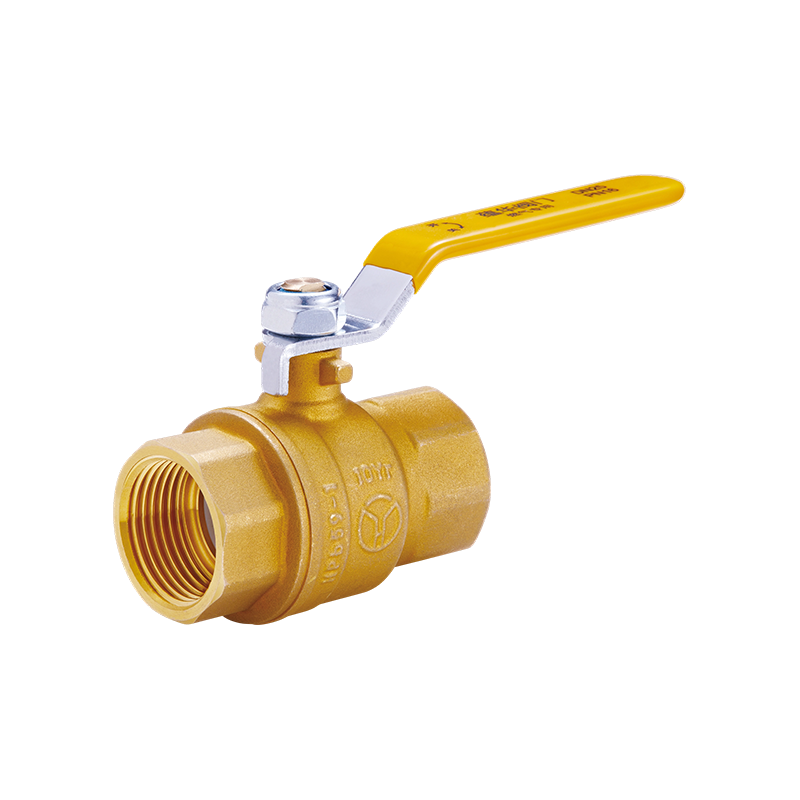 YH-220 Full Port Brass Ball Valve with Long HandleCheck this full-port valve with double female threads and multiple size options, ideal for gas systems requiring full-bore flow and secure thread connections.View Product →
Installation Notes That Avoid Leaks
The first rule is to prepare the tube before touching the valve. Use a tube cutter to create a square end, then remove internal and external burrs with a deburring tool. Slide the compression nut and ferrule onto the tube in the correct orientation: the ferrule’s tapered face usually points toward the valve body. Insert the tube until it bottoms out in the fitting, then hand-tighten the nut. Use a wrench for only a quarter to half turn beyond hand-tightening.
- Cut the pipe square with a tube cutter.
- Deburr the inside and outside edges.
- Slide the nut, then the ferrule, onto the pipe.
- Insert the pipe fully into the valve outlet.
- Hand-tighten the nut, then give it a short wrench turn.
- Open the supply, check for leaks, and re-tighten if needed.
Warning: Over-tightening a compression nut can crush the ferrule, dent the tube, or crack a cast valve body. If the joint leaks after one firm turn, disassemble and check the tube end instead of grabbing a longer wrench.
Info: PEX tubing needs a stiffener insert inside the pipe before making a compression connection. Without it, the ferrule can collapse the pipe wall.
Success: A good compression joint should survive a full system pressure test without visible weeping. If it does, leave it alone; re-tightening later can create a false leak.
For installations where the pipe is vertical or the valve is not supported by hand, a valve with a mounting base makes the compression joint steadier. The base transfers the force of handle operation to the mounting surface instead of the tube.
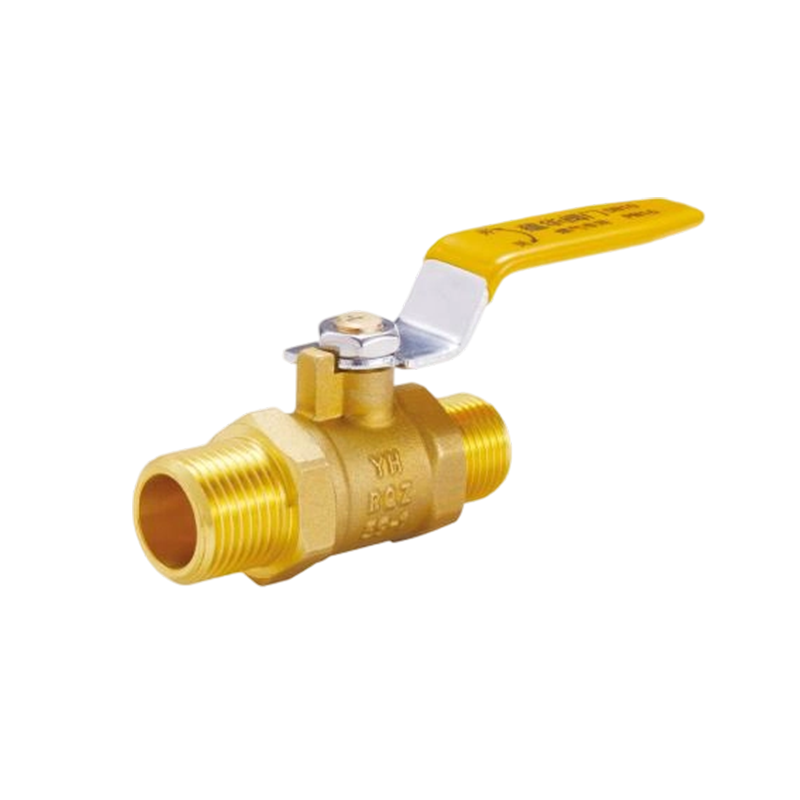
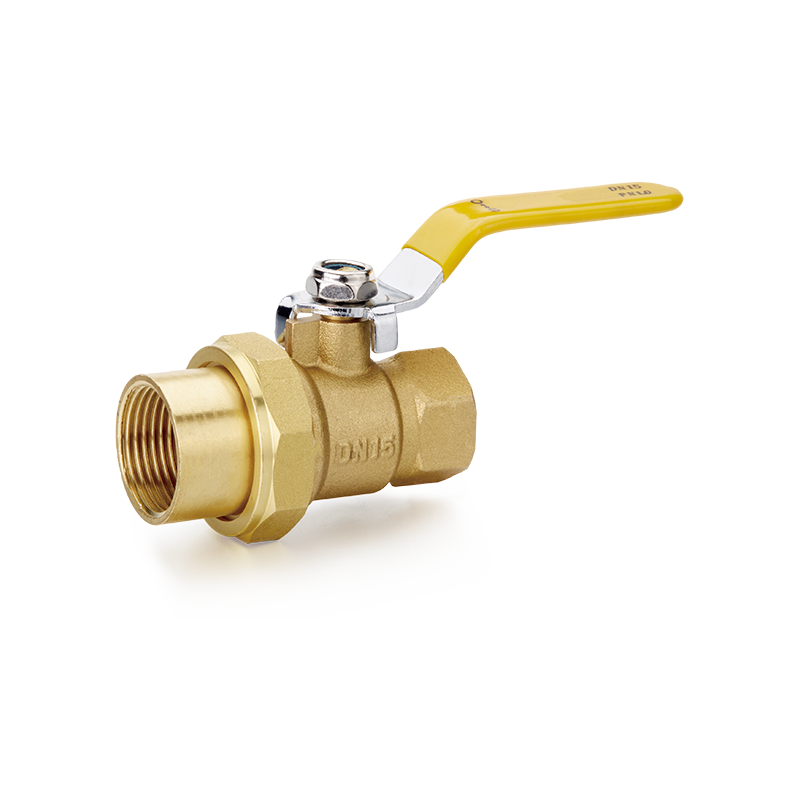
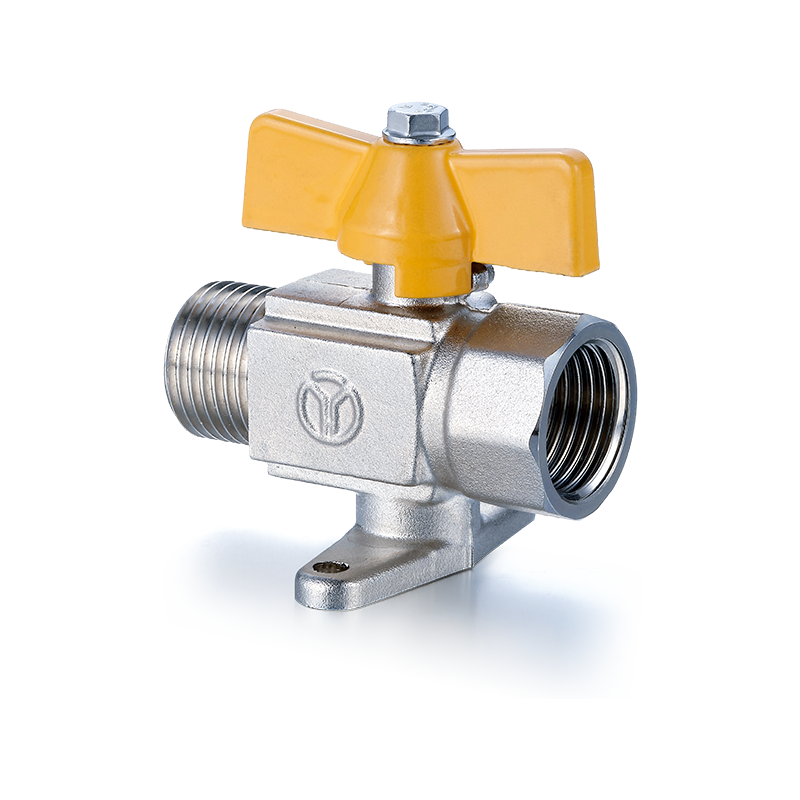 YH-211 Brass Ball Valve with Integrated Mounting BaseThis valve's sturdy base stabilizes vertical or unsupported installations, transferring handle force away from the tube for leak-proof, vibration-resistant performance.View Product →
Why Brass Remains the Default Material
Brass is not the only material for small ball valves, but it is still the most common for 1/2-inch compression models. The reasons are practical: brass machines well, resists corrosion in water service, and handles the repeated sliding contact between the ball and the seats. A well-made brass valve body also gives threads enough strength to endure the wrench load of a compression nut without distortion.
The quality of the brass matters as much as the configuration. Bar-stock brass bodies produce a dense, uniform structure, while investment-cast bodies can have porosity if the foundry is not controlled. This is why manufacturers with automated machining and pressure-testing systems tend to deliver more consistent valves. Quality management improvements at the factory level have a direct effect on leak rates, handle torque, and the visual finish of the valve.
As a supplier, we look at a compression ball valve as a system: body alloy, seal material, ferrule geometry, and thread finish. Adjusting any one of those factors changes how the valve feels in an installer’s hand.
If you are choosing between brass and stainless steel, brass is usually preferred for indoor water plumbing because it is easier to machine and more affordable. For aggressive water or outdoor exposure, stainless is an option, but the compression fitting still needs a compatible tube.
A Manufacturer’s View on Long-Term Reliability
From a factory perspective, the most important thing about a 1/2-in compression brass ball valve is not the packaging or the price list, but how the valve performs after 10,000 cycles. The wear on the ball seal, the stability of the stem packing, and the corrosion margin on the compression threads all decide real-world service life.
Our manufacturing process treats ball valves as precision components. CNC machining holds the ball bore concentric to the body ends, and automated test rigs pressure-check every valve before shipment. This is especially important for compression models because the connection depends on the straightness of the body shoulder and the uniform face of the outlet. Upgrading water supply and gas infrastructure is increasing the demand for reliable quarter-turn valves, and factory testing is what keeps those valves dependable in the field.
For installers facing different pipe layouts, we offer the range found in our product catalog: long-handle ball valves for easy operation, base-mounted models for stable panel installation, and mini ball valves for compact equipment. The same attention to surface finish and pressure testing applies across the series.
If your project needs a shutoff in a tight machine cabinet, a mini ball valve may be a better fit than a full-size compression model, even when you need to adapt the connection.
Danger: Cracked valve bodies, stripped compression threads, or ferrules that have been compressed too far can fail under pressure. Replace the valve rather than trying to seal a hairline crack.
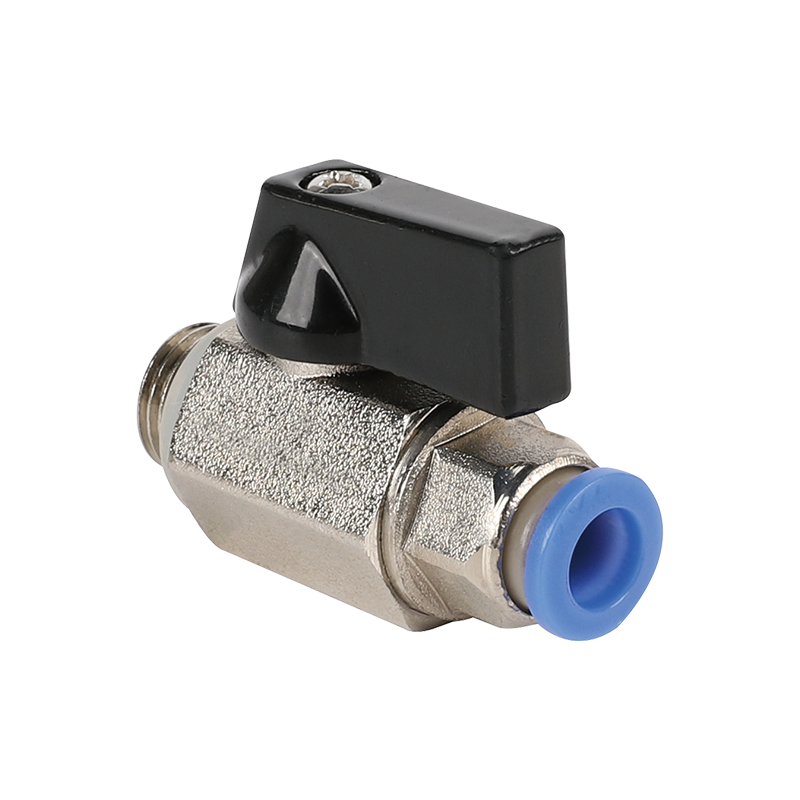 MINI-2 Mini Short-Handle Ball Valve with Push-to-ConnectFor tool-free installation in tight pneumatic or water lines, this compact valve offers quick connections and reliable sealing, replacing risky compression repairs.View Product →
The Takeaway
A 1/2 in compression brass ball valve is a practical way to add a quarter-turn shutoff to copper or PEX lines without soldering. The key decisions are straightforward: confirm the nominal 1/2-inch sizing, choose lead-free brass for water, verify the port finish, and install the compression nut with patience. When the tube is properly prepared and the valve is supported, the joint will outlast most of the surrounding pipework.
For a manufacturer, that reliability starts with material selection and ends with testing. If you are sourcing valves for a project, ask for the pressure rating, the alloy code, and the test procedure. Those answers will tell you more than any glossy leaflet.


Related News
Contact Us
-

-
 +86-0574-63742169
-
 No.104-128, Cizhang East Road, Zhangqi Town, Cixi City, Ningbo, Zhejiang Province, China


Message Us Now !
