


 English
  русский
  عربى
عربى  Español
1/2 FNPT x MNPT Brass Ball Valve Inline: Sizing, Threads & Selection Guide
Content
- 1 1/2 FNPT x MNPT Brass Ball Valve Inline: The Practical Selection Guide
- 2 What "1/2 FNPT x MNPT" Actually Means
- 3 Inline Body versus Angle Body
- 4 Full Port or Standard Port: Do Not Assume from the Thread Size
- 5 Handle Style: Ergonomics, Torque, and Tamper Resistance
- 6 Mounting and Orientation: When a Base Makes Sense
- 7 Brass Alloy and Thread Quality: Where Cheap Valves Fail
- 8 The Sourcing Checklist and the Bottom Line
1/2 FNPT x MNPT Brass Ball Valve Inline: The Practical Selection Guide
A straight-through brass ball valve with a 1/2-inch female NPT inlet and male NPT outlet solves a specific piping problem. The details decide whether it solves it well.
You are sizing a shutoff for a 1/2-inch line, and the drawing specifies a 1/2 FNPT x MNPT brass ball valve inline. The conclusion up front: this is the most direct way to join a female-threaded pipe end upstream to a male-threaded component downstream, keeping the flow straight and the body compact. It also eliminates a nipple and coupling, so there are two fewer joints to leak.
The label alone does not tell you whether the ball bore is full port, which brass alloy was used, how the handle behaves in a confined space, or whether the threads meet the NPT tolerance you assume. This guide covers each point so the valve you quote is the one that works on site.
What "1/2 FNPT x MNPT" Actually Means
NPT stands for National Pipe Taper, the dominant tapered pipe thread standard in North America, defined by ANSI B1.20.1. The 1/2 refers to nominal pipe size, not the thread outside diameter or the bore inside the valve. FNPT is the female thread end; MNPT is the male thread end.
On a 1/2 FNPT x MNPT brass ball valve inline, the inlet is female and the outlet is male. That mixed configuration lets you connect straight to a male-threaded pipe or fitting without adding a nipple and coupling, keeping the assembly shorter and less prone to leaks.
| Configuration | Inlet | Outlet | Typical use |
|---|---|---|---|
| FNPT x FNPT (F-F) | Female | Female | Between two lengths of male-threaded pipe |
| FNPT x MNPT (F-M) | Female | Male | Direct transition from female pipe end to male-threaded component |
| MNPT x MNPT (M-M) | Male | Male | Compact stub between two female-threaded fittings |
Because the specification is FNPT x MNPT, the F-M row is your configuration. Say inline as well, to distinguish it from an angle-pattern body that redirects the flow by 90 degrees.
Inline Body versus Angle Body
An inline ball valve keeps the inlet and outlet on the same axis. When open, the ball bore aligns with the pipe, so flow passes without changing direction. That gives a lower pressure drop than an angle valve, less turbulence, and easier draining when the system is shut down.
Angle-pattern valves turn the flow 90 degrees and can save space at a corner, but they are not substitutes for an inline unit in a straight pipe run. For water supply, compressed-air lines, and low-pressure gas isolation, the 1/2 FNPT x MNPT brass ball valve inline is the safe default.
A quarter-turn is only a good shutoff when the package around it is built to hold for decades.
Specify the whole package — thread standard, port, handle, and alloy — and the inline ball valve becomes the most reliable joint in the system. Leave one detail ambiguous, and it becomes the first leak you find.
Full Port or Standard Port: Do Not Assume from the Thread Size
The 1/2-inch NPT size does not fix the bore of the ball. A full-port valve has a bore close to the inside diameter of the mating pipe, typically 15 mm on a 1/2-inch brass ball valve. A standard-port valve uses a smaller ball opening; it is cheaper and lighter, but it adds a measurable restriction.
| Port type | Typical bore | Flow behaviour | Best suited for |
|---|---|---|---|
| Full port | Around 15 mm | Near pipe ID; very low pressure drop | Long pipe runs, gravity-fed systems, continuous duty |
| Standard port | Around 11-12 mm | Restricted; higher pressure drop | Compact equipment, infrequent isolation, cost-sensitive assemblies |
Flow note: Cv is the flow in US gallons per minute through a fully open valve at a 1 psi pressure drop. A typical 1/2-inch full-port brass ball valve has a Cv between 8 and 14. At a tank outlet or pump inlet, choose full port; a reduced bore becomes a real pressure loss when the line runs continuously.
Handle Style: Ergonomics, Torque, and Tamper Resistance
The handle decides how comfortable the valve is to operate, how much torque you can apply, and whether someone can change the position without authorization. Match it to the installation, not to habit.
Long lever handles
A long lever gives good mechanical advantage and makes the open or closed position visible from a distance. It is the default choice for a 1/2 FNPT x MNPT brass ball valve inline on a main supply line where an operator may wear gloves.
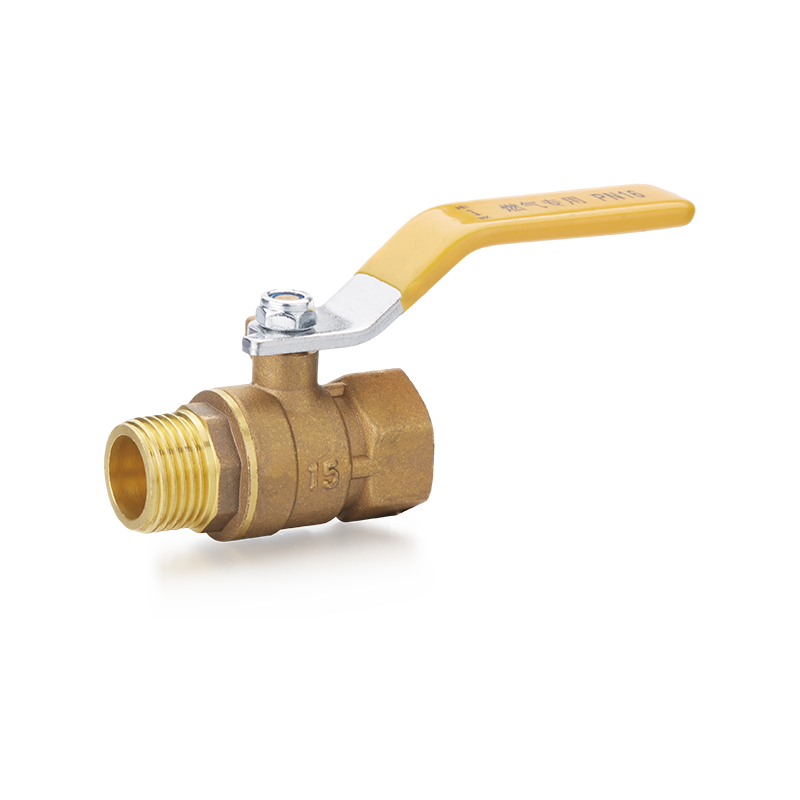 YH-202 Brass Ball Valve with Ergonomic Long Handle for Inline UseThis dual-thread brass valve combines female and male ends for adapter-free connections. Its extended lever reduces operating effort and provides a clear position cue, making it practical for glove-wearing operators and medium-pressure utility lines.View Product →
Butterfly handles
Butterfly handles sit low and fit into tight cabinets and manifolds. The trade-off is less torque and a less obvious position cue. They suit valves operated occasionally where side clearance is scarce.
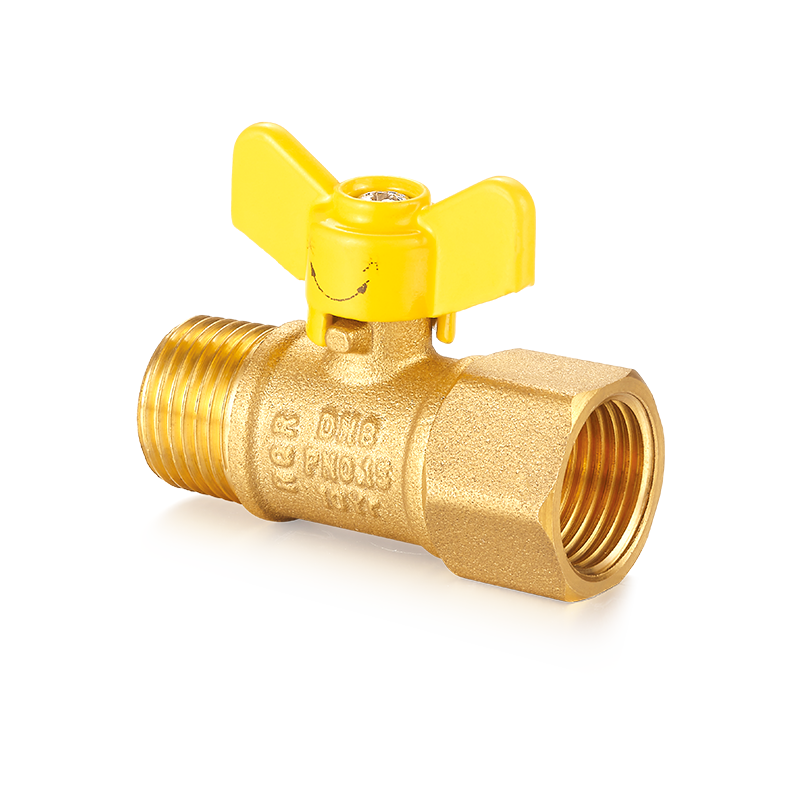 YH-205 Brass Ball Valve with Compact Butterfly Handle for Tight SpacesWith a space-saving butterfly handle and low-pressure precision sealing, this valve suits confined installations behind panels or cabinets. Its large grippable design clearly indicates open or closed status, ideal for residential and senior-friendly use.View Product →
Lockable handles
For gas lines, school facilities, or shared mechanical rooms, a lockable handle prevents unauthorized operation. Locking is not a substitute for correct thread engagement, but it adds a management layer inspectors now expect.
Installation warning: never use the handle as a wrench to pull two threads together. NPT engages by taper; if the joint does not seal after hand-tightening plus one to two turns, stop and check the thread gauge.
Mounting and Orientation: When a Base Makes Sense
An inline ball valve can be installed in any orientation, but a long handle, vibration, and unsupported piping put bending stress on the NPT joints. A valve with an integral base gives you a fixing point for a bracket, protecting the threads and keeping the handle in a predictable position.
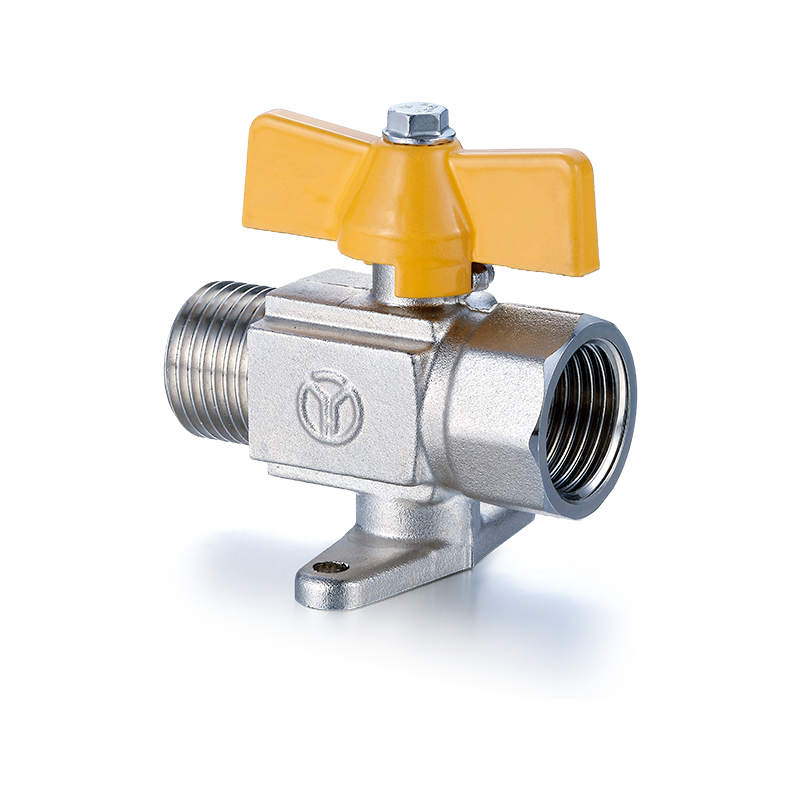 YH-211 Brass Ball Valve with Integrated Base for Stable MountingFeaturing a sturdy integrated base, this F/M threaded brass valve resists vibration and displacement in fixed wall-hung or equipment-side piping. Its flexible connection adapts to branch transitions, while durable rubber seals help prevent leaks.View Product →
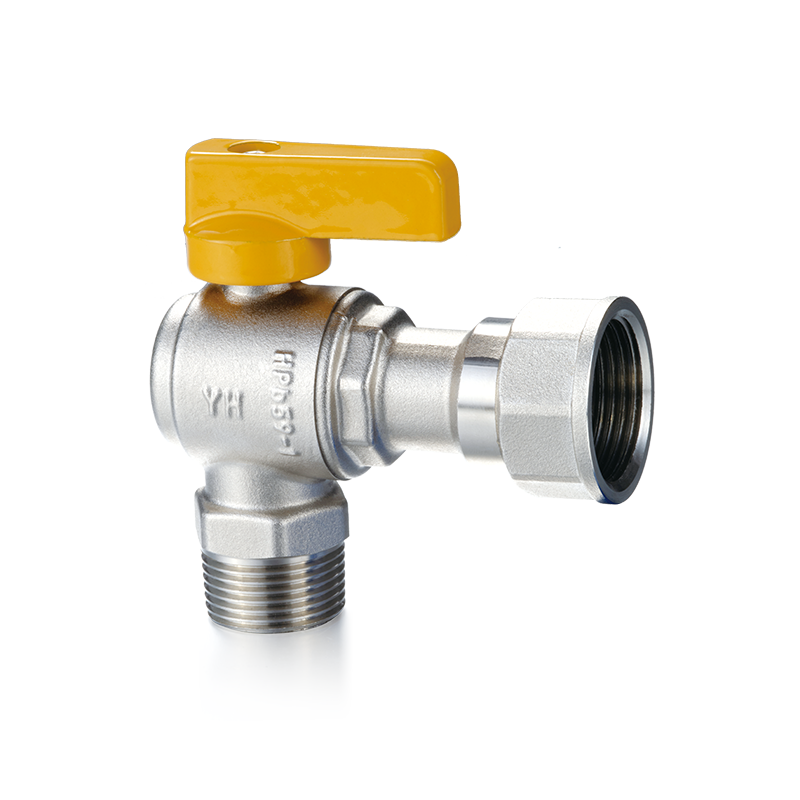
If the pipe layout turns 90 degrees at the shutoff point, a right-angle ball valve can combine the elbow and the valve in one body. It is a different product from the inline type, so keep the two separate when comparing quotations.
Brass Alloy and Thread Quality: Where Cheap Valves Fail
Brass ball valves are machined from bar stock or forged blanks, with alloys such as CW617N or CZ121 common in Europe and equivalent lead-free alloys for potable water. The alloy drives pressure rating, machinability, and resistance to dezincification. For drinking-water lines, confirm the certification for your market — NSF/ANSI 61, AS/NZS 4020, or WRAS.
Thread geometry is the real test
NPT threads must match the ANSI B1.20.1 taper profile. Cheap valves fail here first: under-tapered threads, nicked flanks, or poor surface finish leak even with generous sealant. A maker running CNC machining and automated leak testing on the production line turns this risk into a routine check. Our latest manufacturing capability update shows how automated process control keeps thread geometry consistent across large batches.
Ask four questions before committing to a supplier: alloy, thread standard, 100% inspection test pressure, and how the handle is secured against vibration.
The Sourcing Checklist and the Bottom Line
Most problems with a 1/2 FNPT x MNPT brass ball valve inline are avoidable at the specification stage:
- Confirm both ends with a thread gauge: 1/2-inch FNPT inlet, MNPT outlet.
- Choose inline for straight flow; use an angle body only when the layout forces it.
- Select full port for continuous duty or gravity-fed lines.
- Verify the brass alloy and any potable-water or gas certification.
- Agree the handle type before quotation; add a lockable option on safety-critical lines.
Thread mismatch danger: NPT and BSPT look similar but are not interchangeable. A 1/2 BSPT male will thread into a 1/2 NPT female for a turn or two, then seize or leak. Confirm the thread standard on the purchase order.
Verification step: order one sample and install it on a test loop. A correctly specified valve holds full working pressure with clean threads, a crisp quarter-turn, and no measurable drop across the fully open bore.
The 1/2 FNPT x MNPT brass ball valve inline is a simple product with a demanding spec sheet. Match the thread standard, choose the port and handle for the installation, and confirm the factory's testing routine. Do that, and the valve will outlast the equipment it protects. Browse the full brass ball valve range to compare F-F, F-M, and M-M configurations, or send your drawing for a quotation.
Related Products
-
 View More
-
 View More
YH-211 Brass Ball Valve with Base(F/M)
-
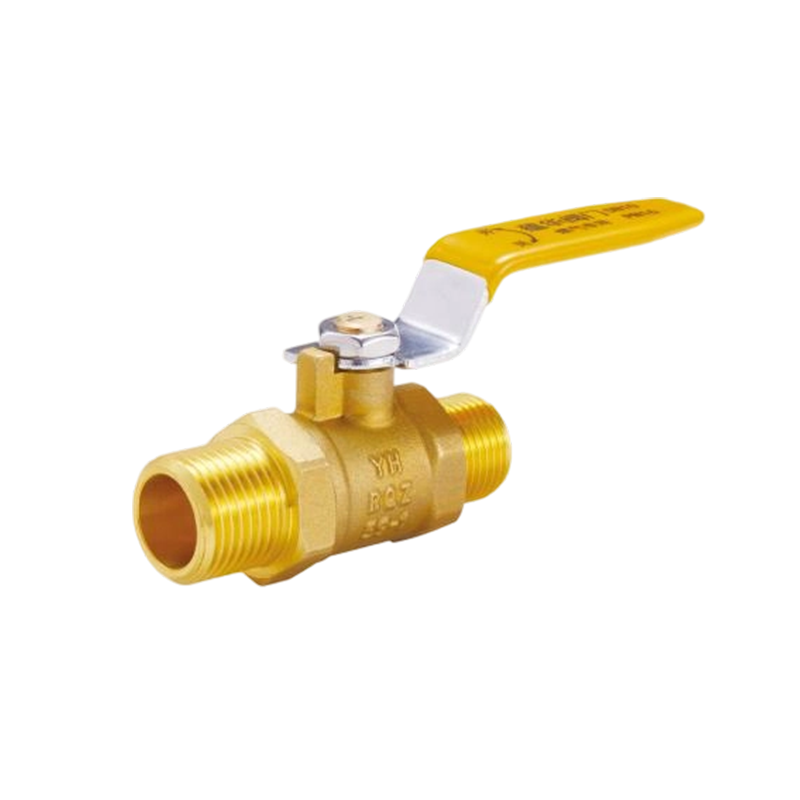 View More
YH-221 Brass Ball Valve with Long Handle(M/M)
-
 View More
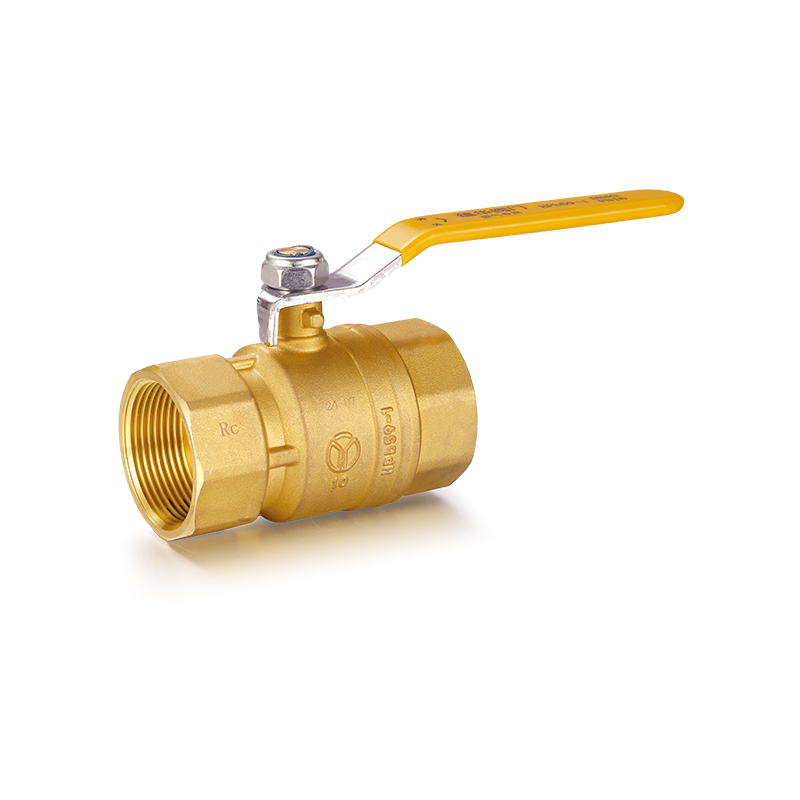
YH-201 Brass Ball Valve with Long Handle(F/F)
-
 View More
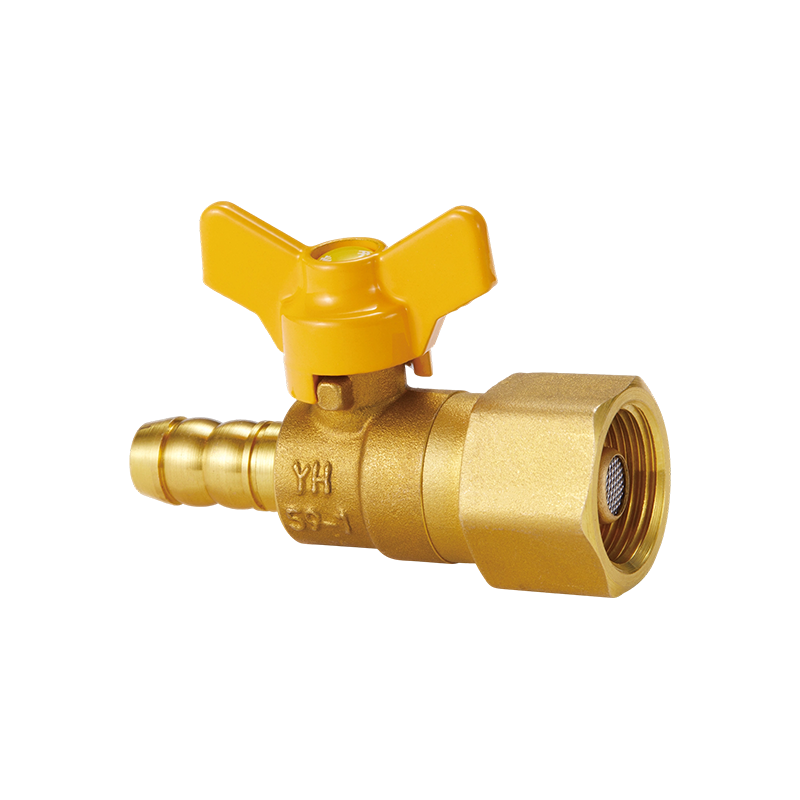
YH-216A Brass Excess Flow Shut-Off Valve(F/Hose Connector)
-
 View More
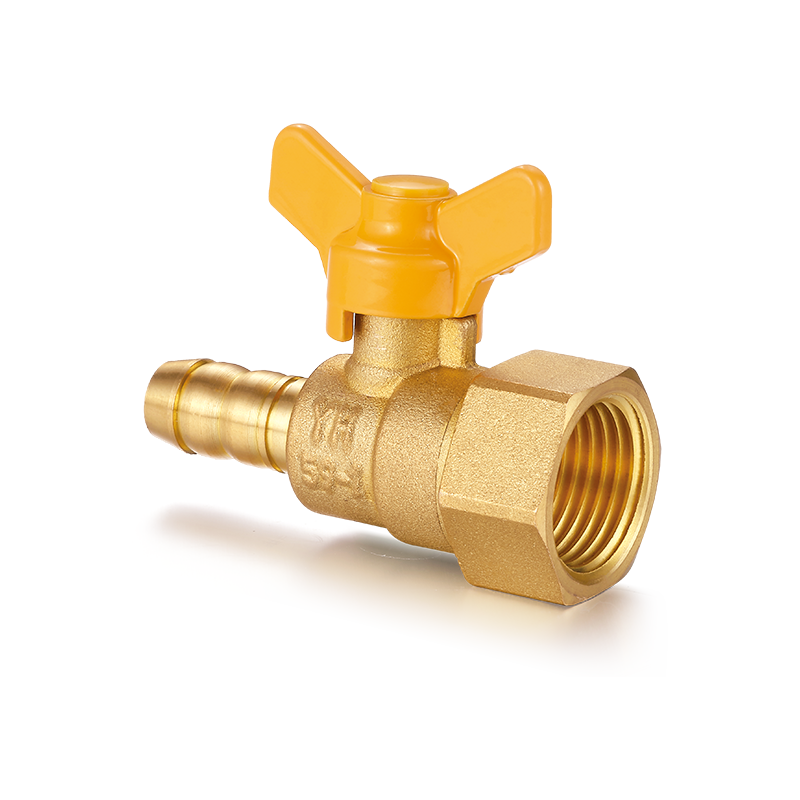
YH-216 Brass Ball Valve with Butterfly Handle(F/Hose Connector)
Related News
Contact Us
-

-
 +86-0574-63742169
 -
 No.104-128, Cizhang East Road, Zhangqi Town, Cixi City, Ningbo, Zhejiang Province, China


Message Us Now !
