


 English
 русский
 عربى
 Español

1/8 FIP Full Port Forged Brass Mini Ball Valve: What the Spec Really Means
Content
- 1 Decoding the Four Words
- 2 Why Forging Matters More at 1/8 Inch Than at 2 Inch
- 3 Full Port at 1/8 Inch: Small Bore, Real Flow
- 4 Where a 1/8 Inch Mini Valve Actually Lives
- 5 A Typical Specification at a Glance
- 6 Installation Notes From the Assembly Line
- 7 Three Mistakes We See Most Often
- 8 Choosing Within the Mini Series
1/8 FIP, Full Port, Forged Brass: What a Mini Ball Valve Really Tells You
Four short words on a purchase order carry a dozen engineering decisions. Here is how we read them in our own workshop, and what to check before a 1/8-inch mini ball valve goes into your line.
There is a quiet moment in almost every enquiry where the drawing says 1/8 FIP, full port, forged brass, and everyone in the thread nods. It looks settled. It usually is not. A valve this size weighs less than a bar of soap and disappears into a manifold, a filter housing or a gas connection, yet it is often the single point where a system is either safely shut off or quietly weeping.
We make brass valves for a living, mini ball valves among them, and the questions that come back to us are almost never about the ball or the lever. They are about thread standards, bore size, alloy grade, and whether anyone thought about the technician who has to reach the handle inside a cabinet the width of a shoebox. So let us take the four words apart, one at a time.
Decoding the Four Words
Purchasing shorthand compresses a great deal into a small space. Unpacked, each term is a decision somebody has already made, sometimes without realising it.
- 1/8 inch is a nominal pipe size, not a measurement of the bore. It identifies the thread family, roughly 9.7 mm across the outside of the male thread. The flow path inside can be wider than the nominal figure suggests, or noticeably narrower, depending on the port.
- FIP means Female Iron Pipe, a female thread, sometimes written FPT. The word iron is historical; the fitting is usually brass. What matters far more is which thread standard was cut into it. A 1/8 NPT thread runs at 27 threads per inch, while 1/8 BSP and BSPT run at 28. They look similar, they are not, and neither seals properly into the other.
- Full port means the ball bore is close to the internal diameter of the pipe it serves, so flow passes with little restriction and pressure loss across the valve stays small.
- Forged brass means the body was formed from a heated billet under pressure rather than poured into a mould: denser grain, no shrink porosity, and calmer behaviour under repeated thermal cycling.
None of those terms is difficult alone. The trouble starts when a specification carries only three of them and everyone assumes the fourth.
Thread confusion causes more field failures on small valves than any other single issue. If your drawing says 1/8 inch and nothing else, ask for NPT, BSP or BSPT in writing before the order is released.
Why Forging Matters More at 1/8 Inch Than at 2 Inch
It is tempting to think a small valve is a forgiving valve. The opposite is closer to the truth. At 1/8 inch, the wall between the bore and the outside world is only a few millimetres thick. A gas pocket or a cold shut in a casting stops being a cosmetic blemish and becomes a potential leak path with very little material standing between it and the atmosphere.
Forging closes that door. The metal is worked while hot, so the grain flows along the shape of the body instead of sitting across it at random, and internal voids are pressed out rather than left behind. The practical result is a body that holds pressure consistently, threads that cut cleanly, and a valve that survives being dismantled and reassembled a few times over its service life.
Two caveats belong here, because forged brass on its own is not a material specification.
- Ask for the alloy. CW617N and CW614N are both common in this class of valve and behave differently in machining and corrosion resistance. For drinking water, ask specifically about lead content and any dezincification-resistant grade.
- Ask what was tested. A forged body is only as good as the leak test behind it. We pressure-test every valve before it leaves the line, and we would rather send a datasheet with test parameters on it than a claim with none.
If you want to see how that thinking becomes day-to-day production discipline, our note on strengthening the quality management system walks through the inspection points we hold ourselves to.
Full Port at 1/8 Inch: Small Bore, Real Flow
Full port is the term people accept most readily without thinking, and the one that most reliably changes the price. At 1/8 inch the difference in bore is only a few millimetres, so it is fair to ask whether it is worth paying for.
What full port buys you
- Lower pressure drop, which matters in low-pressure work: gravity-fed lines, drip irrigation, low-head manifolds and appliance connections.
- Less turbulence and less seat noise, a genuine comfort factor in domestic and laboratory settings.
- A clearer path for debris. A reduced bore gives particles somewhere to lodge, and a lodged particle is a valve that will not seal again.
- Easier cleaning, and in some designs the ability to pass a small brush through.
When reduced port is the better buy
If the valve is purely an isolation device on a line with ample pressure and modest flow, a reduced bore will do the job for less money, and there is no engineering shame in saying so. The honest test is simple: write down the acceptable pressure drop across the valve, then compare it with the calculated loss for each option. If you cannot state a number, you are probably buying full port as insurance rather than as engineering.
One more thing worth saying plainly: if you are fighting pressure drop at 1/8 inch and losing, the answer is usually not a better 1/8-inch valve. It is a 1/4-inch line.
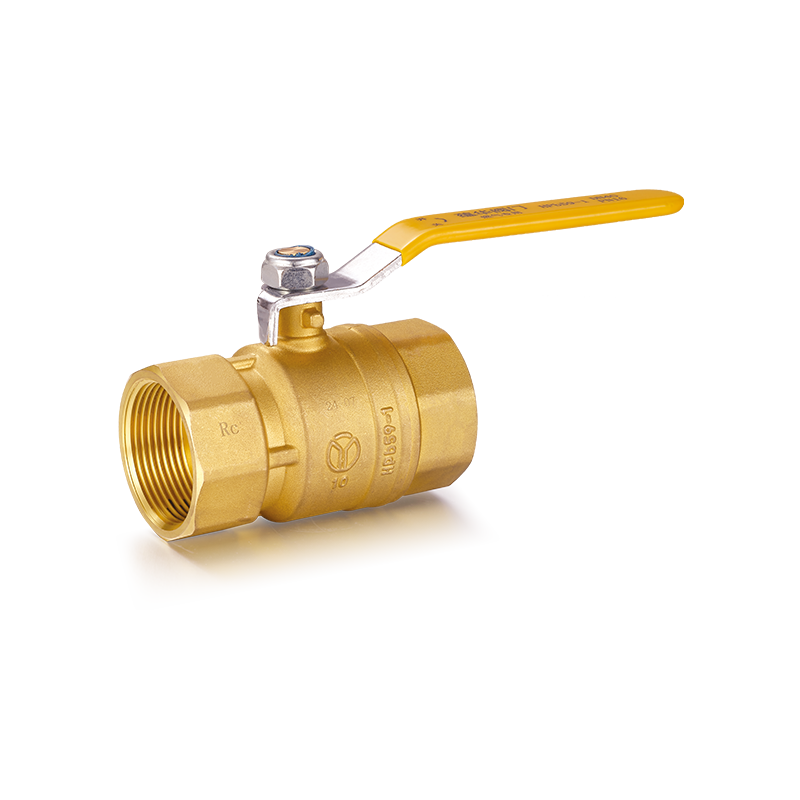
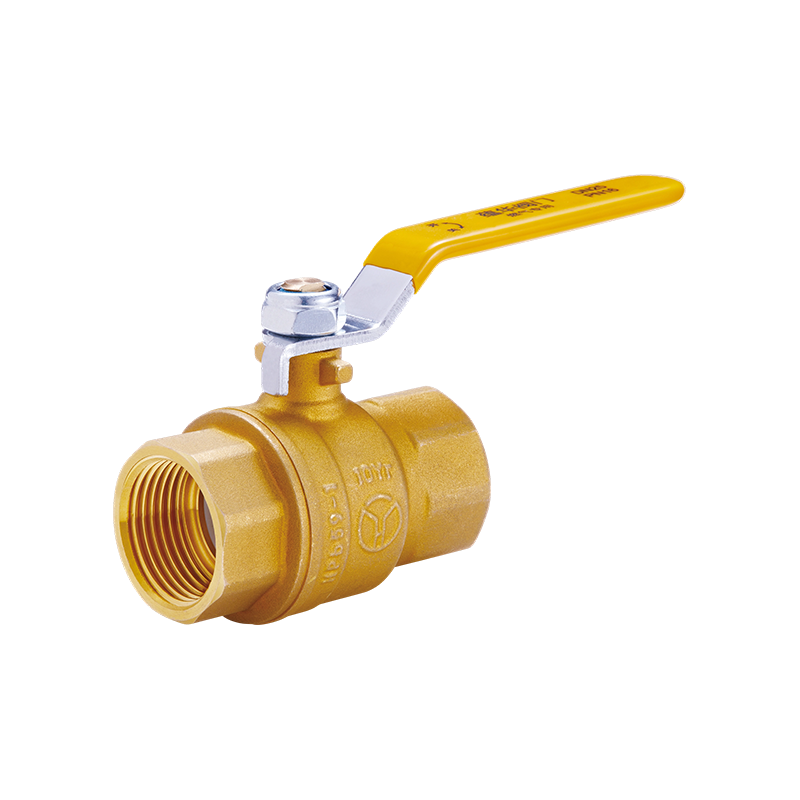 YH-220 Full Port Brass Ball Valve with Long HandleFull-port female/female brass valve with long handle, suited to gas lines where maintaining flow and easy operation matter.View Product →
Where a 1/8 Inch Mini Valve Actually Lives
Because the valve is small, it tends to be installed where the hand can barely follow. That single fact shapes more of our mini series than any drawing does.
- Instrument air and gauge lines where isolation sits right at the gauge and a quarter turn is all the movement available.
- Laboratory and medical gas manifolds with low flow, high consequence and a strong preference for a full bore.
- Filtration and treatment housings that need a shutoff upstream so a cartridge can be changed without flooding the cabinet.
- Beverage and coffee equipment where the valve hides behind a panel and must be operable by feel alone.
- Compressed air blow-off and small pneumatic circuits, cheap insurance against a runaway actuator.
- Irrigation zone shutoffs and RV or marine water systems, small, exposed and frequently operated.
We keep three handle shapes for exactly this reason: a long lever where there is room to swing, a short lever or butterfly where there is not, and a lockable version where the valve must not be turned by anyone who happens to be passing.
A Typical Specification at a Glance
The table below is the shape of a specification we would recognise as complete for a 1/8 inch FIP full port forged brass mini ball valve. Treat the values as indicative, because every configuration differs and the final datasheet should always come from the supplier who ships the goods.
| Parameter | Typical value | What to confirm |
|---|---|---|
| Nominal size | 1/8 in. (DN6) | Which thread standard is cut |
| End connection | FIP x FIP | Male or female variants in the same body size |
| Body material | Forged brass, CW617N or CW614N | Alloy certificate; lead-free grade for potable water |
| Ball and stem | Chrome-plated brass ball, brass stem | Surface finish; double O-ring on the stem |
| Seat | PTFE | Temperature limit of the seat material |
| Port | Full port | Bore dimension against pipe internal diameter |
| Pressure rating | PN16 to PN25 (about 16 to 25 bar) | Whether the rating is stated for water, air or steam |
| Temperature range | -10 to 120 degrees Celsius | Dependent on seat and seal material |
| Handle | Long lever, short lever or butterfly | Sweep clearance; lockable option |
| Testing | 100 percent pressure and leak test | Test pressure and hold time |
Two rows deserve more attention than they usually get. The thread standard is not a formality; it is the interface between your valve and somebody else's pipe. And a pressure rating only means something when it is quoted against a specific medium, because 25 bar with water is not the same statement as 25 bar with saturated steam.
Installation Notes From the Assembly Line
Almost every complaint we investigate at this size turns out to be an installation story rather than a manufacturing one. A short sequence, in the order it actually happens:
- Confirm the thread standard against the mating fitting, not against the label on the box. Two minutes with a thread gauge saves a returned shipment.
- Apply sealant to the male thread only, two or three turns of PTFE tape or a bead of anaerobic sealant, leaving the first thread clean so nothing enters the bore.
- Hold the body, not the handle. The lever will happily twist a small body off a pipe stub if you let it.
- Tighten snug, then a quarter turn. Brass threads deform earlier than steel ones, and a cracked port is not a warranty conversation anyone enjoys.
- Check handle sweep before final tightening. A quarter turn that ends against a cabinet wall is a valve that will never open fully again.
- Flush the line with the valve open, then exercise it quarterly. A ball valve that has not moved in three years may as well be a length of pipe.
A 1/8-inch valve costs less than the labour to replace it. That single fact should shape every specification decision around it.
Over-tightening is the most common installation failure we see on small brass valves. If you need a cheater bar to get the joint dry, the joint is already too tight. Add sealant, not leverage.
Three Mistakes We See Most Often
- Ambiguous thread calls. 1/8 inch without a standard is not a specification. NPT, BSP and BSPT are all sold under that shorthand, and none of them interchange.
- Treating forged as an approval. Forging is a manufacturing process, not a certificate. Potable water and gas service each carry their own requirements, and the alloy grade, seat material and test record all have to support the claim.
- Buying full port on price. It is surprisingly common to specify full port, accept the lowest quote and receive a reduced bore that nobody measures on arrival. Put the bore dimension on the drawing and check a sample with a caliper.
There is a fourth, gentler mistake: forgetting everything around the valve. A mini ball valve rarely arrives alone. It comes with a hose connector, a reducing fitting or a short length of tube that has to match, and ordering those together from a supplier who already knows the thread you are cutting removes an entire category of delay.
Choosing Within the Mini Series
Our own mini range covers the combinations that come up most often in practice: female-to-female, male-to-male and male-to-female bodies, with a long lever, a short lever or a butterfly handle. The female-to-female version is the one closest to a 1/8 inch FIP specification, and it is where most enquiries begin.
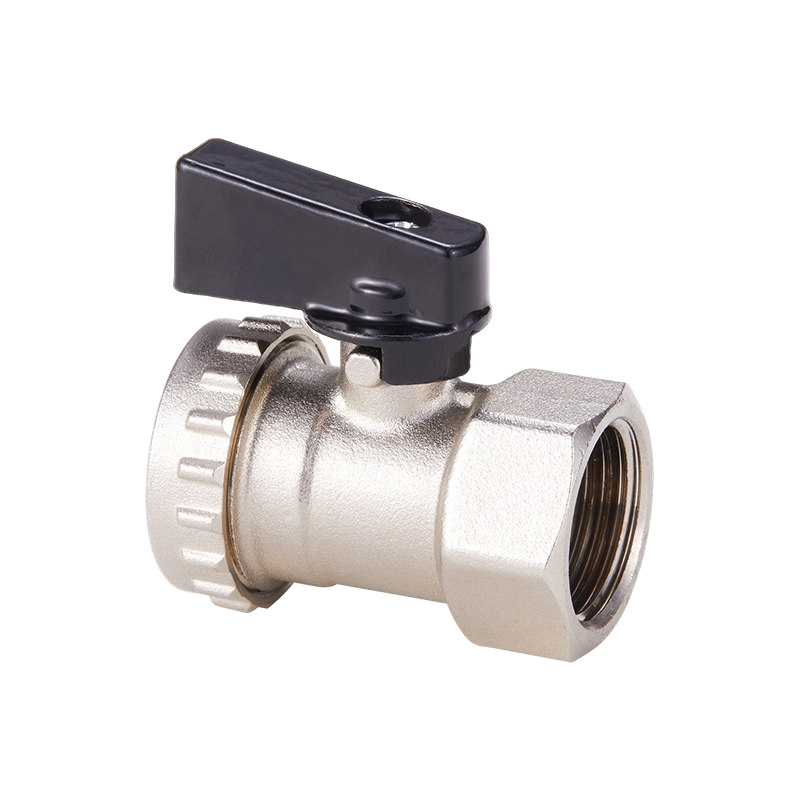 MINI-4 Compact Mini Ball Valve (F/F)Compact female/female mini ball valve with union-style nut and knurled body for easier installation and tool-free handling in tight equipment spaces.View Product →
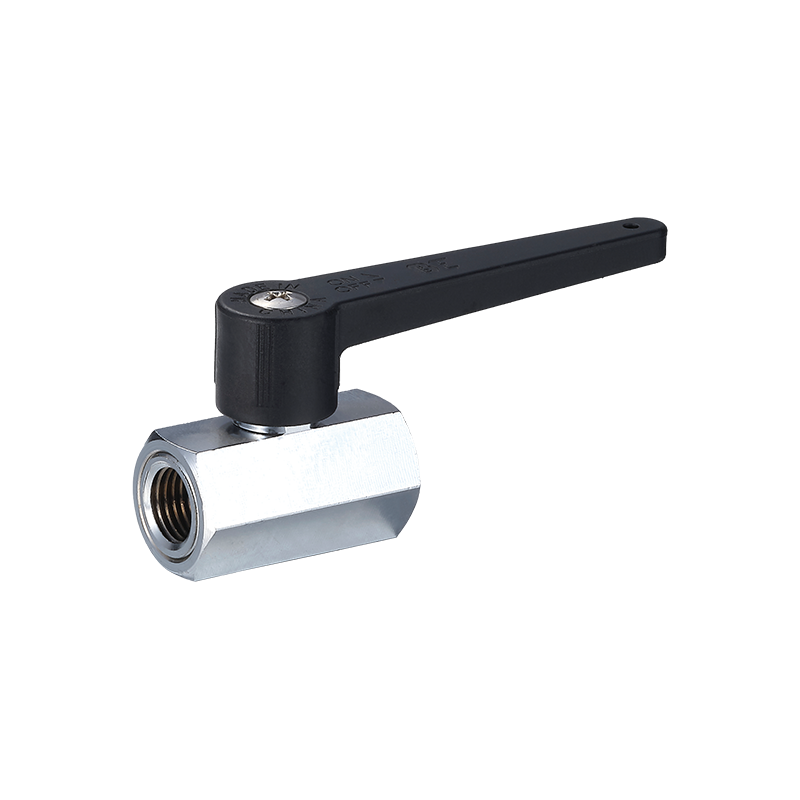 MINI-1 Mini Long Handle Ball Valve (F/F)Compact female/female mini valve with long lever for clear 90-degree shutoff in instrument panels and small pneumatic or water lines.View Product →
If the valve is going into equipment rather than a bare pipe run, it is worth widening the comparison before settling. Sometimes the cleaner answer is a slightly larger body with the connection already built in, and occasionally it is a different valve family altogether. You can browse the full brass valve range as a starting point, and we are equally happy to say when a mini ball valve is the wrong part for the job.
Writing a specification for a 1/8 inch FIP full port forged brass mini ball valve should take about five minutes and cover four lines: thread standard, port, alloy, and pressure rating against the actual medium. Everything else, from handle shape to seat material to test record, is refinement, and refinement is where a supplier earns the second order.
We have been machining brass for a long time, and the lesson has not changed. Buy the specification, not the noun. If a drawing reaches us with only the noun on it, expect a question back. That question is usually the cheapest part of the whole project.

Related News
Contact Us
-

-
 +86-0574-63742169
-
 No.104-128, Cizhang East Road, Zhangqi Town, Cixi City, Ningbo, Zhejiang Province, China


Message Us Now !
