


 English
 русский
 عربى
 Español

1/4 Brass Mini 3-Way Ball Valve: Ports, Specs and Buying Risks Explained
Content
- 1 The 1/4 Brass Mini 3-Way Ball Valve: Tiny, Technical, and Easy to Get Wrong
- 2 What the Third Port Actually Changes
- 3 The Specifications That Decide Whether It Works
- 4 The Mini Size Makes the Detail Work Load
- 5 Brass Grade and Manufacturing Honesty
- 6 Where a 1/4 Brass Mini 3-Way Valve Earns Its Place
- 7 What to Verify Before You Order in Bulk
- 8 The Bottom Line
Compact Valves — Specification Notes
The 1/4 Brass Mini 3-Way Ball Valve: Tiny, Technical, and Easy to Get Wrong
At 1/4 inch, a three-way brass ball valve looks almost trivial. In practice, port routing, thread form and seat material decide between years of quiet service and a leak that shuts down a line.
A 1/4 brass mini 3-way ball valve is one of those components that procurement teams treat as a commodity and engineers treat as a precision part. Both views are partly right. The valve is small, the unit cost is low, and the list of standard configurations is short. But because the valve routes flow rather than simply stopping it, the wrong port arrangement or thread pitch only becomes obvious after installation. That makes the specification phase worth more attention than the price list suggests.
What the Third Port Actually Changes
A three-way ball valve provides one inlet and two outlets, or the reverse. Unlike the familiar two-way shut-off valve, the ball in a three-way valve has a machined passage that connects ports in selected combinations as the handle rotates. The handle position is marked so the operator can see which internal path is open.
L-Port, T-Port, and the Risk of Confusion
The L-port ball connects two ports at a time and switches with a quarter turn. It is a directional valve, best for selecting between two branches. The T-port ball connects all three ports in one position, which suits mixing or bypass applications where flow must continue during switching.
“The most common specification error is assuming a three-way ball valve behaves like two two-way valves inside one body. It does not. The flow path and handle travel are different, and the result is a valve that blocks, rather than routes, the flow.”
For most mini-valve installations, the decision comes down to whether you need to switch from one source to another, or keep flow moving in at least one direction at all times.
| Configuration | Ports Connected | Switching Behaviour | Typical Use |
|---|---|---|---|
| L-Port | Two at a time | Quarter-turn switching | Branch selection |
| T-Port | All three together | Flow continues during switching | Bypass and mixing |
| Two-way (for contrast) | Two ports only | On/off shut-off | Line isolation |
The Specifications That Decide Whether It Works
For a 1/4 brass mini 3-way ball valve, the values that matter are connection standard, pressure and temperature rating, seat material, and port-routing logic. A few numbers matter more than the rest.
| Parameter | Typical Range | Why It Matters |
|---|---|---|
| End Connections | G1/4, R1/4, 1/4 NPT | Must match existing fittings and seals |
| Working Pressure | 60–100 bar depending on design | Body strength and seat integrity |
| Working Temperature | -20°C to 150°C | PTFE seat and seal limits |
| Body Material | CW617N, CW602N or equivalent | Dezincification resistance |
| Seat Material | PTFE or POM | Leakage and operating torque |
| Flow Coefficient (Kv) | Approx. 0.3–1.0 | Confirms it can pass the required flow |
| Handle Travel | 90° or 180° | Affects installation layout and operation |
Thread form is the fastest way to get this valve wrong. G1/4 (BSPP) and 1/4 NPT both carry a quarter-inch nominal size, but they differ in thread angle, pitch and sealing principle. BSPP relies on a face seal with a bonded washer or O-ring, while NPT seals through thread interference. A G-threaded valve will not seal reliably in an NPT port, regardless of how much sealant you apply.
Info. For gas applications, check that the valve is rated for the intended gas family and the local pressure requirements. Not every brass valve is classified for gas duty.
The Mini Size Makes the Detail Work Load
A 1/4-inch bore is small, and the flow coefficient is correspondingly limited. That is often enough for sampling lines, gauge manifolds, small-bore instrumentation and OEM panels. But it also means the internal passages are more sensitive to machining burrs and seat compression. A fraction of a millimetre of misalignment that would not matter in a DN50 valve can cause an audible leak in a 1/4-inch mini valve.
Space constraints shape the rest. Mini valves usually live inside enclosures, behind panels, or in compact manifolds where handle length becomes an ergonomic issue. Some operators need a short handle to avoid obstruction; others need a longer one for better torque on stiffer seats. The same body may be offered with different handle options, so confirm this before ordering in volume.
Brass Grade and Manufacturing Honesty
The body material does more than resist corrosion. In aggressive water, low-quality brass can dezincify, producing a porous, weak structure that eventually leaks or breaks. For potable water and many gas applications, choose a dezincification-resistant alloy such as CW602N or an equivalent lead-reduced grade. For general industrial use, CW617N is common, but verify the actual composition rather than relying on the word “brass” alone.
Fabrication method matters too. Forged brass bodies have a denser grain structure and fewer internal voids than bar-stock pieces cut to length. In a valve this small, the difference is hard to see from the outside, but it shows up in pressure testing and service life. This is part of the broader valve manufacturing quality transformation that is raising the bar for how even small components are inspected and documented.
Where a 1/4 Brass Mini 3-Way Valve Earns Its Place
The practical use cases are narrower than for a standard ball valve, but each one is a situation where the part is installed once and then left to work for years:
- Gas sampling systems, where the valve switches between sample and vent lines without shutting down the analyser.
- Compact water treatment panels, where a full-size valve will not fit between the filter and bypass lines.
- Instrument air and analyser cabins, where small-diameter lines still demand leak-free shut-off.
- OEM test benches and hydraulic mock-ups, routing several small streams from one source.
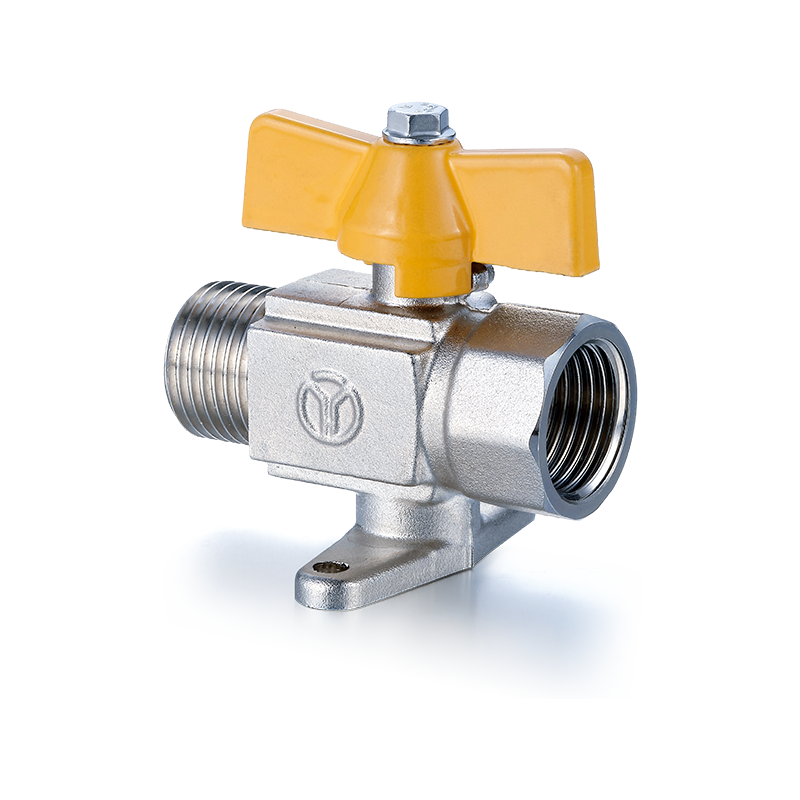
In these settings, the valve is rarely the most expensive component on the panel, but it is the first thing you touch when looking for a leak. That is why manufacturing quality matters more than unit price. Manufacturers comfortable with small brass components usually build their 3-way versions on the same platform as their standard mini ball valve range, with the port routing machined into the ball and body to order. The compact brass mini valves in this series include a range of female and male port combinations that reflect the connection logic described above. The M-F combination, for example, is widely used to connect a male-threaded line to a female-threaded manifold port, a common arrangement in analyser systems.
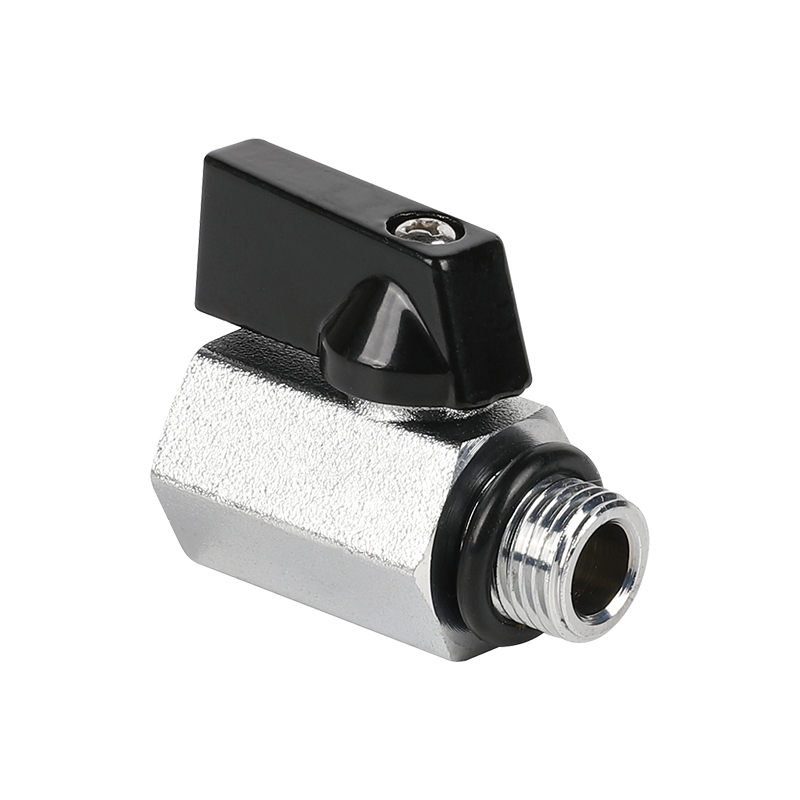 Compact Mini Ball Valve with Male-Female ThreadsThis brass mini valve combines male and female ports for flexible panel integration, featuring nickel plating, leak-proof sealing, and a space-saving short lever.View Product →
For panel outlets and incoming supplies where both sides are female, a compact F-F variant is also available on the same body format.
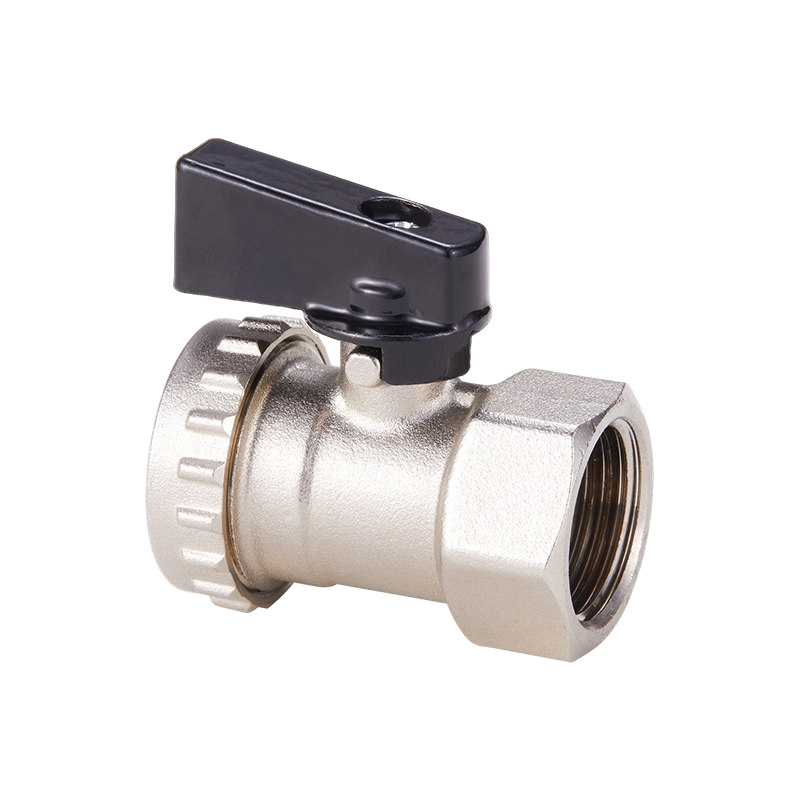 Female-to-Female Mini Ball Valve with Live NutThis F/F brass valve offers tool-free tightening via a knurled body and live nut, ideal for tight spaces and easy alignment in residential and mobile systems.View Product →
If you are comparing suppliers, look for documented pressure test results and a production system that treats inspection as a fixed step. The reliability of these small valves becomes more important as urban water supply and gas infrastructure upgrades push more monitoring points into confined spaces.
What to Verify Before You Order in Bulk
Before placing a bulk order, run through a short checklist. It takes a few minutes and prevents the classic failures that usually appear after installation:
- Confirm the thread form. Do not mix BSPP, BSPT, NPT or metric threads on the same manifold.
- Ask for the port-routing diagram. Make sure the ball passage matches the flow logic you specified.
- Confirm the pressure rating and seat type for low-pressure gas or liquid service. A valve rated for 100 bar is not automatically reliable at 0.1 bar.
- Check handle travel and torque on the sample. A handle that stops at the wrong position is a defect, not a minor deviation.
- Test the production sample under pressure in both open and closed positions. Most small-brass-valve failures occur at the seat interface, not the body.
Warning. For gas installations, confirm that the delivered valve has been tested with the appropriate medium and meets the relevant gas-safety requirements for your market before installation. This is a safety issue, not a paperwork preference.
The Bottom Line
A 1/4 brass mini 3-way ball valve is a small purchase that becomes a large problem when the port logic, thread form or material is wrong. The path to a trouble-free installation is unspectacular: choose L-port or T-port based on your flow logic, match the thread standard to your fittings, verify the brass grade, and ask for pressure test data and production samples. If the supplier can show you those, the risk is low. If the supplier can only quote a price, that price rarely covers the cost of a shutdown.
Related Products
Related News
Contact Us
-

-
 +86-0574-63742169
-
 No.104-128, Cizhang East Road, Zhangqi Town, Cixi City, Ningbo, Zhejiang Province, China


Message Us Now !
