


 English
  русский
  عربى
عربى  Español
What makes brass valves suitable for gas line installations?
Content
- 1 What Makes Brass Valves Suitable for Gas Line Installations
- 2 The Material Properties That Make Brass Gas-Safe
- 3 Common Brass Valve Types Used in Gas Systems
- 4 Sizing Considerations for Gas Line Brass Valves
- 5 Temperature Tolerance and Long-Term Durability
- 6 Code Compliance and Safety Standards
- 7 Installation and Maintenance Best Practices
- 8 Choosing the Right Brass Valve for Your Gas System
Materials & Engineering — Gas Systems
What Makes Brass Valves Suitable for Gas Line Installations
An editorial look at the metallurgy, sizing logic, and code discipline behind the material that quietly holds every gas line together.
Brass valves are suitable for gas line installations because the alloy resists corrosion from natural gas and propane, seals tightly under pressure, machines precisely for leak-free threading, and performs reliably across a wide temperature range without becoming brittle. These four properties combined make brass the default material specified in most residential, commercial, and light industrial gas piping codes. Unlike plain steel, brass does not rust when exposed to moisture that can accumulate inside gas lines, and unlike many plastics, it does not soften, deform, or off-gas when in contact with hydrocarbon-based fuels. For anyone installing, replacing, or inspecting a gas shutoff, regulator, or supply line, understanding why brass performs this role helps clarify what to look for when selecting a valve and how to judge its long-term reliability.
The remainder of this article breaks down the specific material characteristics, common valve types, sizing considerations, and installation practices that explain brass's dominance in gas applications.
The Material Properties That Make Brass Gas-Safe
Brass is a copper-zinc alloy, and the specific ratio of copper to zinc used in valve-grade brass gives it a combination of strength, ductility, and chemical stability that few other common metals match at a comparable price point. When gas passes through a valve body, it can carry trace moisture, sulfur compounds, and particulates depending on the source and processing of the fuel. Brass resists sulfide corrosion and does not oxidize as aggressively as carbon steel, which means the internal sealing surfaces stay smooth and true for far longer.
Corrosion Resistance in Detail
Corrosion is the primary failure mode in gas valves, since even microscopic pitting on a sealing surface can create a leak path. Brass alloys typically used in valve manufacturing achieve corrosion resistance ratings well above plain carbon steel, largely because the zinc content forms a protective layer that slows further oxidation once minor surface exposure occurs. This self-limiting corrosion behavior is one reason brass valves installed decades ago are still frequently found in working condition during inspections.
Machinability and Sealing Precision
Because brass is relatively soft compared to steel but still structurally strong, it can be machined to very tight tolerances. This matters enormously for gas applications, where a valve seat and ball or disc must mate with near-perfect precision to prevent even trace leakage. Manufacturers can cut fine threads and polish sealing surfaces on brass components more consistently than on harder alloys, which directly reduces the likelihood of a faulty seal at the factory stage.
Common Brass Valve Types Used in Gas Systems
Not all brass valves serve the same function within a gas line, and understanding the distinctions helps installers choose the right component for a given point in the system.
Ball Valves for Shutoff Control
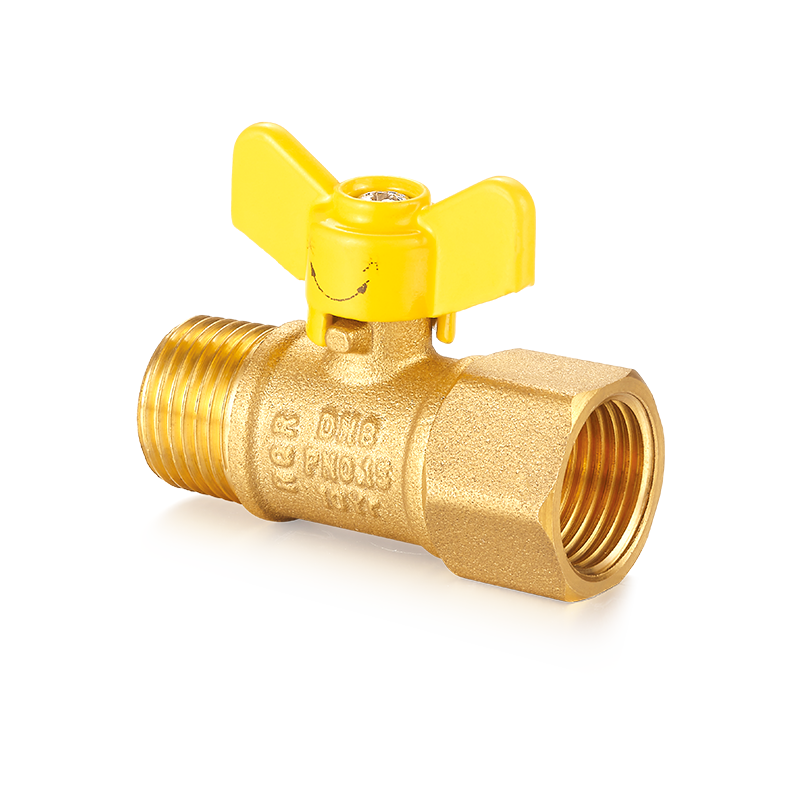
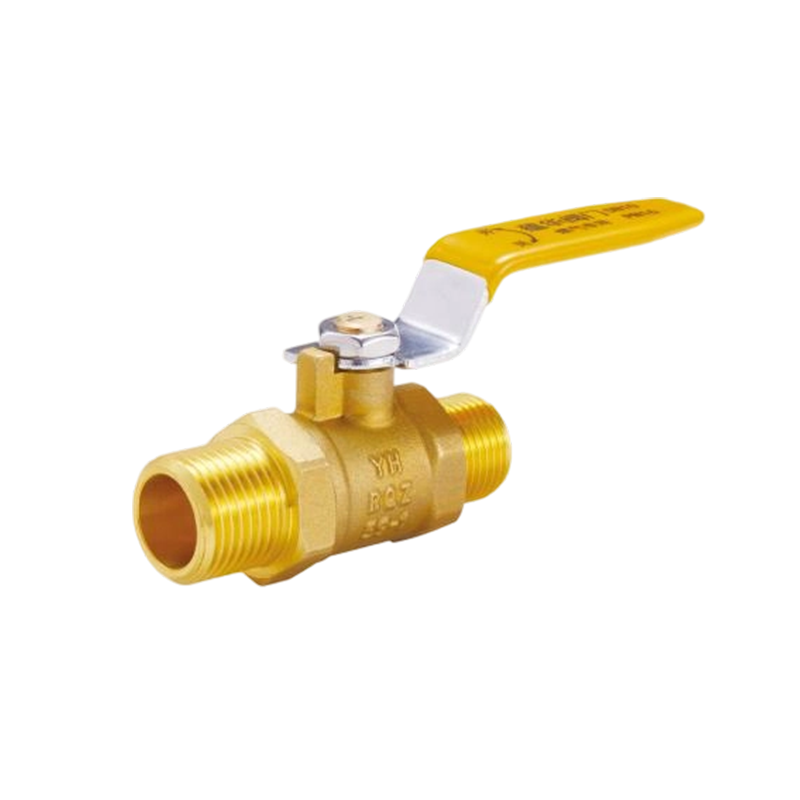
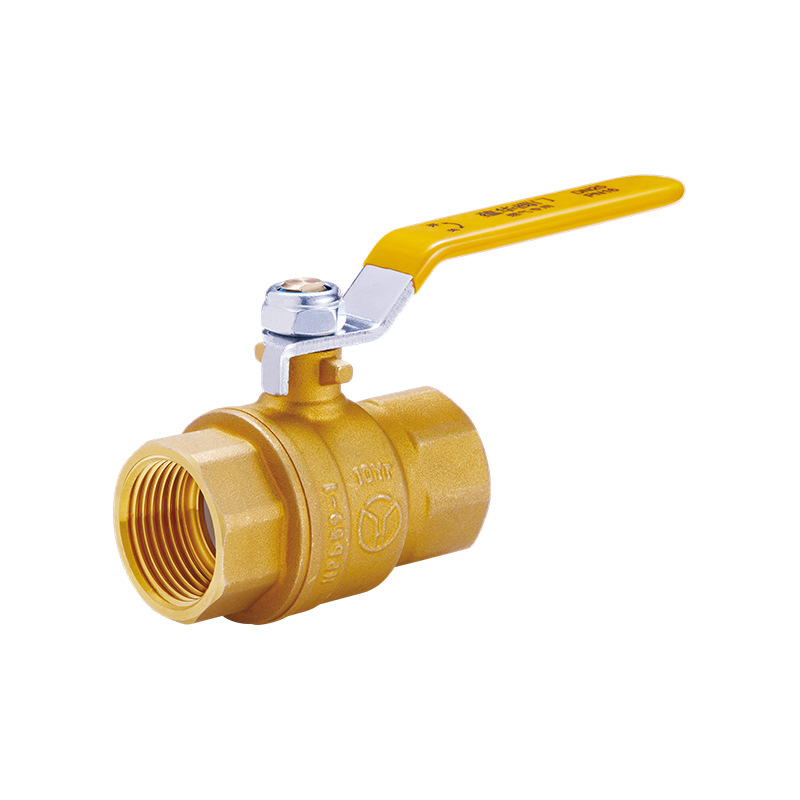
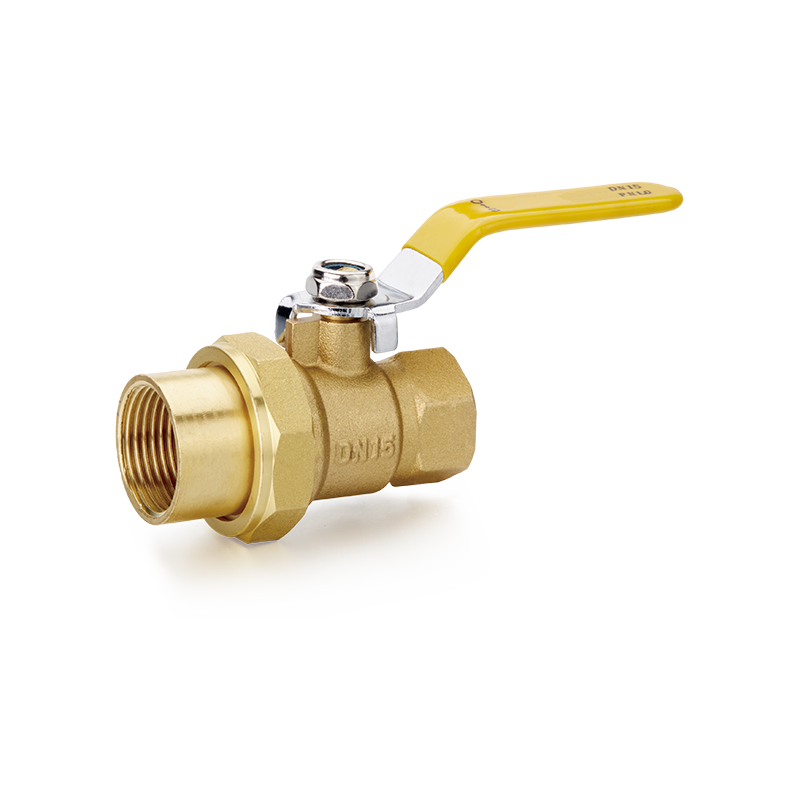
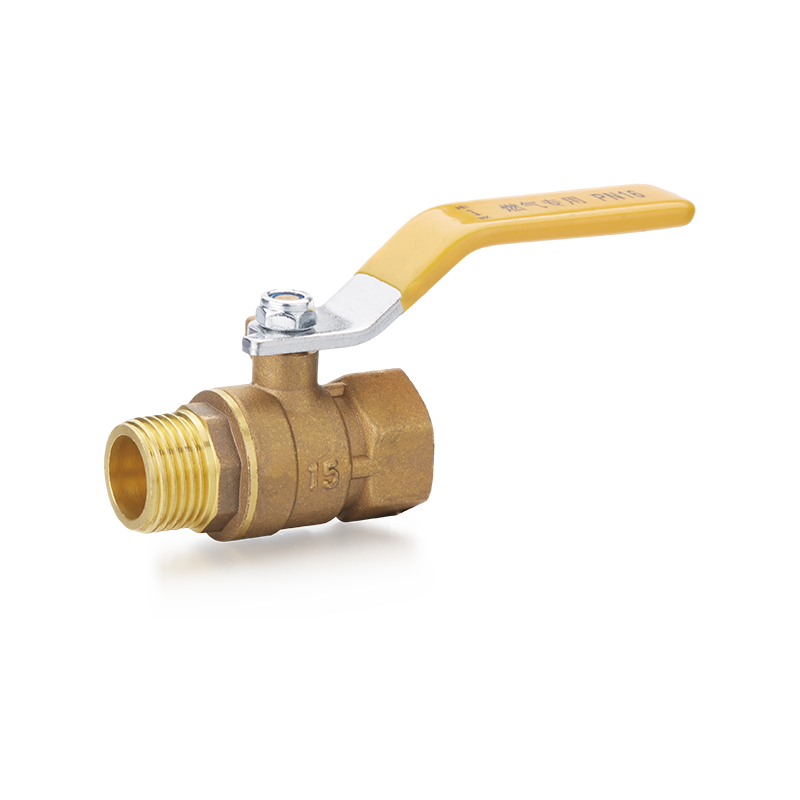
Ball valves are the most common choice for manual gas shutoffs because a quarter-turn of the handle moves the internal ball from fully open to fully closed, giving installers and emergency responders a fast, unambiguous way to stop gas flow. A 1 2 brass ball valve is a typical size used for individual appliance shutoffs, such as at a water heater, stove, or dryer connection, where the smaller bore matches the lower flow demand of a single appliance. Larger distribution points, such as the main feed into a commercial kitchen or a multi-appliance manifold, often call for a 2 1 2 brass ball valve, which accommodates significantly higher volumetric flow without creating a pressure bottleneck.
Check Valves for Backflow Prevention
The Brass Check Valve serves a different purpose: rather than being manually operated, it allows gas to flow in only one direction, automatically closing if pressure reverses. This is important in systems with multiple gas sources, backup generators, or dual-fuel setups, where an unintended reversal of flow could otherwise allow gas to migrate into an unintended branch of the piping network. Check valves are typically installed inline and require no user interaction, which makes their internal reliability especially important since they are rarely inspected during routine use.
A check valve's reliability matters most precisely because no one is watching it — it has to get the decision right every single time, unattended.
Pressure Regulating and Metering Valves
Beyond simple shutoff and backflow prevention, brass bodies are also used in pressure-regulating valves that step down gas pressure from a utility main to the lower pressure required by household appliances. The dimensional stability of brass under repeated pressure cycling helps these regulators maintain consistent output pressure over years of service.
Sizing Considerations for Gas Line Brass Valves
Selecting the correct valve size is not simply a matter of matching pipe diameter; it also involves accounting for flow rate, pressure drop, and the number of downstream appliances. Undersizing a valve can restrict flow to the point that appliances underperform, while oversizing can add unnecessary cost and, in some cases, make precise flow control more difficult.
| Application | Typical Valve Size | Common Valve Type |
|---|---|---|
| Single appliance shutoff | 1/2 inch | Ball valve |
| Multi-appliance manifold | 1 to 1.5 inch | Ball valve |
| Commercial kitchen main feed | 2.5 inch | Ball valve |
| Dual-source backflow protection | Matches line diameter | Check valve |
As the table shows, a 1 2 brass ball valve is generally sufficient for single-point shutoffs where flow demand is modest, while a 2 1 2 brass ball valve becomes necessary when a single valve must handle the combined draw of several large appliances or a commercial-grade burner system. Matching valve bore to expected flow prevents excessive pressure drop, which can otherwise cause pilot lights to extinguish or burners to run inconsistently.
Info
When in doubt between two sizes, consult the appliance manufacturer's rated gas consumption (BTU/hr) rather than guessing from pipe diameter alone.
Temperature Tolerance and Long-Term Durability
Gas lines are often routed through spaces with significant temperature swings, from unconditioned basements and crawl spaces to exterior wall penetrations exposed to seasonal extremes. Brass maintains its structural integrity across a wide temperature band, generally performing reliably from well below freezing up to several hundred degrees Fahrenheit, which covers the vast majority of residential and commercial gas line environments.
Brass Check Valve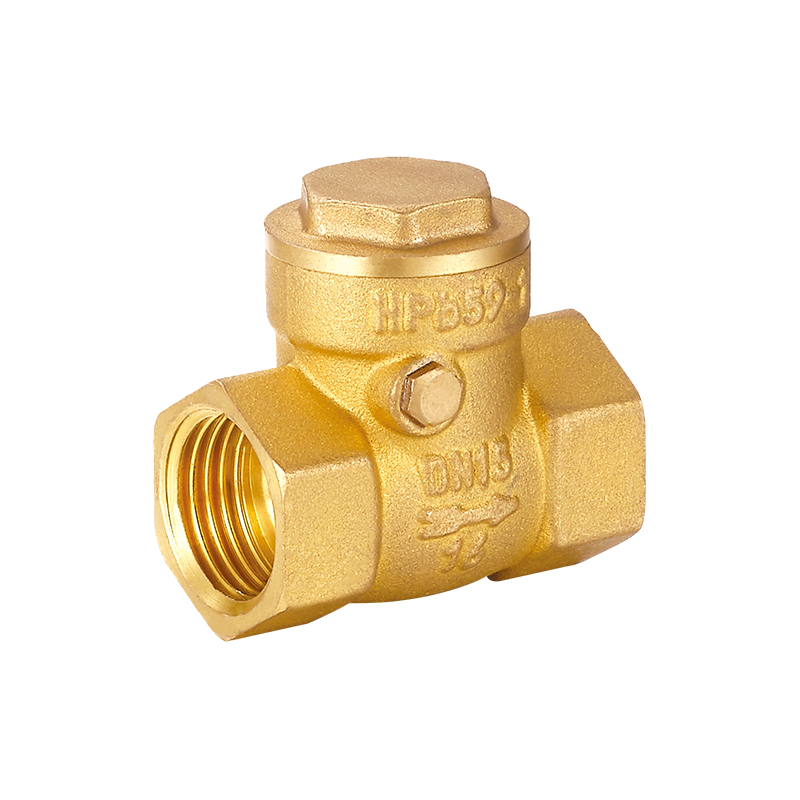
Resistance to Thermal Expansion Stress
Because brass has a predictable and moderate coefficient of thermal expansion, valve bodies do not warp or crack under repeated heating and cooling cycles the way some plastics can. This is particularly relevant near appliances that cycle on and off frequently, since the metal directly adjacent to a burner or water heater connection experiences repeated thermal stress over its service life.
Service Life Expectations
Properly installed brass gas valves commonly remain functional for 20 years or more with only periodic operation to prevent seizing. This longevity reduces the frequency of invasive plumbing work, which is a meaningful advantage in finished walls or slab-covered installations where valve replacement is costly and disruptive.
Success
A brass valve that has been cycled regularly and shows no exterior pitting after a decade of service is a strong sign of a sound original installation.
Code Compliance and Safety Standards
Gas piping is one of the most heavily regulated categories of building infrastructure, and brass valves are widely referenced in plumbing and mechanical codes precisely because their performance characteristics are well documented and consistent.
- Valves must carry a rating explicitly indicating suitability for fuel gas service, since not all brass valves are rated for gas even though many look similar to water valves.
- Threaded connections must use appropriate gas-rated sealants or tape, never standard plumber's putty.
- Shutoff valves must be installed in accessible locations, typically within a defined distance of the appliance they serve.
- Valve handles must clearly indicate open and closed positions, which is a standard feature of quarter-turn ball valve design.
Because a 1 2 brass ball valve and a 2 1 2 brass ball valve share the same fundamental quarter-turn operating principle, inspectors and homeowners alike can visually confirm valve status at a glance regardless of the installation's scale, which is a meaningful safety advantage over multi-turn gate-style valves.
Warning
Never substitute a water-rated brass valve for a gas application. Visual similarity does not guarantee an equivalent internal seal rating or approved gas service listing.
Installation and Maintenance Best Practices
Even the best-suited valve material will underperform if installation practices are poor. A few practical habits extend the reliable service life of any brass gas valve.
Proper Thread Engagement
Over-tightening a brass fitting can distort threads and create micro-gaps, while under-tightening leaves a path for leakage. Following manufacturer torque guidance, rather than relying on feel alone, produces the most consistent seal.
Periodic Operation
Ball valves that sit untouched for years can become stiff. Cycling a valve fully open and closed once or twice a year keeps internal components lubricated by residual gas-line oils and prevents seizing during an emergency shutoff.
Routine Leak Checks
A simple soap-and-water solution applied to valve joints will visibly bubble if gas is escaping, offering an easy, low-cost way to confirm a valve's seal integrity between professional inspections.
Danger
If a soap test produces bubbling at any joint, shut off the supply immediately and do not attempt to tighten a live, leaking connection. Ventilate the area and contact a qualified technician.
Choosing the Right Brass Valve for Your Gas System
When selecting valves for a new installation or replacement project, three factors should guide the decision: required flow capacity, the specific function needed at that point in the system, and confirmed gas-service rating from the manufacturer. A 1 2 brass ball valve suits most individual appliance connections, a 2 1 2 brass ball valve handles higher-capacity distribution points, and a Brass Check Valve protects against backflow wherever multiple gas sources or bidirectional flow risk exists. Matching these components correctly, and maintaining them with basic periodic attention, is what allows brass to deliver the decades of safe, leak-free service that has made it the standard material for gas line valves across residential, commercial, and light industrial applications alike.
Related News
Contact Us
-

-
 +86-0574-63742169
 -
 No.104-128, Cizhang East Road, Zhangqi Town, Cixi City, Ningbo, Zhejiang Province, China


Message Us Now !
