The Brass Check Valve offers several significant installation advantages compared with a Stainless Steel Check Valve. The most notable benefits include easier handling due to lower weight, smoother threaded connections, reduced installation time, better compatibility with common plumbing systems, and lower overall installation costs. For residential, commercial, and many industrial water systems, brass valves are often preferred because they simplify installation while maintaining reliable performance.
In typical water distribution applications, a Brass Check Valve can often be installed faster and with fewer complications than a comparable Stainless Steel Check Valve. While stainless steel remains an excellent choice for highly corrosive or extreme operating environments, brass frequently provides the most practical balance between installation efficiency, performance, and cost.
Understanding the Role of a Check Valve
A check valve is designed to allow fluid to flow in one direction while preventing reverse flow. This simple but essential function protects pumps, piping systems, storage tanks, and other equipment from damage caused by backflow.
Both Brass Check Valves and Stainless Steel Check Valves perform this fundamental task effectively. However, differences in material properties can have a noticeable impact on installation procedures, labor requirements, and long-term maintenance considerations.
Lighter Weight Makes Installation Easier
One of the most immediate advantages of a Brass Check Valve is its relatively manageable weight. During installation, technicians often need to position valves in confined spaces, elevated mechanical rooms, or overhead piping systems. A valve that is easier to handle can significantly improve installation efficiency.
Because brass valve bodies are generally easier to maneuver, installers spend less time aligning connections and supporting the valve during assembly. This can be particularly beneficial in projects involving multiple valves across large facilities.
- Improved handling during installation.
- Reduced installer fatigue.
- Faster positioning and alignment.
- Lower risk of accidental dropping during installation.
These benefits contribute directly to shorter installation times and improved workplace efficiency.
Superior Threading Characteristics
Brass is widely recognized for its excellent machinability. Manufacturers can produce highly accurate threads that engage smoothly with pipe fittings and connectors. This characteristic simplifies installation and reduces the chance of connection issues.
Stainless steel, while exceptionally durable, can occasionally experience thread galling during assembly. Galling occurs when metal surfaces seize together under pressure, making installation more difficult and increasing the possibility of thread damage.
Brass threads are generally smoother and less susceptible to seizing, helping installers achieve secure connections with less effort.
Installation Comparison Table
Comparison of installation-related characteristics between Brass Check Valves and Stainless Steel Check Valves.
| Installation Factor |
Brass Check Valve |
Stainless Steel Check Valve |
| Ease of Handling |
Excellent |
Good |
| Thread Engagement |
Very Smooth |
Moderate |
| Risk of Galling |
Low |
Moderate |
| Installation Time |
Shorter |
Longer |
| Labor Cost |
Lower |
Higher |
Excellent Compatibility with Standard Plumbing Systems
Brass Check Valves are widely used in potable water systems, building services, irrigation networks, and commercial plumbing installations. Because brass is commonly paired with copper and other standard piping materials, installation is often straightforward.
Installers typically do not need specialized adapters or transition fittings when integrating brass valves into existing systems. This compatibility reduces installation complexity and minimizes the likelihood of connection-related issues.
For example, a 1 1 4 inch brass check valve can frequently be installed directly into commercial water distribution systems using standard threaded fittings. This simplifies procurement, installation planning, and field assembly.
Lower Labor Costs and Faster Project Completion
Labor often represents a significant portion of total project costs. Any component that reduces installation time can produce measurable savings.
Because Brass Check Valves are easier to position, thread, and secure, installers can often complete the work more quickly. Even a modest reduction of 10 to 15 minutes per valve can create substantial savings on large projects involving dozens of installations.
In many commercial installations, the reduction in labor costs can exceed the material cost difference between valve types.
- Less installation time.
- Reduced labor expenses.
- Fewer installation errors.
- Improved project scheduling.
Benefits of Installing a Brass Swing Check Valve
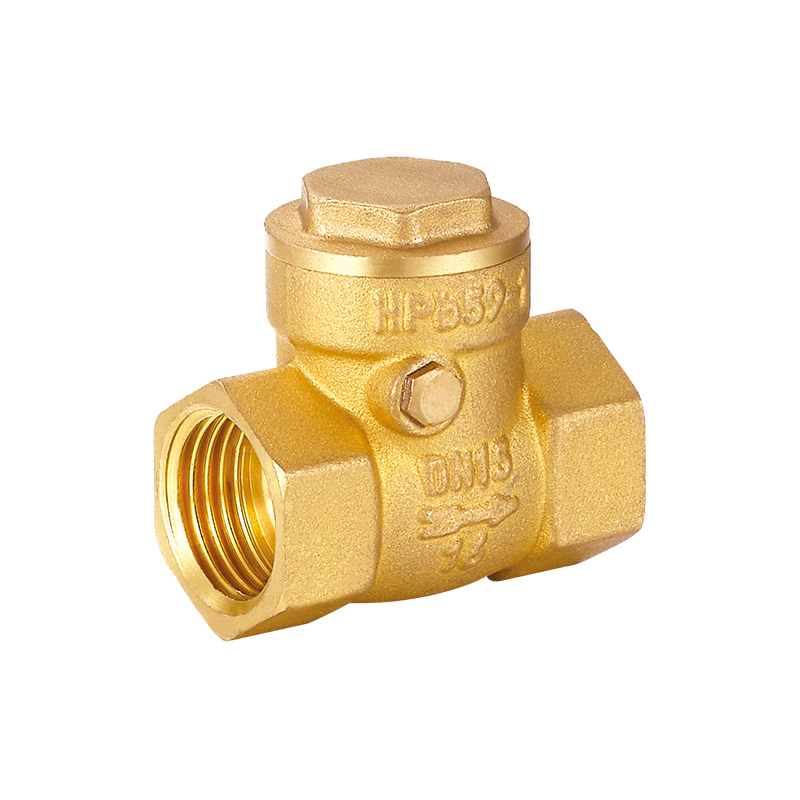
A brass swing check valve is particularly popular in water systems because of its simple construction and reliable operation. The valve uses a hinged disc that opens automatically when fluid flows forward and closes when reverse flow occurs.
From an installation perspective, brass swing check valves are often compact and easy to orient correctly within a pipeline. The simple design reduces installation mistakes and helps technicians verify proper flow direction quickly.
These valves are frequently selected for pump discharge lines, irrigation systems, municipal water applications, and building service installations where reliable backflow prevention is required.
Reduced Risk of Installation Damage
Installation damage can create leaks, reduce service life, and increase maintenance expenses. Brass offers a practical balance of strength and workability that helps reduce these risks.
Because brass is less prone to thread galling than stainless steel, installers are less likely to encounter seized connections during assembly. This contributes to more reliable installations and fewer unexpected delays.
- Reduced risk of thread seizure.
- Lower chance of cross-threading.
- Less risk of overtightening damage.
- Improved connection reliability.
Simplified Future Maintenance
The advantages of a Brass Check Valve do not end after installation. Maintenance accessibility is another important consideration for facility owners and maintenance personnel.
Brass valves can often be removed and reinstalled more easily during inspections, cleaning procedures, or replacement projects. The lower tendency for thread seizure makes future servicing less labor-intensive.
Over the life of a system, these maintenance benefits can contribute to lower operating costs and reduced downtime.
Situations Where Stainless Steel May Be Preferred
Although Brass Check Valves provide numerous installation advantages, Stainless Steel Check Valves remain the preferred choice for certain demanding applications.
- Highly corrosive chemical processing environments.
- Severe marine exposure conditions.
- Very high-pressure systems.
- Applications requiring exceptional material strength.
In these cases, the superior corrosion resistance and mechanical properties of stainless steel may justify the increased installation complexity and cost.
The installation advantages of a Brass Check Valve compared with a Stainless Steel Check Valve include easier handling, smoother threading, lower labor costs, greater compatibility with common plumbing systems, reduced installation risks, and simplified maintenance.
Whether selecting a standard Brass Check Valve, a brass swing check valve, or a 1 1 4 inch brass check valve for larger piping systems, installers often benefit from faster installation and lower total project costs. While stainless steel remains the preferred solution for highly aggressive environments, brass continues to be one of the most practical and installation-friendly materials for check valve applications in water and fluid handling systems.



 English
  русский
  عربى
عربى  Español

 +86-0574-63742169
 No.104-128, Cizhang East Road, Zhangqi Town, Cixi City, Ningbo, Zhejiang Province, China

