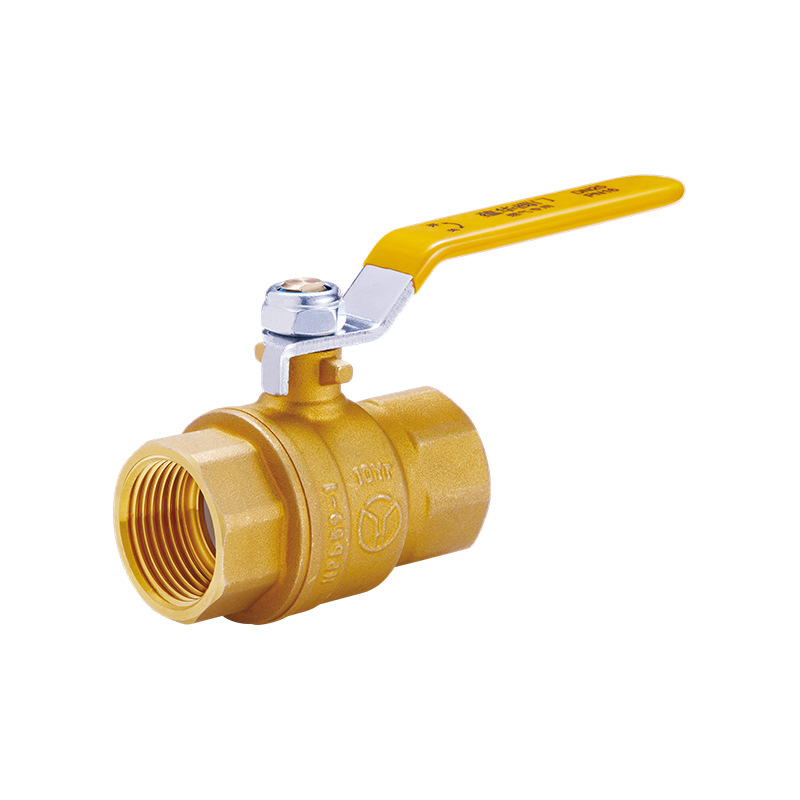
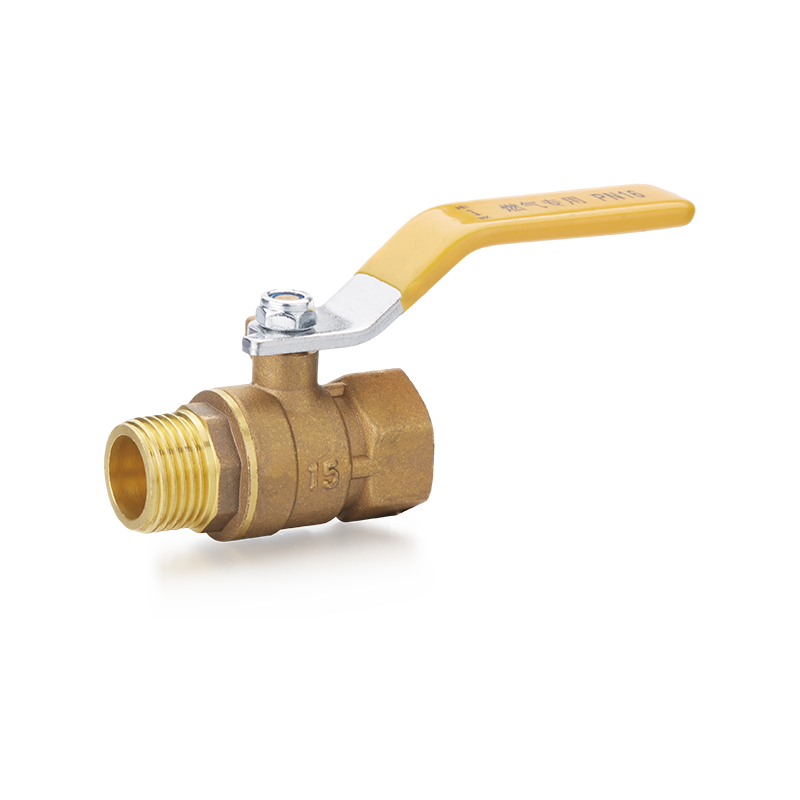
The full-port Mini Ball Valve provides better flow efficiency than a reduced-port Mini Ball Valve because its internal bore is nearly the same size as the connected pipe. This design allows fluid to pass through with minimal restriction, resulting in lower pressure loss, higher flow capacity, and reduced energy consumption. In contrast, a reduced-port Mini Ball Valve has a smaller internal opening that creates additional resistance and turbulence.
For applications where maximizing flow rate and minimizing pressure drop are important, a full-port Mini Ball Valve is generally the superior choice. However, reduced-port designs remain practical for systems where space savings and lower initial costs outweigh the need for maximum flow performance.
The choice ultimately depends on system requirements, operating conditions, fluid type, and budget considerations. Understanding how these valve designs influence flow characteristics can help users make a more informed purchasing decision.
What Is a Full-Port Mini Ball Valve?
A full-port Mini Ball Valve, sometimes called a full-bore valve, features an internal ball opening that closely matches the diameter of the pipeline. When the valve is fully open, fluid encounters very little obstruction because the flow path remains nearly uniform throughout the valve body.
This design is commonly selected for applications where maintaining flow rate is critical. Because there is little reduction in the flow area, the valve minimizes turbulence and pressure losses.
Industries that prioritize process efficiency often choose full-port designs for water systems, compressed air networks, gas distribution, chemical transfer lines, and other applications where unrestricted flow improves overall performance.
What Is a Reduced-Port Mini Ball Valve?
A reduced-port Mini Ball Valve contains a ball opening that is smaller than the internal diameter of the connected pipe. This creates a narrowed flow path inside the valve body.
The reduced opening causes fluid velocity to increase as it passes through the valve. While the valve still provides reliable shut-off functionality, the smaller flow path introduces additional resistance compared with a full-port design.
Reduced-port valves are often selected when system flow demands are moderate and reducing valve size, weight, or cost is a priority.
Key Design Differences
Comparison of full-port and reduced-port Mini Ball Valve characteristics.
| Feature |
Full-Port Mini Ball Valve |
Reduced-Port Mini Ball Valve |
| Bore Size |
Nearly equal to pipe diameter |
Smaller than pipe diameter |
| Flow Restriction |
Minimal |
Moderate |
| Pressure Drop |
Low |
Higher |
| Weight |
Heavier |
Lighter |
| Cost |
Typically higher |
Typically lower |
The fundamental difference is that a full-port valve prioritizes flow performance, while a reduced-port valve balances performance with cost and compactness.
Flow Efficiency Comparison
Flow efficiency measures how effectively fluid moves through a valve without experiencing significant losses. Since a full-port Mini Ball Valve maintains a nearly unrestricted flow path, fluid velocity remains more stable throughout the valve body.
In many practical systems, a full-port valve may provide a flow coefficient (Cv) that is 15% to 40% higher than an equivalent reduced-port valve. This means more fluid can pass through the valve under the same pressure conditions.
For example, in a process line transporting water at 50 gallons per minute, a full-port valve may allow the target flow rate with less energy consumption, while a reduced-port valve could require additional pumping effort to achieve the same performance.
Benefits of Higher Flow Efficiency
- Higher system throughput.
- Lower operating costs.
- Improved equipment performance.
- Reduced flow disturbances.
- Better process consistency.
Pressure Drop Analysis
Pressure drop is one of the most important indicators of valve performance. Whenever fluid passes through a restriction, energy is lost due to friction and turbulence. Because reduced-port valves create a smaller flow area, they generally produce greater pressure losses.
In higher-flow applications, a full-port Mini Ball Valve may reduce pressure losses by 20% to 50% compared with a reduced-port design.
This difference becomes increasingly important in long pipeline systems, pump-driven processes, and applications where maintaining stable downstream pressure is critical.
Lower pressure drop also contributes to reduced energy consumption, which can create meaningful savings over the lifespan of the system.
Performance with Different Fluids
Recommended valve type based on fluid characteristics.
| Fluid |
Recommended Design |
Primary Reason |
| Water |
Full-Port |
Maximum flow efficiency |
| Compressed Air |
Full-Port |
Lower pressure loss |
| Oil |
Full-Port |
Reduced resistance |
| Utility Fluids |
Reduced-Port |
Cost effectiveness |
For viscous fluids, unrestricted flow becomes even more valuable because additional restrictions can significantly increase pumping requirements and operating costs.
The Importance of a Stainless Steel Mini Ball Valve
Material selection is just as important as valve design. A stainless steel mini ball valve is widely used in demanding environments because of its excellent corrosion resistance, mechanical strength, and long service life.
Whether the valve uses a full-port or reduced-port design, a stainless steel mini ball valve can withstand harsh operating conditions, including exposure to moisture, chemicals, and temperature fluctuations.
Many industries prefer a stainless steel mini ball valve for water treatment systems, food processing facilities, pharmaceutical production lines, and chemical transfer applications. The material helps maintain reliability while minimizing maintenance requirements.
When maximum efficiency is required, combining a full-port configuration with a stainless steel mini ball valve body often delivers the best overall performance.
Cost Versus Performance
Although full-port valves offer better hydraulic performance, they generally cost more because they require larger internal components and additional material.
Advantages of Full-Port Mini Ball Valves
- Maximum flow capacity.
- Lower pressure losses.
- Improved energy efficiency.
- Better performance in demanding systems.
Advantages of Reduced-Port Mini Ball Valves
- Lower initial investment.
- Compact dimensions.
- Reduced weight.
- Suitable for moderate-flow applications.
For systems that operate continuously, the long-term energy savings associated with lower pressure losses may justify the higher purchase price of a full-port valve.
When Should You Choose Each Design?
Choose a Full-Port Mini Ball Valve When:
- Flow efficiency is critical.
- Pressure loss must be minimized.
- The system handles high flow volumes.
- Energy efficiency is a priority.
Choose a Reduced-Port Mini Ball Valve When:
- Budget constraints are significant.
- Flow demand is relatively low.
- Installation space is limited.
- Minor pressure losses are acceptable.
The full-port Mini Ball Valve delivers superior flow efficiency because its larger internal bore minimizes pressure drop, reduces turbulence, and allows greater flow capacity. In most performance-focused applications, it provides measurable advantages in system efficiency and operating costs.
A reduced-port Mini Ball Valve remains a practical option when budget, compact size, and moderate flow requirements are the primary considerations. By evaluating flow demands, operating conditions, and lifecycle costs, users can select the valve configuration that best aligns with their application objectives.
For demanding environments requiring durability and corrosion resistance, a stainless steel mini ball valve combined with the appropriate port design offers an effective balance of reliability, efficiency, and long-term value.



 English
  русский
  عربى
عربى  Español
 View More
 View More
 View More
 View More
 View More
 View More

 +86-0574-63742169
 No.104-128, Cizhang East Road, Zhangqi Town, Cixi City, Ningbo, Zhejiang Province, China

