
- Home
- Products
- Valve
- Brass Filter
- Brass Pressure Reducing Valve
- Brass Globe Valve
- Brass Gate Valve
- Brass Check Valve
- Ductile Iron Gate Valve
- Mini Ball Valve
- Forged Steel Long-Handle Ball Valve
- Brass Ball Valve With Base
- Brass Butterfly Handle Ball Valve
- Brass Hose Ball Valve
- Brass Lockable Ball Valve
- Brass Long-Handle Ball Valve
- Brass Right-Angle Ball Valve
- Hardware Accessories
- Valve
- About Us
- Capabilities
- News
- Contact Us


 English
  русский
  عربى
عربى  Español
Menu
- Home
- Products
- Valve
- Brass Filter
- Brass Pressure Reducing Valve
- Brass Globe Valve
- Brass Gate Valve
- Brass Check Valve
- Ductile Iron Gate Valve
- Mini Ball Valve
- Forged Steel Long-Handle Ball Valve
- Brass Ball Valve With Base
- Brass Butterfly Handle Ball Valve
- Brass Hose Ball Valve
- Brass Lockable Ball Valve
- Brass Long-Handle Ball Valve
- Brass Right-Angle Ball Valve
- Hardware Accessories
- Valve
- About Us
- Capabilities
- News
- Contact Us
Industry News
Home / News / Industry News / Brass Check Valve and Brass Gate Valve: The Complete Selection, Application, and Maintenance Guide
Industry News
Home / News / Industry News / Brass Check Valve and Brass Gate Valve: The Complete Selection, Application, and Maintenance Guide
Brass Check Valve and Brass Gate Valve: The Complete Selection, Application, and Maintenance Guide
Content
- 1 Which Brass Valve Does Your System Actually Need
- 2 Brass Check Valve: How It Works, Types, and Correct Application
- 3 Brass Gate Valve: Construction, Operating Principle, and Correct Use
- 4 Brass Check Valve vs Brass Gate Valve: Direct Comparison
- 5 Sizing and Selection Criteria for Both Valve Types
- 6 Materials, Standards, and What to Verify Before Purchasing
- 7 Installation Best Practices for Brass Check Valves and Brass Gate Valves
- 8 Maintenance and Troubleshooting for Brass Valves in Service
- 9 Frequently Asked Questions
- 9.1 1. What is the main difference between a Brass Check Valve and a Brass Gate Valve?
- 9.2 2. Can a Brass Gate Valve be used to control flow rate?
- 9.3 3. How do I know which direction to install a Brass Check Valve?
- 9.4 4. What brass alloy should a Brass Gate Valve or Brass Check Valve be made from for potable water?
- 9.5 5. What causes a Brass Check Valve to chatter or make noise in service?
- 9.6 6. How often should a Brass Gate Valve be exercised if it is used as a normally-open isolation valve?
- 9.7 7. Can a Brass Check Valve be installed in a vertical downward flow pipe?
- 9.8 8. What is the pressure drop through a Brass Gate Valve when fully open?
- 9.9 9. How long does a Brass Gate Valve or Brass Check Valve last in normal water service?
- 9.10 10. Is a Brass Gate Valve or a ball valve better for residential water main shutoff?
Which Brass Valve Does Your System Actually Need
A Brass Check Valve prevents reverse flow automatically without any operator action, while a Brass Gate Valve provides a manually operated full-bore shutoff that either fully opens or fully closes a pipeline. These two valve types are not interchangeable. Confusing them in system design creates either uncontrolled backflow (if a check valve is omitted where required) or inadequate flow control (if a gate valve is used in applications where it will be partially opened, which causes vibration damage and accelerated seat wear).
The practical rule: install a Brass Check Valve wherever reverse flow would damage equipment, contaminate a supply, or create a safety hazard. Install a Brass Gate Valve wherever a clean, low-resistance full-bore shutoff is needed for isolation, maintenance, or system sectioning. Most real piping systems require both types at different locations within the same circuit.
Brass Check Valve: How It Works, Types, and Correct Application
A Brass Check Valve is an automatic, self-actuating valve that permits fluid flow in one direction only. It has no external operator, handle, or actuator. The valve opens passively when forward flow pressure exceeds the cracking pressure of the check mechanism, and it closes automatically when flow stops or reverses, using the combination of spring force (in spring-loaded types) and back pressure from the downstream side to seat the closing element.
The Three Main Types of Brass Check Valve
- Swing check valve: A hinged disc (the clapper) swings open on forward flow and swings back against the seat on reverse flow or flow cessation. Swing check valves have low cracking pressure (typically 0.02 to 0.05 bar), making them easy to open under low differential pressure. They are suitable for horizontal or vertical upward flow orientations. The main limitation is water hammer risk when the clapper slams shut on sudden flow reversal; this shock can exceed 10 bar in fast-closing swing checks on long pipeline runs. Brass swing check valves are commonly used in domestic water supply, heating circuits, and general low-pressure plumbing in sizes from DN15 (1/2 inch) to DN100 (4 inch).
- Spring-loaded piston or lift check valve: A piston or disc is held against the seat by a compressed spring and lifts off the seat when forward flow pressure overcomes the spring force plus any back pressure. Spring-loaded Brass Check Valves are insensitive to flow orientation and can be installed in any position including vertical downward flow, which swing check valves cannot. The spring preload creates a defined cracking pressure (typically 0.1 to 0.3 bar), which prevents the valve from chattering at very low flow rates where a swing check would oscillate. These are the preferred format for pump discharge lines, boiler feed lines, and installations where pipe orientation cannot be controlled.
- Dual plate (wafer) check valve: Two semicircular spring-loaded plates close against a central stop on flow reversal. The wafer body fits between flanges, making the overall length significantly shorter than a standard body valve. Dual plate brass check valves are used where space is constrained. Their fast closure reduces water hammer compared to swing checks but they require careful spring selection to avoid chattering at low flow.
Where Brass Check Valves Are Mandatory in System Design
- Pump discharge lines: Every centrifugal pump discharge must have a check valve to prevent backflow through the stopped pump when an adjacent pump continues operating in a parallel pump system. Without a Brass Check Valve on the discharge of each pump, the running pump backflows through the stopped pump, driving it in reverse and potentially damaging the impeller, shaft seal, and motor bearings.
- Domestic hot water heater connections: Building codes in most markets including the United States (ASME A112.21.3), the United Kingdom (BS 6282), and European markets (EN 13959) require a check valve on the cold water supply to every water heater to prevent thermosyphon backflow of hot water into the cold supply mains when the heater is hot and the supply pressure drops.
- Backflow prevention in cross-connected systems: Any connection between potable water supply and a non-potable circuit (swimming pool filling, irrigation, industrial cooling water) requires a backflow prevention assembly that includes a Brass Check Valve as a minimum, with more complex reduced pressure zone (RPZ) assemblies required for high-hazard cross-connections per AWWA and local water utility requirements.
- Boiler and steam system feed lines: The feed water line entering a boiler must have a check valve to prevent steam or hot boiler water from flowing back into the feed pump when the pump stops, which would cause flashing and pump cavitation damage on restart.
Brass Check Valve Pressure and Temperature Ratings
Standard commercial Brass Check Valves manufactured to BS 5154, ANSI/ASME B16.34, or DIN standards are rated for the following common service conditions:
| Valve Class | Maximum Working Pressure (bar) | Maximum Temperature (°C) | Typical Application |
|---|---|---|---|
| PN16 | 16 bar | 110°C | Residential plumbing, HVAC |
| PN25 | 25 bar | 130°C | Commercial building services, light industrial |
| Class 125 (ANSI) | 13.8 bar (200 psi) for non-shock cold water | 93°C | North American plumbing and utility systems |
Brass Gate Valve: Construction, Operating Principle, and Correct Use
A Brass Gate Valve is a linear motion manual isolation valve where a flat or wedge-shaped gate (disc) is raised or lowered perpendicular to the flow path by rotating an external handwheel. When fully open, the gate retracts completely from the flow bore, creating a full-bore opening with minimal pressure drop. When fully closed, the gate presses firmly against two seating faces on either side of the bore, creating a bidirectional shutoff seal.
Gate Valve Construction Components
A standard Brass Gate Valve consists of the following primary components, each contributing to the valve's performance and service life:
- Body and bonnet: Cast or forged brass body with a removable bonnet that houses the stem and packing. Threaded bonnet connections (union bonnet) are standard for smaller valve sizes (DN15 to DN50). Bolted bonnets provide a more robust seal in larger sizes (DN65 and above) where operating torque and line pressure create higher bonnet joint stresses.
- Wedge gate (disc): The closing element that provides the shutoff seal. Solid brass wedge gates are standard for water and general utility service. Flexible wedge designs with split or hollowed gates provide better sealing against valve seats that have distorted slightly due to pipe strain, making them preferred for high-pressure and high-temperature applications where rigid wedge gates can bind on closing.
- Stem and packing: The threaded stem converts rotational handwheel motion to linear gate movement. Outside screw and yoke (OS and Y) designs are standard for industrial applications because the stem position visually indicates whether the valve is open or closed. Inside screw designs are more compact but give no visual position indication. Packing around the stem prevents leakage to atmosphere; PTFE packing is standard in modern Brass Gate Valves for its chemical resistance and low friction.
- Seats: The seating surfaces within the body against which the gate closes. In brass gate valves, the seats are either integral machined brass seats or renewable stainless steel or bronze seat rings that can be replaced when worn without replacing the entire valve body.
The Critical Rule: Never Throttle a Brass Gate Valve
The single most important operational rule for a Brass Gate Valve is that it must be operated either fully open or fully closed and must never be used in a partially open position to regulate flow. Using a gate valve as a throttle valve causes the high-velocity jet of fluid through the partially opened gate to impinge on the downstream seat and the gate edges, causing erosive wear that destroys the seating surfaces within weeks in high-flow applications. A gate valve with an eroded seat cannot seal properly when closed, creating a permanent internal leakage path that makes the valve functionally useless as an isolation device even when it appears to be closed.
If flow regulation is required in addition to shutoff capability, a separate globe valve, needle valve, or ball valve rated for throttling service should be installed in series with the gate valve. The gate valve provides the shutoff isolation when maintenance is required, and the throttling valve provides the flow regulation during normal operation.
Applications Where Brass Gate Valves Are the Correct Specification
- Main isolation valves in building water supply: The building main shutoff valve, meter isolation valves, and branch circuit isolation valves are all appropriate applications for Brass Gate Valves because they require infrequent operation, need full-bore flow when open (to avoid pressure drop in the supply), and benefit from the positive two-direction shutoff capability of the gate valve design.
- Irrigation system main shutoffs: Agricultural and landscape irrigation mains handling sediment-laden water benefit from the full-bore opening of a gate valve, which prevents solids accumulation in the valve body that would occur with the tortuous flow path of a globe valve.
- Low-frequency industrial isolation: Process equipment isolation for maintenance in chemical plants, refineries, and manufacturing facilities where the valve is opened for normal operation and closed only for plant shutdown or equipment maintenance. The low operation frequency (perhaps 10 to 50 cycles per year) suits the gate valve's design, which is optimized for reliable sealing at rest rather than frequent cycling.
- Fire protection systems: Many fire suppression system isolation valves use OS and Y gate valve designs because the visual stem position indicator confirms the valve is open (stem fully extended) or closed (stem fully retracted), which is an important safety check in a system that must be ready to operate on demand.
Brass Check Valve vs Brass Gate Valve: Direct Comparison
Understanding the functional differences between these two valve types prevents misspecification errors that are common in small-scale plumbing projects where buyers may select whichever brass valve is available without understanding the specific function each serves.
| Feature | Brass Check Valve | Brass Gate Valve |
|---|---|---|
| Actuation method | Automatic (no operator action required) | Manual (handwheel rotation required) |
| Flow direction control | One direction only (prevents backflow) | Bidirectional (can isolate from either side) |
| Flow when open | Restricted by valve mechanism (some pressure drop) | Full bore (minimal pressure drop) |
| Throttling capability | None (automatic open or close only) | Not permitted (full open or closed only) |
| Primary function | Backflow prevention | On/off isolation |
| Installation orientation | Depends on type (spring check works any orientation) | Horizontal or vertical stem up preferred |
| Typical size range | DN6 (1/4 inch) to DN200 (8 inch) | DN15 (1/2 inch) to DN150 (6 inch) in brass |
Sizing and Selection Criteria for Both Valve Types
Correct valve sizing prevents two opposite problems: undersized valves that create excessive pressure drop and restrict system flow, and oversized valves that cost more than necessary and in the case of check valves may chatter at low flow rates because the flow velocity is insufficient to hold the check mechanism fully open.
Sizing a Brass Gate Valve
A Brass Gate Valve is almost always sized to match the pipe diameter at the point of installation, because its full-bore design means that a gate valve sized to the pipe creates negligible additional pressure drop in the fully open position. The only exception is when a gate valve is deliberately sized one size smaller than the pipe to reduce cost in a low-flow branch where the pressure drop of a slightly undersized valve is acceptable. For domestic water supply applications, a Brass Gate Valve pressure drop in the fully open position is typically only 0.1 to 0.3 meters of water head (0.01 to 0.03 bar) for standard flow rates, which is negligible compared to the system pressure available.
Sizing a Brass Check Valve
Sizing a Brass Check Valve requires more care than sizing a gate valve because the check mechanism creates a pressure drop that varies with flow rate and because the valve must be sized to avoid chattering at minimum expected flow conditions. The recommended approach is:
- Calculate the maximum flow velocity through the valve at the nominal pipe diameter. Flow velocity above 3 m/s in a swing check valve causes excessive noise and accelerated disc wear. Velocities of 1.5 to 2.5 m/s are optimal for most swing check designs.
- For spring-loaded Brass Check Valves, verify that the minimum expected flow rate produces a pressure differential across the valve of at least 1.5 times the valve's cracking pressure to prevent the valve from oscillating between open and closed at low flow rates.
- If the pipe diameter produces too high a flow velocity, consider selecting the check valve one pipe size larger than the pipe and using reducers to transition between pipe and valve connection sizes. This is common practice in pump suction and discharge piping where flow velocities in the connecting pipe are close to the maximum acceptable limit for check valve service.
Materials, Standards, and What to Verify Before Purchasing
The quality range among commercially available Brass Check Valves and Brass Gate Valves spans from products meeting stringent international standards to products that are simply labeled as brass but fail basic material and dimensional compliance tests within months of installation. Knowing what to verify before purchasing saves the cost and disruption of valve failure in service.
Brass Alloy Composition: Why It Matters
Not all brass is equal. The brass alloys used in plumbing and industrial valves span a range from dezincification-resistant (DZR) brass to standard yellow brass and inferior alloys with uncontrolled composition. In potable water applications, valves must be manufactured from DZR brass or low-lead brass containing a maximum of 0.25% lead by weighted average under NSF/ANSI 61 and NSF/ANSI 372 requirements. Standard yellow brass (approximately 65% copper, 35% zinc) is susceptible to dezincification in soft, acidic water or water with chloride concentrations above 200 mg/L, where zinc is selectively leached from the alloy, leaving a porous copper-rich sponge that fails structurally under normal operating pressure within years of installation.
DZR brass contains a small addition of arsenic (0.02% to 0.06%) that prevents the selective leaching of zinc, maintaining the alloy's mechanical properties over the full service life of the valve. DZR brass valves are identified by the designation CW602N (European standard) or C35330 (ASTM standard) in material certification documentation.
Certifications and Standards to Require
- NSF/ANSI 61 and NSF/ANSI 372: Required for any valve in contact with potable water in North American markets. Confirms that lead and contaminant extraction from the valve material does not exceed safe limits for drinking water contact.
- EN 12288 (Brass Gate Valves) and EN 13959 (Check Valves): European standard governing the design, testing, and marking requirements for brass gate and check valves in building services applications. Products sold in EU markets should carry CE marking referencing these standards where applicable.
- WRAS (Water Regulations Advisory Scheme) approval: Required for valves used in potable water systems in the United Kingdom. WRAS approval confirms that the valve materials and construction comply with the Water Supply (Water Fittings) Regulations 1999.
- Hydrostatic shell test and seat test: Every valve before shipment should be hydrostatically tested to 1.5 times its maximum allowable pressure (MAP) for the shell integrity test and to 1.1 times MAP for the seat leakage test per EN 12266 or ASME B16.34. Request test certificates for high-pressure or safety-critical applications.
Installation Best Practices for Brass Check Valves and Brass Gate Valves
Correct installation is as important as correct valve selection. Even a properly specified valve will fail prematurely or perform inadequately if installed without following the manufacturer's guidance and general piping engineering best practices.
Installing a Brass Check Valve Correctly
- Verify flow direction arrow on valve body: Every Brass Check Valve has a flow direction arrow cast or stamped on the body. Install the valve with this arrow pointing in the direction of intended (forward) flow. Reversed installation creates a permanently closed valve that blocks all flow.
- Observe minimum straight pipe runs: Install the check valve at least 5 pipe diameters downstream of any elbow, tee, or pump discharge to avoid turbulent flow conditions that cause valve chattering and premature disc wear. For pump discharge check valves, the recommended straight pipe length upstream of the check valve is 10 pipe diameters minimum to allow velocity profile development.
- Confirm orientation compatibility: Swing check valves must be installed with the hinge pin horizontal or with the disc swinging in the upward direction. They cannot be installed in vertical downward flow because gravity holds the disc closed regardless of forward flow. Spring-loaded Brass Check Valves can be installed in any orientation.
Installing a Brass Gate Valve Correctly
- Preferred orientation is horizontal pipeline with stem vertical or angled upward: Vertical stem-up installation prevents sediment from accumulating in the gate pocket (the recess in the valve body where the gate retracts when open), which in a stem-down installation would prevent the gate from fully closing and cause seat damage as the gate is forced closed against the accumulated material.
- Support the pipe independently from the valve: Brass Gate Valves in larger sizes (DN50 and above) are heavy enough that unsupported installation imposes significant bending stress on the connecting pipe joints at the valve ends. Provide pipe support within 300mm on each side of the valve to prevent joint leakage from pipe deflection over time.
- Exercise the valve before commissioning: Fully open and close the valve 2 to 3 times after installation to verify free operation of the handwheel and confirm that no thread damage or interference from installation debris prevents full travel of the gate. A gate valve that cannot be fully closed is not a functional isolation device and must be replaced or repaired before the system is commissioned.
Maintenance and Troubleshooting for Brass Valves in Service
Brass valves require relatively little maintenance in clean water service, but specific failure modes become predictable over time and can be addressed proactively to avoid unplanned system shutdowns.
Common Brass Check Valve Failures and Their Causes
- Chattering or noise during operation: Caused by insufficient flow velocity to hold the check disc fully open, or by a worn or weak spring that allows partial closure at normal flow rates. Solution: verify that the valve is correctly sized for the installed flow rate; consider replacing with a next-size-smaller valve if the pipe velocity at the current size is below the minimum for stable open operation.
- Failure to prevent backflow (internal leakage): Caused by scale or debris trapped on the seat face preventing the disc from sealing, by a worn or deformed disc seat, or by a failed disc spring in spring-loaded types. Clean the seat and disc with the valve in service by briefly cycling flow; if leakage persists, the valve requires disassembly for seat cleaning or seat replacement.
- External leakage from body joints: Usually caused by installation torque damage to threaded connections, or by thermal cycling stress on threaded joints in hot water service. Apply PTFE thread tape to all threaded connections and torque to manufacturer specification (typically 30 to 60 Nm for DN15 to DN50 brass fittings) to avoid both under-torquing (leakage) and over-torquing (thread stripping).
Common Brass Gate Valve Failures and Their Causes
- Stem packing leakage: The most common gate valve maintenance requirement. Gland packing compresses over time in service and allows leakage past the stem to atmosphere. The solution in most valve designs is to tighten the gland nut by one quarter to one half turn to compress the packing against the stem. If tightening does not stop the leak, the packing must be replaced with new PTFE or graphite packing rope of the correct cross-section dimension for the valve size.
- Valve stuck open or closed (seized stem): Caused by corrosion or scale on the stem threads, particularly in valves that are infrequently operated and left in one position for years without exercise cycling. Apply penetrating oil to the stem threads and work the valve through small angular increments rather than applying large torque that can shear the stem. Once freed, apply a thin coat of molybdenum disulfide or PTFE grease to the stem threads before closing and periodically exercise the valve through its full travel at least annually to prevent future seizure.
- Internal seat leakage (valve does not seal when closed): Most commonly caused by grit or scale particles trapped between the gate and seat during closing, which embeds in the softer brass seat surface and prevents the line contact seal from forming. Flush the valve by fully opening it briefly to clear the seat, then close again. If leakage persists after multiple flush cycles, the seat faces require lapping or the valve requires replacement.
Frequently Asked Questions
1. What is the main difference between a Brass Check Valve and a Brass Gate Valve?
A Brass Check Valve is an automatic valve that allows flow in only one direction and closes without any operator action when flow stops or reverses. A Brass Gate Valve is a manually operated valve that the operator opens or closes by turning a handwheel, and it provides bidirectional shutoff isolation. The check valve prevents backflow; the gate valve provides manual isolation. Both are often required in the same system at different locations.
2. Can a Brass Gate Valve be used to control flow rate?
No. A Brass Gate Valve must only be operated in the fully open or fully closed position. Using it in a partially open position to throttle flow causes the high-velocity fluid jet to erode the gate and seat faces, destroying the valve's sealing capability within weeks or months of throttle operation. If flow regulation is needed, install a globe valve, ball valve, or needle valve rated for throttling service.
3. How do I know which direction to install a Brass Check Valve?
Every Brass Check Valve has a flow direction arrow cast or stamped on the valve body. Install the valve with this arrow aligned with the direction of intended forward flow in the pipe. If the arrow points in the wrong direction, the valve will block all flow permanently in that location. For spring-loaded check valves without a clearly visible arrow, the inlet port (where flow enters the valve) can be identified as the side that the piston or disc face is exposed to when the valve is open.
4. What brass alloy should a Brass Gate Valve or Brass Check Valve be made from for potable water?
For potable water applications, both Brass Gate Valves and Brass Check Valves should be manufactured from lead-free brass (maximum 0.25% lead by weighted average per NSF/ANSI 372) or from dezincification-resistant (DZR) brass (alloy designation CW602N in Europe or C35330 per ASTM) where the water chemistry creates dezincification risk. Request NSF/ANSI 61 and NSF/ANSI 372 certification documentation from the valve supplier for any valve used in potable water supply, regardless of country of origin.
5. What causes a Brass Check Valve to chatter or make noise in service?
Chattering in a Brass Check Valve is caused by the check disc or piston oscillating between open and closed positions because the flow velocity through the valve is too low to hold the mechanism stably open, or the spring preload in a spring-loaded type is too high relative to the available differential pressure at the installed flow rate. The fix is to select a check valve sized one pipe diameter smaller (which increases velocity and differential pressure across the valve at the same volumetric flow rate), or to select a valve with a lighter spring that opens more fully at the available differential pressure.
6. How often should a Brass Gate Valve be exercised if it is used as a normally-open isolation valve?
Gate valves used in the normally open position and only closed for maintenance isolation should be fully exercised (opened and closed through their full travel) at minimum once per year. More frequent exercise cycles of quarterly operation are recommended for critical isolation valves on life safety systems (fire protection isolation, emergency shutdown lines) to verify that the valve will operate reliably when needed. Annual exercise prevents the stem thread corrosion and scale adhesion that causes gate valves to seize in place after years of inactivity.
7. Can a Brass Check Valve be installed in a vertical downward flow pipe?
It depends on the valve type. Swing check valves cannot be installed in vertical downward flow because gravity holds the clapper disc closed regardless of forward flow, permanently blocking the pipe. Spring-loaded piston or lift check valves can be installed in vertical downward flow because the spring provides the closing force rather than gravity, and forward flow pressure must overcome the spring to open the valve regardless of orientation. Always confirm the permissible installation orientations with the specific valve manufacturer before installing a check valve in anything other than a horizontal pipe.
8. What is the pressure drop through a Brass Gate Valve when fully open?
The pressure drop through a fully open Brass Gate Valve is very low because the gate retracts completely from the bore, creating a nearly unobstructed flow path. At typical domestic water supply flow rates, the pressure drop is 0.01 to 0.05 bar (approximately 100 to 500 mm of water head) depending on valve size and flow velocity. This is significantly lower than the pressure drop through a ball valve, globe valve, or check valve at equivalent flow conditions, which is why gate valves are specified for main isolation duties where minimizing flow resistance is important.
9. How long does a Brass Gate Valve or Brass Check Valve last in normal water service?
In clean potable water service at normal operating pressures (up to 10 bar) and temperatures (up to 90 degrees Celsius), both Brass Gate Valves and Brass Check Valves have design service lives of 20 to 40 years when manufactured from appropriate brass alloys and operated correctly. Gate valve service life is primarily limited by packing wear (repaired by packing replacement, not valve replacement) and seat erosion from throttle operation (prevented by correct operating practice). Check valve service life is primarily limited by disc and seat wear from flow turbulence and water hammer, which is mitigated by correct sizing and installation.
10. Is a Brass Gate Valve or a ball valve better for residential water main shutoff?
Modern residential plumbing practice in most markets has shifted toward ball valves for main shutoff applications because ball valves require only a quarter turn to operate (versus multiple full rotations for a gate valve), are less likely to seize in place after years of inactivity, and their stem packing design is less prone to leakage under the thermal cycling of domestic hot and cold supply systems. However, Brass Gate Valves remain acceptable and are widely used in older installations. If replacing an existing Brass Gate Valve in a residential main shutoff application, a lead-free brass ball valve with full-bore flow capacity is the current recommended upgrade for its combination of reliability, ease of operation, and low maintenance requirements over a 25 to 40 year service life.
Product Categories
Recommended News
Related Products
-
 View More
-
 View More
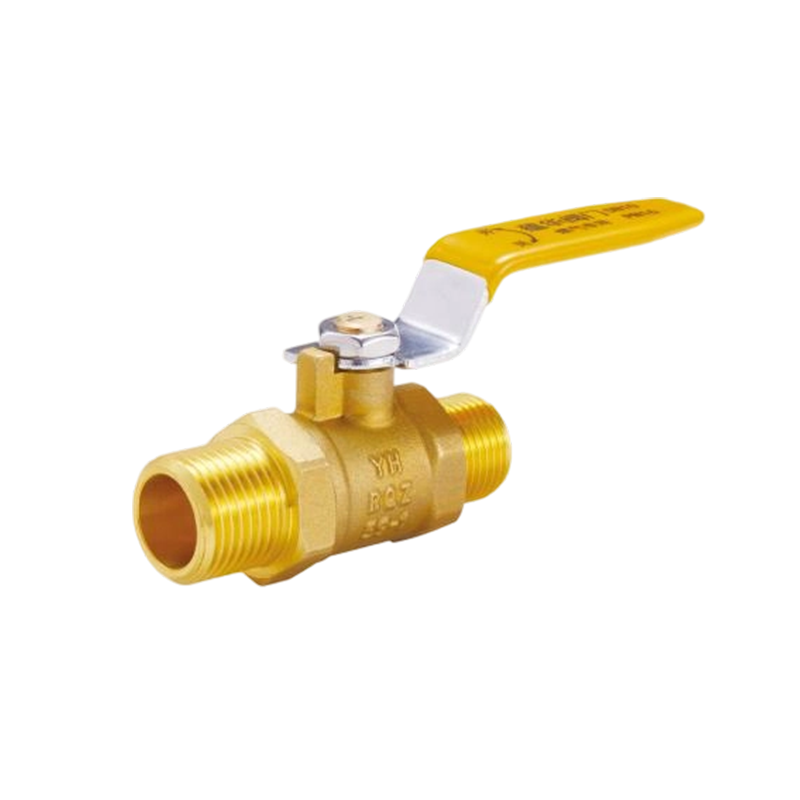
YH-221 Brass Ball Valve with Long Handle(M/M)
-
 View More
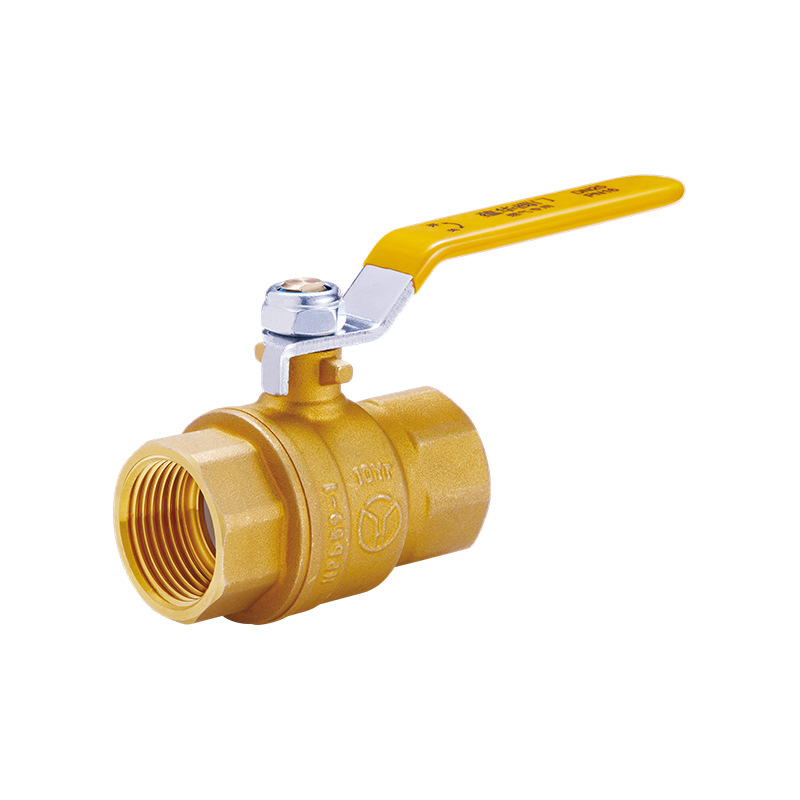
YH-220 Full Port Brass Ball Valve with Long Handle(F/F)
-
 View More
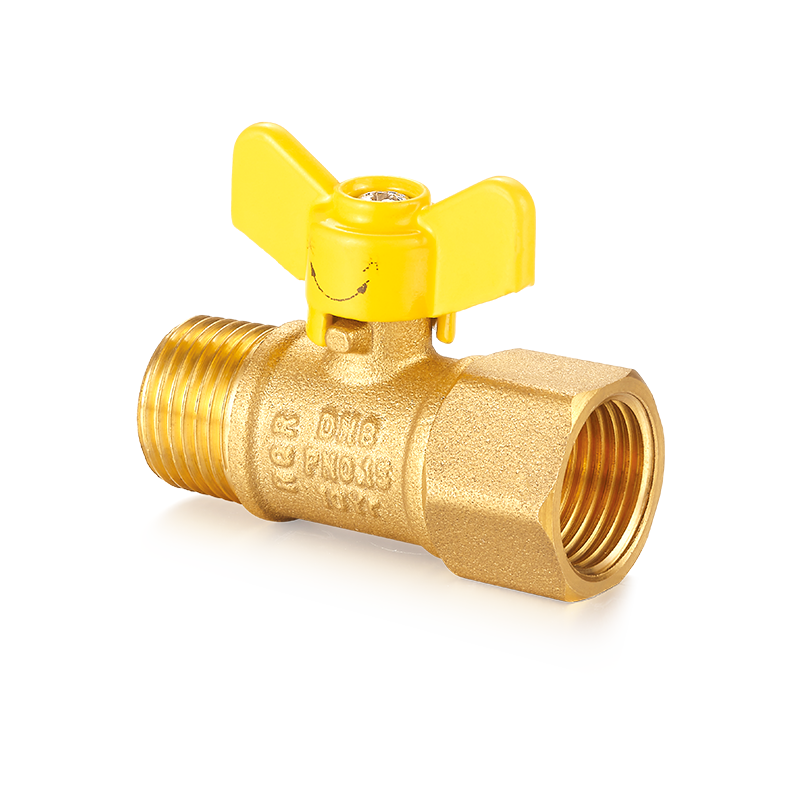
YH-205 Brass Ball Valve with Butterfly Handle(F/M)
-
 View More
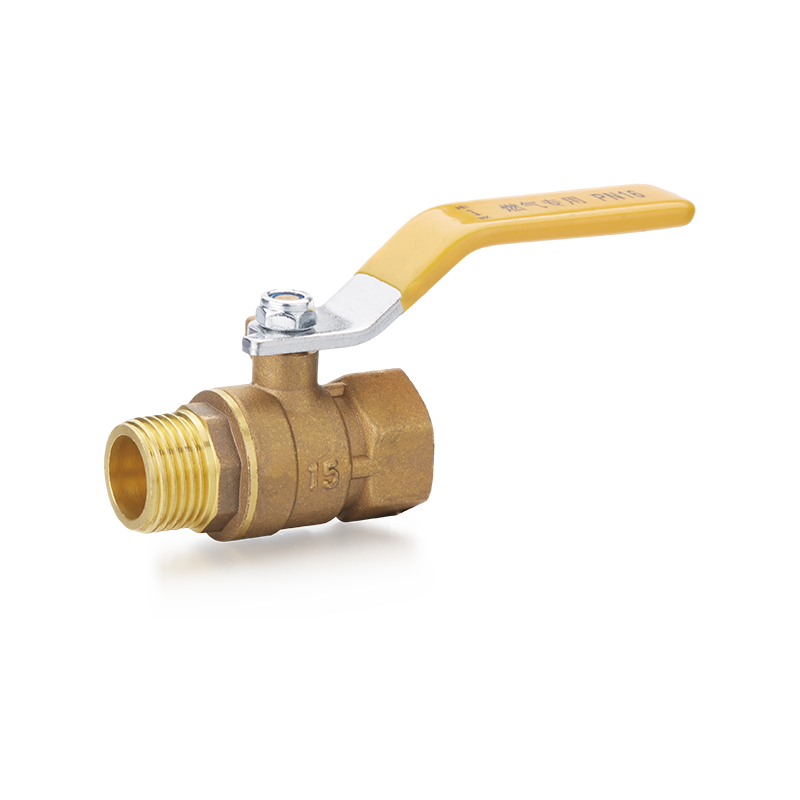
YH-202 Brass Ball Valve with Long Handle(F/M)
-
 View More
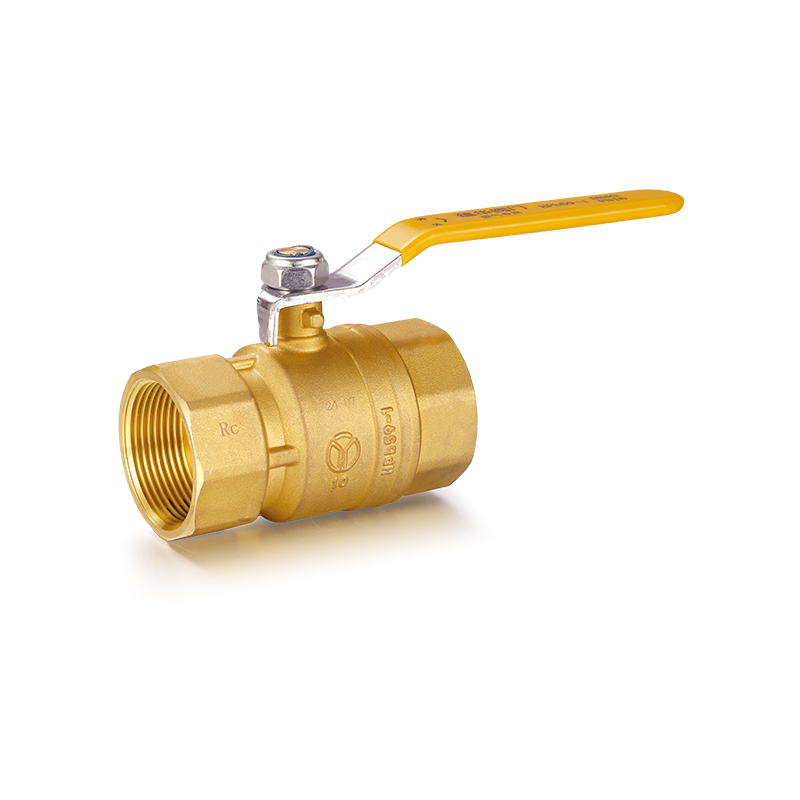
YH-201 Brass Ball Valve with Long Handle(F/F)
Related News
-
May18Brass Globe Valves: The Complete Engineering Guide to Selection, Sizing, and ServiceA brass globe valve is a quarter-turn or multi-turn flow control device made from copper-zinc alloy, specifically engineered to regulate, throttle, and shut off fluid flow in piping systems. Unlike gate valves...Read More
-
Sep14Brass Mini Ball Valve: Thread Types, Sizing, and Selection Guide for Compact LinesComponent Selection · Fluid Control Small Valve. Serious Selection. A brass mini ball valve often sits in the tightest corner of a system, yet it carries the same responsibility as valves many times its size....Read More
-
Aug25Brass Ball Valve Applications and Their Importance for Industrial UsesThe plant maintenance engineer once summarized every ball valve purchase decision in one sentence: "The valve that closes fast and stays closed is the valve that prevents the flood." When a line carrying water...Read More
-
Sep21The 1/2 NPT Brass Ball Valve Inline: Sizing, Threads, and Buying GuideBrass Valve Selection Guide 1/2 NPT Brass Ball Valve Inline: Sizing, Threads, and Buying Guide A practical reference for engineers and buyers specifying one of the most common brass valves in water and gas se...Read More
-
Oct151/2 in. ID Tubing Barbed Brass Ball Valve: Sizing, Port Bore, and Selection Guide1/2 in. ID Tubing, Barbed Brass Ball Valve: Getting the Fit Right the First Time A practical guide to barb sizing, port bore, brass grade and clamp practice for hose-fed water, gas and fluid lines. A 1/2 in. I...Read More
-
Sep031/2 Inch Brass Ball Valve Block and Bleed: Setup, Selection and Sourcing GuideThe 1/2 Brass Ball Valve Block and Bleed Setup, Explained for Buyers and Installers Two ordinary brass ball valves and one small bleed point can deliver what an expensive engineered valve is often bought for:...Read More
Contact Us
-

-
 +86-0574-63742169
 -
 No.104-128, Cizhang East Road, Zhangqi Town, Cixi City, Ningbo, Zhejiang Province, China


